

Professional Insulated Clean Panel Production Line: Enhancing Cleanroom Efficiency
2026-10-13
Cleanroom performance is only as strong as the panels that contain it. Yet not every insulated clean panel production line delivers the consistency, flatness, and sealing precision that modern facilities actually need. From pharmaceutical labs to microelectronics plants, the real difference often comes down to how panels are manufactured long before they reach the cleanroom floor. YI ZHOU TECHNOLOGY has focused on closing that gap with professional production systems built for tighter tolerances and better insulation integrity. If you have ever wondered why some cleanrooms hold their specifications while others drift, the answer may start well before installation.
Inside the Insulated Core: Layering Techniques That Boost Cleanroom Performance
Rather than treating the insulated core as a single homogeneous slab, high-performance cleanroom panels rely on a deliberate sequence of materials with different densities and barrier properties. A common stack starts with a closed-cell polyurethane or mineral wool core that handles thermal drift, followed by a thin aluminum foil vapor retarder, and then a final interior skin of stainless steel or fiberglass-reinforced plastic. The trick is not just what goes in, but how the layers are aligned: offsetting the joints between core segments prevents direct thermal pathways, while pressure-sensitive adhesives fill micro-gaps that would otherwise let airborne particles accumulate.
Edge sealing often gets overlooked, yet it determines whether the panel behaves as a true barrier or a leaky sieve. Some fabricators now inject a polyurethane foam gasket along the tongue-and-groove joint before assembly, so the cured foam expands and locks the joint from the inside. This approach eliminates the need for external tape or sealant beads that can peel or outgas in ISO Class 5 and below environments. Another technique involves vacuum bagging the entire panel during lamination, which squeezes excess resin out and produces a flatter, void-free core. The result is a surface with fewer crevices for microbial growth and easier wipe-down validation.
Layering also affects acoustic and vibration control, which indirectly benefits cleanliness by reducing particle shedding from equipment and personnel movement. A constrained-layer damping sheet placed between the outer skin and the core can cut mid-frequency resonance without adding bulk. In semiconductor fabs and pharmaceutical filling suites, this subtle upgrade helps maintain laminar airflow stability, because panels that flex under pressure changes can disturb the unidirectional air stream. The best cleanroom envelopes treat the insulated core as an engineered system, not a commodity.
Sealing Out Contaminants: Advanced Joinery on Clean Panel Lines
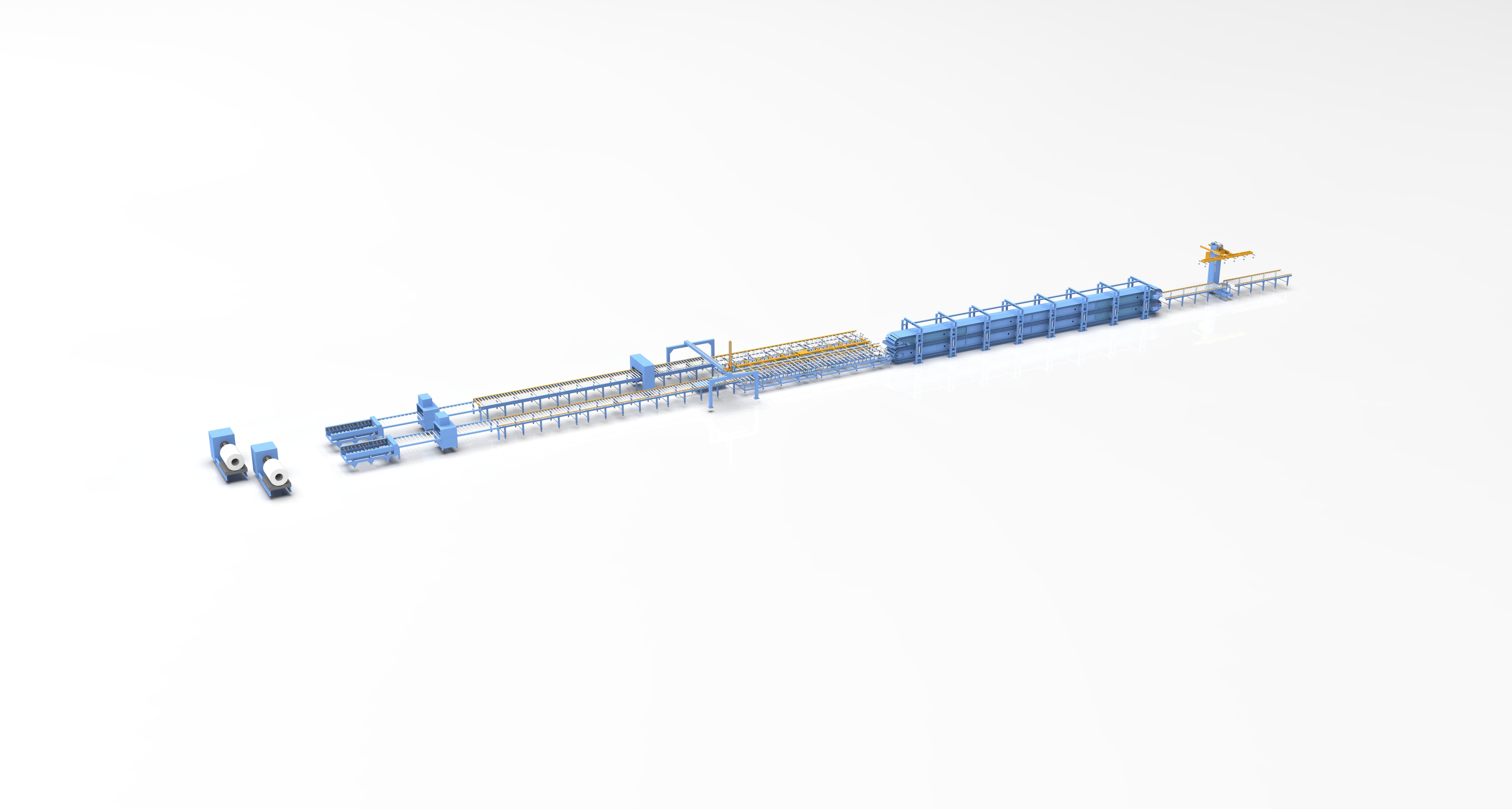
在洁净面板生产环境中,接缝往往是最薄弱环节。即使微米级的间隙也足以让工艺气体、水分或悬浮颗粒渗入,破坏内部环境的完整性。传统搭接或简单对接已难以满足高等级洁净要求,因此先进接合技术致力于从源头消除任何潜在的泄漏通道。
一种常见做法是采用机械互锁与弹性密封相结合的双重屏障。例如,面板边缘加工出精密榫槽,装配时嵌入定制的氟橡胶或硅胶密封条,随后通过冷压或热压使材料发生轻微塑性变形,填满微观不平。这种设计不仅提供结构强度,还形成连续的密封线,有效抵抗压力波动和热循环带来的疲劳。
对于更高要求的应用,激光焊接或搅拌摩擦焊正逐渐取代传统紧固件。这些工艺能形成无孔、无缝隙的冶金结合,彻底消除密封垫老化或脱落的风险。在洁净面板线上实施时,需严格控制焊接参数和气体保护,以防止氧化颗粒污染表面。最终成品经过氦质谱检漏和尘埃粒子计数双重验证,确保面板在长期运行中依然保持气密与洁净。
Automated Precision Cutting for Flawless Cleanroom Panel Fit
Instead of relying on manual measurement and trimming, the system pairs high-resolution scanning with CNC-guided blade or laser modules to maintain sub-millimeter tolerance across every panel edge. Each cut is adjusted for material thickness, thermal expansion, and grain direction, so adjacent panels meet without visible gaps or pressure points.
This level of control matters most at corners and wall-to-ceiling transitions where traditional fabrication often leaves uneven seams. Real-time feedback from touch probes and optical sensors allows mid-run corrections without stopping production, reducing scrap and eliminating the need for on-site rework. Installers receive panels that drop into place cleanly, preserving the airtight, easy-to-sanitize envelope cleanrooms depend on.
Lowering Energy Loads with High-Density Insulated Panel Cores
High-density insulated panel cores work by significantly reducing thermal bridging, a common issue in conventional building envelopes. The dense foam or mineral wool filling inside these panels limits heat transfer through the framing members themselves, not just the cavities. This means less energy is required to maintain a stable indoor temperature, directly cutting heating and cooling loads throughout the year.
Beyond static R-values, the real advantage lies in how these cores perform under fluctuating outdoor conditions. Because the insulation is continuous and tightly bonded to the metal skins, there are no gaps or compression points that allow conditioned air to escape. As a result, HVAC systems can be downsized without sacrificing comfort, and the building consumes fewer kilowatt-hours per square foot compared to traditional stud-and-batt assemblies.
Field monitoring of commercial and industrial structures shows that upgrading to high-density panel cores often yields a 15–25% reduction in annual energy use, depending on climate zone. Those savings come from lower peak demand as well as reduced nighttime losses. For owners focused on operational budgets, the payback period is frequently under five years, especially in regions with high utility rates or long cooling seasons.
From Raw Stock to Sterile Surface: Panel Production Without Compromise
Every panel begins as raw coil stock—mill-finish steel or aluminum that still carries the memory of the rollers. We don't treat that as a blank canvas; we treat it as a liability that has to be earned into a surface. The line starts with tension leveling and precision slitting, then moves through a series of cleaning stages that strip oils, micro-particles, and the invisible residues left from coiling. If the substrate isn't truly clean at this point, no downstream coating can save it.
From there, the material passes through a controlled coating application where thickness is measured in microns, not by eye. We use a closed-loop curing system that holds temperature within a narrow band, because even a slight drift changes the molecular cross-linking of the finish. After curing, panels are cooled under filtered air and inspected by both automated vision and a human eye at the exit station. Any panel that shows a single out-of-spec blemish is pulled before it reaches the cleanroom packaging area.
The final step is not just wrapping—it's transition to a sterile surface. Panels are sealed into protective film inside an ISO-class environment, with operators double-gloved and surfaces wiped with validated disinfectants. The result is a panel that arrives on site ready for direct installation in a controlled environment: no re-cleaning, no residue, no compromise between the raw stock it came from and the sterile surface it must become.
Shortening Lead Times on Custom Cleanroom Panels Through Smart Automation
Traditional custom cleanroom panel orders often stall at the handoff between sales drawings and production files. Smart automation removes that friction by pulling dimensions, cutouts, and material specs directly from the customer's approved design into the shop floor system. The result is a panel that moves from quote to fabrication without a manual re-entry step, cutting days out of the schedule rather than just hours.
Beyond the data transfer, automation also sequences work orders based on material availability, machine capacity, and delivery deadlines. Instead of batching similar panels and hoping they ship on time, the system dynamically groups jobs so that a custom panel with a special window or pass-through does not sit behind a stack of standard units. This keeps urgent, low-volume orders moving without disrupting high-volume runs.
Finally, built-in quality checks catch mismatches before they reach the cleanroom floor. Cameras and sensors verify dimensions against the digital twin during cutting and assembly, so rework does not eat into lead time. Customers get the exact panel they specified, and the shop avoids the hidden delay of fixing errors after the fact.
FAQ
Insulated clean panels form the actual envelope of a cleanroom, combining structural support with a smooth, sealed surface. Their insulating core prevents condensation and thermal bridging, while the metal facing resists microbial growth and particle accumulation. This keeps the internal environment stable and reduces the load on HVAC systems.
A dedicated line automates key steps like core filling, lamination, and edge profiling, which removes much of the variability seen in manual fabrication. Consistent panel thickness, flatness, and joint geometry mean fewer gaps or uneven surfaces that could harbor contaminants, directly tightening cleanroom tolerances.
Rockwool offers strong fire resistance and acoustic damping, while polyurethane (PU) and polyisocyanurate (PIR) deliver higher thermal insulation per unit thickness. Selecting the right core affects how much energy the cleanroom consumes for temperature and humidity control, as well as how easily the panels meet fire and safety codes.
Professional lines incorporate precision roll-forming, controlled adhesive mixing, automated press stations, and inline inspection. This level of control ensures each panel meets strict dimensional and surface finish specifications, which is essential when thousands of square meters must fit together with minimal leakage in a cleanroom.
Yes, modern lines often support adjustable core thickness, variable panel lengths, and custom edge details such as tongue-and-groove or cam-lock systems. This allows fabricators to produce panels tailored to specific ceiling heights, door openings, and utility penetrations without sacrificing the consistency needed for cleanroom sealing.
The joint between panels is one of the most vulnerable areas for air leakage and particle ingress. Tightly machined interlocking edges, often paired with gaskets or sealants, create a continuous barrier. A well-designed edge profile speeds up installation, reduces on-site sealing work, and helps maintain positive pressure with less fan energy.
Critical checks include dimensional accuracy using laser or vision systems, adhesion testing for the core-to-skin bond, surface roughness measurement, and full-length flatness verification. Some lines also perform air leakage or thermal performance sampling to validate that the panels will perform as a sealed envelope in the field.
Pharmaceutical manufacturing, semiconductor fabrication, biotechnology labs, medical device assembly, and food processing all rely on cleanroom environments. In each case, the panels must combine cleanliness, thermal control, and structural reliability, making a professional insulated panel production line a key investment for suppliers serving these sectors.
Conclusion
A modern insulated clean panel line does more than assemble sheets—it builds the physical barrier that keeps a cleanroom stable. The core receives careful attention: multiple layers are bonded under controlled pressure, with high-density foam or mineral wool packed to eliminate voids. That density pays off in lower thermal bridging, so HVAC systems work less to hold temperature and humidity steady. At the joints, advanced sealing methods and precision-cut edges leave no gap for airborne particles to slip through. Automated cutting stations measure each panel to the millimetre, which means installers waste less time trimming on site and the finished walls fit tightly against ceiling grids and floor tracks.
From raw coil stock to the final sterile surface, every step is sequenced to avoid contamination. Roll formers shape metal skins without excess lubricant, and inline cleaning removes dust before the core is injected. Because orders often involve odd dimensions or rapid schedule changes, smart automation lets the line switch between panel widths and thicknesses without long changeovers. Production data feeds back into cutting and laminating stations, so custom batches move through the same line as standard sizes. This flexibility shortens lead times without sacrificing the clean surface finish required for pharmaceutical, electronics, and food-grade facilities. The result is a tighter envelope, fewer callbacks, and a cleanroom that reaches its performance targets faster.
Contact Us
Contact Person: Sophia Jiang
Email: [email protected]
Tel/WhatsApp: +86 17367381818
Website: https://yzwelding.com/