

Professional Emergency Generator Set Features That Ensure Reliable Backup Power
2026-11-21
Backup power is only as reliable as the generator set behind it. The moment utility power drops, professional-grade features—like fast voltage recovery, robust cooling, and precise load handling—determine whether your critical systems keep running or stall. Hichai Power builds emergency generator sets around those exact demands, turning a sudden outage into a non-event.
How Voltage Regulation Keeps Sudden Load Changes From Causing Dips
When a motor kicks on or a bank of lights switches in, the current demand can spike almost instantly. Without a fast-acting regulator, that spike pulls the rail voltage down before the feedback loop catches up. A well-tuned regulation stage senses the droop at the output and adjusts the duty cycle or linear pass element within microseconds, supplying extra energy from the input capacitors while the inductor current ramps. The result is a transient response that trades a tiny, controlled undershoot for a much larger load step, keeping the rail inside the tolerance window where sensitive downstream circuits stay happy.
The trick lies in how the control loop is compensated. Too slow, and a sudden load change looks like a brownout to the load; too aggressive, and the output rings or overshoots on recovery. Many designs rely on a combination of ceramic output capacitance with low equivalent series resistance and a voltage-mode or current-mode loop that has enough phase margin to ride through the step. In practice, placing the crossover frequency well above the frequency content of the load transient lets the regulator treat the dip as a low-frequency disturbance and correct it before the capacitors lose too much charge.
There is also a layout and component-choice angle. The loop can only respond as fast as the path from the feedback node to the switch allows. Long traces, inductive vias, or a poorly chosen compensation network can turn what should be a clean 50 mV dip into a 200 mV sag that resets a microcontroller. By keeping the feedback divider close to the output capacitors and using a regulator with a high bandwidth error amplifier, sudden load changes stay within the linear correction range instead of forcing the output into a hard current limit or shutdown.
Why Fuel Delivery Needs to Stay Consistent During Extended Outages
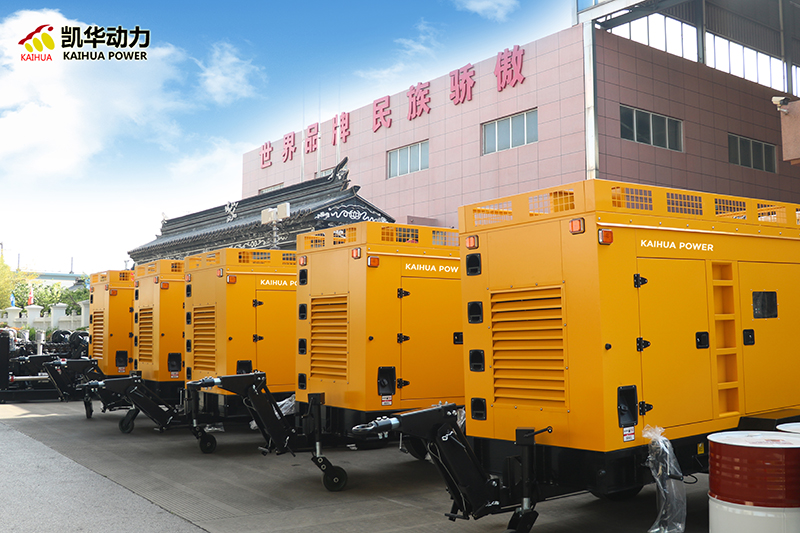
Extended outages rarely announce their full duration upfront. What starts as a few hours can stretch into days, and every additional hour pulls harder on stored diesel, propane, or natural gas reserves. Consistent fuel delivery removes the guesswork by matching replenishment to actual burn rates instead of relying on emergency calls after levels have already dropped too far. That rhythm matters most for hospitals, data centers, water treatment plants, and cold storage facilities where a dry tank is not an inconvenience but a cascading failure.
The logistics around prolonged blackouts get tighter as the outage continues. Roads may be blocked, stations may be dark, and local fuel supplies often face sudden demand from dozens of businesses at once. A delivery schedule that was set before the storm can drift, so steady communication and route adjustments become part of the service rather than an afterthought. Facilities that maintain a predictable cadence, even if volumes shift, tend to avoid the panic buying and long lead times that hit harder after day three or four.
Fuel itself also degrades or picks up contaminants when it sits too long, especially in backup tanks that are rarely cycled. Consistent delivery supports rotation, filtering, and monitoring before the fuel becomes a problem. In an extended outage, the difference between a generator that runs until power returns and one that stalls often comes down to whether the fuel arriving today still meets the engine's needs tomorrow.
What Makes Cold-Start Performance Reliable in Harsh Weather
Reliable cold starts in harsh weather rarely come down to a single component. The battery has to deliver enough cranking amps while its chemistry slows in the cold, and the oil needs to stay thin enough to let the engine turn over without forcing the starter to work against heavy sludge. On top of that, fuel must still atomize properly when temperatures drop; gasoline can struggle to vaporize, while diesel can gel or wax if it is not treated for winter conditions. Getting these basics right makes the difference between a quick start and a long crank that ends with a dead battery.
There is also a less obvious side to this. Many vehicles rely on a block heater, grid heater, or glow plugs to warm the combustion chambers or intake air before the first turn of the key. The engine control unit then adjusts the fuel mixture and idle speed to keep combustion stable during the first few seconds, when cold metal and thick oil are working against it. When those systems are kept in good shape, cold-start reliability is less about luck and more about predictable, repeated behavior at low temperatures.
The Cooling Design That Supports Continuous Full-Load Operation
Sustained full-load operation changes the thermal problem from managing short peaks to managing a steady, unrelenting heat input. The design here starts with a low-resistance path between the main heat sources and the outside air or coolant. Instead of relying on a single large heatsink, the power stage uses a vapor chamber backed by a dense fin array, which spreads heat quickly enough that no individual component runs far ahead of the others. That keeps hot spots from becoming the reason for an early shutdown.
Airflow is treated as a closed loop rather than an open path. The intake and exhaust zones are physically separated, so heated air cannot drift back into the inlet side under full load. The fans are selected for a steep pressure curve, not just raw airflow, which gives them enough headroom to keep moving air through dust filters and dense fin spacing over time. At full load the fan curve stays below the point where airflow would collapse, leaving useful margin before thermal throttling becomes necessary.
The real test is not a short bench run but hours of continuous operation at the upper limit of the rated ambient temperature. Under those conditions, component temperatures rise quickly at first and then flatten out, with junction temperatures settling below the derating threshold. Because the thermal path and airflow were designed for steady-state rather than momentary performance, the unit can hold its full output without cycling fans aggressively or dropping load in response to temperature spikes.
How Predictive Diagnostics Catch Wear Before It Interrupts Power
Predictive diagnostics work by reading the subtle shifts in vibration, temperature, and electrical signatures that occur long before a component fails outright. Instead of waiting for a scheduled inspection or an unexpected trip, sensors continuously compare live data against baseline performance curves. When a bearing begins to show micro-pitting or a cooling fan draws slightly more current than it did last month, the system flags that drift as an early wear pattern. This approach turns maintenance from a reactive scramble into a planned intervention, often weeks or months ahead of any real disruption.
The real advantage lies in how these systems learn from each asset’s own history rather than relying on generic thresholds. A transformer that has always run warm in summer isn’t mistaken for a fault when temperatures climb again — but a sudden change in its harmonic profile, even a small one, gets attention. Maintenance teams receive prioritized alerts that include probable root causes and recommended actions, so they can swap a coupling or re-torque a connection during a brief low-load window. The power flow stays intact because the wear was caught in its quiet, incremental stage, not after it had already begun to eat into insulation or raceway surfaces.
Over time, the accumulated diagnostic record also reshapes how spares are stocked and how overhaul cycles are timed. Instead of replacing parts on a fixed calendar, operators replace them when the data says they are genuinely approaching the end of their useful life. That means fewer unnecessary interventions and fewer surprises on the grid. The result is a system that degrades gracefully under watch, with most failures demoted from emergencies to routine work orders.
Enclosure Engineering That Keeps Backup Power Neighbor-Friendly
Real sound control in a backup power enclosure starts with air paths, not just wall thickness. Intake and exhaust openings are routed through lined, offset chambers that let cooling air move while forcing noise to bounce against absorbent surfaces before it escapes. The panels themselves are usually built as layered assemblies of perforated steel, dense vinyl, and fibrous fill, each tuned to break up different frequency bands instead of relying on a single heavy barrier.
Thermal behavior shapes the enclosure just as much as acoustics. A well-designed shell directs cool air toward the alternator end and pulls it across the engine before discharging through a hooded, upward-facing outlet. That path keeps hot air away from nearby fences, windows, and patios, while a large low-speed fan moves enough volume without the high-pitch whine of smaller high-RPM units.
Small mechanical details also determine whether the unit gets noticed. Doors are fitted with continuous compression seals and adjustable latching points so they close firmly without rattling. The base uses rubber isolators to stop engine vibration from transferring into concrete pads or building walls, and exterior finishes are selected in low-glare earth tones that let the cabinet sit quietly against landscaping or utility areas rather than drawing attention to itself.
FAQ
It comes down to a few engineering details: a heavy-duty engine block sized for continuous duty, an electronic governor that holds frequency within tight tolerances, and a cooling system built to handle full-load heat rejection without derating. Together these let the unit pick up critical loads in seconds and keep them running until utility power returns.
An automatic transfer switch constantly monitors incoming utility voltage. When it detects a sag, swell, or outage outside acceptable limits, it isolates the building from the grid and signals the generator to start. Once the generator reaches stable voltage and frequency, the transfer switch moves the load over. This removes human delay and prevents backfeeding.
Generators that only run during outages can develop wet stacking, carbon buildup, or hidden fuel system issues. A load bank test pushes the unit to near its rated output so those problems show up before an emergency. It also verifies cooling capacity, voltage regulation, and fuel delivery under real stress, not just a no-load exercise.
The fuel system often determines how long the generator keeps running. A well-designed setup includes dual-wall or sub-base fuel tanks, water separation filters, a fuel polishing loop, and a reliable day tank. Diesel units also benefit from fuel condition monitoring to catch algae, water, or sediment before they clog injectors or cause a shutdown.
A remote monitoring package reports engine status, battery voltage, coolant temperature, fuel level, and fault codes to a phone or building management system. Facilities teams can spot a weak battery or a low fuel condition before a storm hits, and they can start or stop the unit from a distance. This turns reactive maintenance into something closer to planned readiness.
In cold climates, a block heater keeps the engine coolant warm enough for reliable starts, while a battery warmer and a heated enclosure protect starting components. A coolant heater on the jacket water circuit also shortens the time to full load. Some installations add an intake air preheater or use a larger battery bank to overcome cold cranking resistance.
The enclosure does more than reduce noise. It shields the generator from rain, snow, dust, and direct sun, and it manages airflow so the radiator can reject heat properly. A weather-rated, sound-attenuated enclosure with accessible service doors also lets technicians perform routine maintenance without exposing the unit to bad weather.
Key items include battery terminals and electrolyte or charge state, coolant level and freeze protection, oil condition, air filter restriction, fuel filters for water, and belt tension. It is also worth exercising the generator under load monthly. Many failures trace back to a weak battery, stale fuel, or a clogged filter rather than a major mechanical fault.
Conclusion
A dependable emergency generator set reveals its quality under stress, especially when the grid is already down and ordinary equipment starts to struggle. Reliable backup power shows up in the way a professional generator absorbs sudden load changes. Rather than letting a large pump or compressor pull the voltage down, the regulation circuit reads the output several times each cycle and adjusts excitation current fast enough to keep the dip barely visible. Fuel delivery gets the same attention during extended outages. Lines, lift pumps, and filters are arranged to maintain steady flow, prevent vapor locking, and avoid the uneven combustion that often appears when a tank runs low or outdoor temperatures climb.
Cold-start behavior is built into the package with heated blocks, battery warmers, and intake preheating, so freezing weather does not turn a utility failure into an equipment failure. Once the set is running, the cooling system is matched to continuous full-load operation, with radiator area, fan speed, and coolant routing sized for the hottest expected conditions instead of an average afternoon. Predictive diagnostics track small changes in oil pressure, exhaust temperature, and vibration to flag injector or bearing wear before it interrupts an outage. The enclosure is then engineered to cut noise and contain vibration without trapping heat, which keeps the unit workable in tight urban sites while protecting the internals from weather and debris.
Contact Us
Contact Person: Ms. Lu
Email: [email protected]
Tel/WhatsApp: 8618917899306
Website: https://www.hichaipower.com