

Prefab Concrete House Moulds: Top Picks for Your Build
2026-06-26
When you're ready to move beyond traditional construction, prefab concrete house moulds offer a faster, smarter way to build. From foundation to finishing, every pour counts—and choosing the right mould can make or break your project. At LugongMachinery, we don't just supply moulds; we help you shape the future of your build with precision-engineered solutions that reduce waste and speed up timelines. In this post, we'll walk you through our top picks, revealing what sets them apart and how they can elevate your next job site.
Why Prefab Concrete Moulds Are Shaping Modern Homes
Off-site fabrication has quietly reshaped how walls, floors, and entire room modules come together. Concrete moulds produced in controlled factory settings arrive on site with a precision that hand-poured formwork rarely achieves. Tolerances stay tight, waste drops, and the rhythm of construction shifts from unpredictable weather-dependent trades to a predictable assembly process. Homebuilders find they can lock in costs earlier and deliver projects faster without sacrificing the solid feel and thermal mass that make concrete desirable in the first place.
The design freedoms unlocked by reusable steel or fiberglass moulds go beyond simple boxes. Curved walls, textured surfaces, integrated utility chases, and even bespoke niches are cast in a single pour. Architects can experiment with form without burdening the budget, because the mould absorbs the complexity, not the on-site labour. This repeatability also reinforces quality control—every panel emerging from the same mould carries identical material density, curing history, and surface finish, so the final home feels cohesive rather than pieced together.
Beyond speed and aesthetics, the method answers a growing appetite for durability and energy performance. Continuous insulation can be embedded within the sandwich panels during casting, eliminating thermal bridges that plague frame construction. The dense concrete envelope naturally damps sound and resists fire, pests, and moisture intrusion. In an era where homeowners and regulators push for lower lifetime carbon footprints, prefab concrete moulds deliver a building fabric that performs quietly for decades, often with less embodied energy than many assume once the longevity is factored in.
Key Features That Set Top Moulds Apart
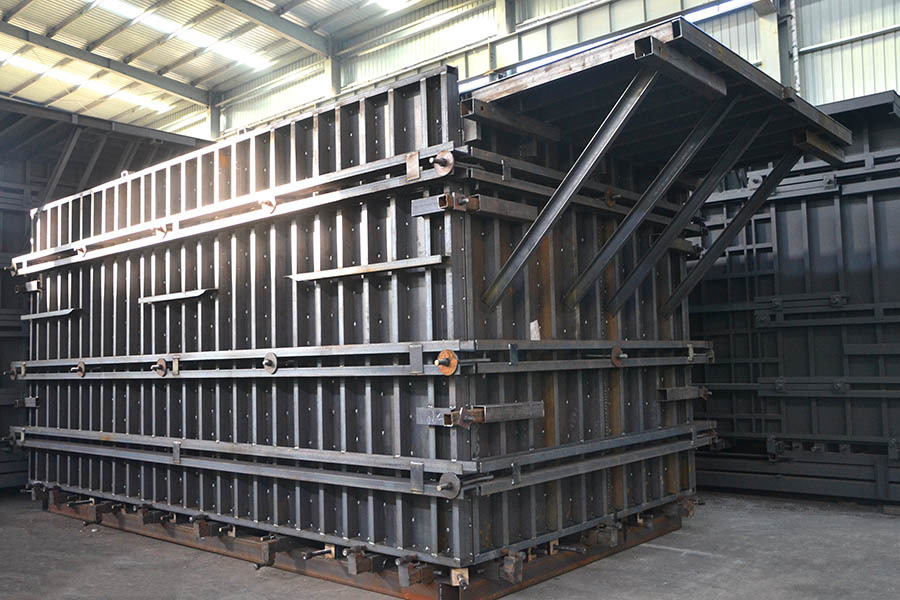
Top moulds distinguish themselves through a meticulous focus on engineering precision right from the design phase. It's not just about machining steel; it's about leveraging deep experience with material behavior—like predicting how a specific grade of polymer will shrink or warp—and compensating for it in the tool geometry. This upfront work, often refined across dozens of iterations without ever cutting metal, ensures that the first shots off the press are already within spec, saving weeks of trial and error on the shop floor.
Another hallmark is the thoughtful selection and treatment of tooling materials. Exceptional moulds use alloys that stay dimensionally stable under extreme thermal cycling, resisting the micro-cracks that plague cheaper tools. The real art, however, lies in the heat treatment—processes like deep cryogenic stabilization or precisely controlled tempering—that permanently alter the steel's crystal structure. This isn't about checking a hardness box; it's about creating a cavity surface that holds its polish and edge definition far beyond typical lifespans.
Finally, the cooling architecture often separates great moulds from good ones. Instead of straight drilled lines that merely approximate the part's contours, leading builders integrate conformal cooling passages that follow every curve, even deep cores. This not only slashes cycle time but eliminates hot spots that cause warpage. Achieving this flow geometry demands creative manufacturing, like laser-sintering inserts or stacking layered plates, blending old-school machining with modern additive techniques to keep the melt front perfectly uniform.
Matching Moulds to Your Architectural Vision
Every architectural project begins with a vision—a unique blend of form, texture, and character that defines its identity. The moulds you choose are not just functional tools; they are the translators of that vision into tangible reality. Whether you're aiming for the fluid curves of modern minimalism or the ornate detailing of classical revival, the right mould captures the nuances that make your design sing. It's about more than just shape; it's about the way light plays across a textured surface, the rhythm of repeating patterns, and the tactile quality that invites touch. Start by asking what story you want your structure to tell, and let that narrative guide your mould selection.
Precision in mould-making is what allows your concept to move seamlessly from blueprint to built form. Custom profiles can replicate the exact depth of a cornice or the subtle camber of an arch that standard options might miss. Consider how the material flows and sets—some moulds excel at capturing fine details, while others prioritize durability for large-scale repetition. Collaboration with artisans and engineers early in the design phase can reveal possibilities you hadn't imagined, turning constraints into creative opportunities. A mould isn't just a negative space; it's the first impression your finished piece will make, so invest time in refining every curve and corner until it aligns perfectly with your intent.
Flexibility and adaptability in mould design are crucial, especially when working across diverse architectural styles. Maybe your vision calls for a seamless blend of old and new—a historic façade with a contemporary interior. Modular mould systems or adjustable forms can help achieve consistency without compromising on individuality. Don't underestimate the impact of surface finishes; a matte versus glossy release can dramatically alter the visual weight of a panel. Ultimately, the moulds you select become part of the building's legacy, influencing maintenance, longevity, and how the space feels for decades. Choose partners who understand that your architectural vision is personal, and be uncompromising in the pursuit of that perfect match.
Secrets to Seamless Prefab Concrete Assembly
Achieving a flawless fit with prefab concrete components often comes down to the unglamorous step of meticulous joint detailing. It's tempting to assume that factory precision alone will guarantee on-site success, but tiny deviations in formwork, curing shrinkage, or even the way elements are transported can add up to noticeable misalignments. The real secret is treating the connection as a design feature rather than an afterthought—using flexible grouts, carefully positioned bearing pads, and dry-fit strategies whenever possible before committing to permanent bonds.
On the logistics side, the sequence of delivery and lifting can make or break assembly speed. A common pitfall is delivering all the pieces in one batch, which clutters the site and forces the crew to hunt for the right panel. Instead, smart teams schedule just-in-time deliveries that match the erection sequence, and they pre-mark each unit with not just its ID but also its orientation and lifting points. This simple step eliminates confusion and reduces crane idle time, letting the crew stay in a rhythm that feels less like heavy construction and more like large-scale puzzle solving.
Finally, a trick that often goes overlooked is the use of temporary alignment guides that are removed once the connections set. Unlike traditional shims and wedges—which can mar the concrete or slip under load—reusable magnetic clamps and adjustable steel brackets hold pieces in exact position while leaving the visible face untouched. When these tools are combined with a shared digital model accessible on a rugged tablet, the team can catch dimensional conflicts long before grout is mixed, turning what could be a stressful deadline into a smooth, almost mundane process.
Real-World Builds That Showcase Mould Excellence
From towering skyscrapers to intricate consumer products, real-world mould applications rarely fit textbook scenarios. The ability to adapt tooling strategies to tight geometric constraints, unconventional materials, or hybrid processes is what separates competent mould makers from exceptional ones. Consider how a medical device manufacturer re-engineered a multi-cavity mould to eliminate gate vestige on a critical sealing surface—without sacrificing cycle time. By integrating conformal cooling channels and a family mould layout, they achieved a 30% reduction in scrap while maintaining flawless part aesthetics. Such builds demand a symbiotic relationship between design, simulation, and hands-on toolmaking, where every ejector pin placement and vent channel is fine-tuned to the polymer's idiosyncrasies.
In automotive lighting, mould excellence means orchestrating light guide optics, heat resistance, and zero-defect clarity across millions of cycles. A recent project involved a two-component lens with an integrated daytime running lamp, where the mould had to handle both a clear polycarbonate and a red PMMA sequentially. The tooling team deployed a rotary platen setup with indexable core inserts, enabling simultaneous shot ejection and insert cooling outside the cycle. The result was a flawless weld line positioned invisibly behind a decorative bezel—an elegant workaround that high-speed cameras and moldflow iterations made possible. It’s this iterative debugging on the bench, not just the screen, that forges tooling ready for the production floor.
Packaging moulds present another proving ground, where thin walls and fast cycles push steel to its limits. On one high-volume closure line, persistent core shift was causing intermittent seal failures. The fix wasn’t a complete redesign but a meticulously balanced runner system paired with custom-made spiral vents that eliminated gas traps without flash. Add in on-board cavity pressure sensors feeding real-time adjustments to the injection profile, and what was once a scrap-prone process turned into a lights-out benchmark. These builds remind us that true mould excellence is invisible to the end-user but critical to every perfect product that comes off the line.
Navigating the Future of Concrete Home Construction
As we step into a new era of building, concrete is no longer just a brute material—it’s becoming intelligent. Innovations like self-healing concrete, which uses bacteria to fill cracks, and translucent concrete panels that blend strength with natural light, are transforming how we think about home design. These aren't distant concepts; they're being tested in projects today, hinting at a future where homes are more resilient and expressive than ever before.
Sustainability is the heartbeat of concrete’s evolution. The industry is moving toward low-carbon mixes, incorporating fly ash and slag, and even exploring carbon-capturing concrete that actively cleans the air. Prefabrication and 3D printing are cutting waste and enabling intricate shapes once impossible on-site. Builders are pairing these methods with geothermal heating and cooling systems embedded directly into concrete slabs, creating shells that manage energy effortlessly—a quiet revolution in how we live.
The human touch remains center stage despite technological leaps. Architects are blending traditional craftsmanship with computational design, resulting in curves and textures that feel organic. Communities are embracing concrete not just for its durability, but for its ability to withstand wildfires, floods, and storms—offering safety without sacrificing beauty. As regulations, materials, and mindsets align, concrete home construction is poised not just to shelter us, but to tell a story of resilience and innovation.
FAQ
Prefab concrete house moulds are reusable frameworks, often made from steel, aluminum, or plastic, that shape wet concrete into walls, floors, and other structural elements right on site. They work like a giant stencil: you assemble the panels, pour the concrete, let it cure, then strip the moulds away. The result is a solid, monolithic structure that cuts down on bricks and mortar, speeding up construction dramatically.
They offer three big advantages: speed, strength, and consistency. Because the frames are engineered to align perfectly, you get uniform walls and precise dimensions without the mess of bricklaying. Concrete houses are also incredibly durable—great for areas prone to storms or earthquakes—and they tend to have better thermal mass, which can lower energy bills. Plus, you avoid weather delays since the pour sets regardless of rain or shine.
It really depends on your project’s scale and budget. Tunnel forms are a favorite for repetitive room layouts—they cast walls and slabs in one go. Aluminum formwork systems, like those from Mivan or similar brands, are lightweight and reusable hundreds of times, ideal for medium to large developments. For smaller custom homes, insulated concrete form (ICF) blocks that stay in place as insulation are gaining traction. Plastic modular moulds are also popping up for intricate designs because they’re easier to handle and clean.
Start by matching the system to your design complexity and repetition. If your floor plan has many identical units, tunnel or aluminum forms will save serious time. For one-off luxury homes with curved walls, you might need flexible plastic or timber-faced moulds. Also think about logistics: some systems need cranes, others are hand-set. And don’t forget the total cost—consider not just the mould purchase or rental, but also labor, pouring speed, and how many reuses you’ll get.
Preparation is everything. Make sure the formwork is spotlessly clean and properly oiled before each pour—this prevents sticking and leaves a smoother finish. Check alignments obsessively; even a tiny shift can throw off the next floor. Use a concrete mix with the right workability and vibrate it well to avoid honeycombing. And plan your stripping schedule around the weather: under too much heat, concrete can crack if stripped too early; in cold, it might need longer curing.
One headache is formwork leakage—if panels don’t seal tightly, you get unsightly fins that need grinding. Fix that by inspecting seals and tightening clamps. Another is blowouts from too much pour pressure; pour in controlled lifts and don’t rush. If you’re doing multi-story, crane downtime between lifts can kill your schedule, so sequence pours carefully. Also, concrete can develop surface defects if the moulds are worn or poorly cleaned—replace liner sheets or re-coat them when they start to degrade.
You won’t get the same freedom as stick-built wood framing. Mould systems favor straight, linear forms—curves are costly and often need custom fabrication. Large openings for windows and doors must be blocked out carefully, and you’ll want to plan electrical conduits and plumbing roug-ins before the pour, because post-drilling concrete is a nightmare. But within those constraints, you can still achieve striking modern aesthetics with clean lines and open plans.
For a single house, the upfront cost can be higher due to mould rental or purchase, but you save on labor and finishing—no plastering needed, and paint goes straight onto the concrete. The real payback comes with multiple units or multi-story projects where the moulds get reused many times. You also reduce lifecycle costs: concrete homes need virtually no maintenance, resist pests and fire, and tend to have lower insurance premiums. Over 20–30 years, the savings stack up significantly.
Conclusion
Prefab concrete house moulds have quietly revolutionized the way we think about homebuilding, blending speed with sculptural possibility. Far from the utilitarian boxes of the past, today's top systems enable walls that curve, cantilever, and carry texture—from board-formed wood grain to smooth, polished finishes—all without sacrificing structural integrity. The real magic lies in how these moulds are engineered: precision joints that lock together on site, integrated channels for plumbing and electrical runs, and materials that can be reused hundreds of times without losing accuracy. This isn't just about pouring concrete faster; it's about giving architects and self-builders a kit of parts that expands what a concrete home can be, whether you're chasing a minimalist urban retreat or a rugged, off-grid sanctuary.
What sets standout moulds apart isn't a single feature but a quiet coherence between design intent and on-the-ground assembly. The best systems anticipate the messiness of real builds—think adjustable bracing that forgives slight foundation irregularities, or modular designs that let you swap out panel configurations without a complete redesign. Looking at completed projects, you notice a common thread: the houses feel intentional, as if the moulds were chosen not just for efficiency but for the way they capture shadow and light on concrete's surface. As the industry inches toward even smarter, lighter formwork and more sustainable concrete mixes, the choice of mould becomes an architectural decision in itself—one that shapes not only the walls but the entire experience of living inside them.
Contact Us
Contact Person: Zhang Zhenlai
Email: [email protected]
Tel/WhatsApp: 8618563210000
Website: https://en.lugongmachinery.com/