

Polyester Geogrid Factory Delivers High-Strength Reinforcement for Infrastructure Projects
2026-07-31
From highways to retaining walls, the backbone of modern infrastructure relies on materials that combine strength with longevity. A leading polyester geogrid factory is now delivering high-tensile reinforcement solutions that redefine stability in demanding environments. At WEN FENG STONE, we've seen firsthand how advanced geogrids prevent soil erosion and pavement cracking under extreme loads. But what makes this new generation of polyester geogrids a game-changer for engineers worldwide? Read on to discover the technology behind these invisible workhorses—and why they're becoming essential for projects that can't afford to fail.
The Science Behind Polyester Geogrid Strength
Polyester geogrids owe their strength to the molecular architecture of high-tenacity polyester fibers. At the core, long-chain polymer molecules are stretched to achieve a high degree of orientation and crystallinity. This process aligns the molecules so that they resist tensile forces with exceptional efficiency. Unlike other polymers that may creep or deform under sustained load, polyester’s rigid molecular backbone provides outstanding dimensional stability, maintaining structural integrity even under continuous stress. This inherent molecular strength is then translated into the geogrid structure through precision knitting or weaving, where junctions are designed to transfer load without slipping or breaking.
The interplay of raw material properties and manufacturing technique is critical. During extrusion, the polyester filaments are drawn under controlled conditions, locking in the tensile modulus and tenacity. The geogrid’s coated or uncoated junctions become points of load distribution, and their design—whether through thermal bonding or polymer coatings—ensures that forces travel efficiently from the surrounding soil into the grid. The result is a material that bridges weak soils, reinforcing them by carrying large tensile loads while remaining chemically stable in a wide range of pH environments and resistant to biological degradation.
Scientific testing reveals that the true strength of polyester geogrids goes beyond simple tensile capacity. Long-term performance is governed by low creep behavior and high interaction coefficients with compacted fill materials. The grid’s open aperture structure interlocks with aggregate, creating a mechanically stabilized layer that dissipates energy and resists lateral spread. This synergy between polymer science and geotechnical engineering explains why polyester geogrids are trusted for retaining walls, steepened slopes, and road bases—they don’t just hold the soil, they transform it into a coherent, load-bearing system.
How This Factory Meets Global Infrastructure Demands
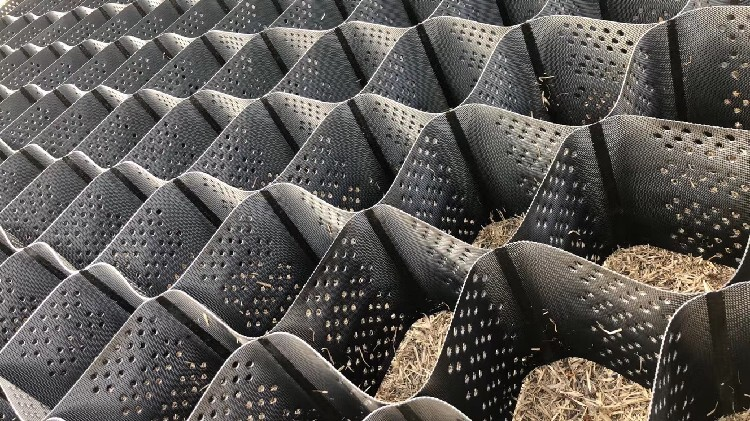
Infrastructure projects around the world don't wait for anyone. At our factory, we've learned that keeping up means more than just scaling production—it’s about anticipating what comes next. We’ve built a workflow that bends without breaking, letting us shift from massive steel beams for a bridge in Southeast Asia to custom pipe fittings for a Middle Eastern desalination plant within the same quarter. No need for flashy rebranding; it’s simply how we’ve operated for years, with teams that speak the language of both engineering precision and on-the-ground urgency.
Our approach to global demand hinges on a straightforward principle: stay close to the pain points. Instead of chasing the loudest requests, we listen for what's missing. When ports in East Africa needed corrosion-resistant components ahead of schedule, we rerouted shipments through alternative logistics hubs and adjusted alloy mixes in real time, something a rigid production line could never manage. Being flexible doesn’t mean compromising on quality—our testing rigs mimic coastal humidity, desert heat, and subzero cold, ensuring every bolt, beam, or valve holds up wherever it lands.
The real test of meeting global demands isn’t in the easy orders; it’s in the last-minute calls from project managers knee-deep in mud and deadlines. We’ve built a buffer into our system—not just stock, but cross-trained crews and modular tooling that can be reconfigured overnight. This lets us absorb sudden spikes from renewable energy farms, mining expansions, or disaster recovery efforts without sweating the small stuff. For us, infrastructure isn’t abstract. It’s the reason a new hospital in Peru has running water, and why a rail line in India didn't stall during monsoon season.
Real-World Applications That Demand Superior Reinforcement
Modern infrastructure quietly depends on materials that refuse to buckle under stress. Take the cables holding up a suspension bridge—every strand must endure years of wind, traffic vibration, and thermal expansion without a single crack. This isn't just about raw strength; it's about a relentless resistance to fatigue that keeps commuters safe without fanfare.
Deep underground, mining equipment chews through solid rock, and the teeth of those cutting tools face an almost cruel level of abrasion. If the metal wears down too fast, entire operations grind to a halt. Superior reinforcement here means blending extreme hardness with just enough toughness so the part doesn't shatter on impact. It's a brutal, silent battle against erosion that dictates productivity.
Then there are the artificial joints placed in human bodies. A hip implant is bathed in warm saline and subjected to millions of loading cycles per year, all while being chemically attacked by the body's own environment. The material needs to be biologically indifferent yet mechanically unassailable, reinforcing the skeleton from within for decades. No room for error, no second chance at a first impression.
From Raw Polymer to High-Performance Geogrid
The journey begins with carefully selected raw polymers—typically polypropylene or high-density polyethylene—arriving as granular resin. These base materials are far from the final load-bearing product; their molecular chains need orientation and alignment to unlock strength. Through a controlled extrusion process, the polymer is melted and formed into a sheet or a series of interconnected ribs, setting the stage for the critical transformation that follows.
Next, the semi-finished grid is subjected to precision stretching, often in both longitudinal and transverse directions. This drawing process reorients the polymer molecules, dramatically increasing tensile stiffness and reducing creep under sustained loads. The result is a geogrid with an optimized aperture geometry and high junction efficiency—capable of interlocking firmly with surrounding aggregate, distributing forces widely, and providing decades of reliable reinforcement in roads, retaining walls, and slopes.
Engineering Reliability in Soil Stabilization Projects
Soil stabilization projects demand more than just mixing binders into the ground; they require a disciplined engineering approach that treats soil as a variable construction material. The reliability of these projects hinges on comprehensive site investigations that capture spatial variability—moisture lenses, organic pockets, or unexpected layering can undermine even the best-mixed designs. Engineers move beyond generic recipes by performing in situ tests like cone penetration testing paired with laboratory strength assessments, building a geo‑characterization that feeds directly into performance‑based mix designs. This upfront investment in understanding the soil’s response to stabilization agents prevents costly rework and ensures the treated ground meets long‑term performance thresholds, not just short‑term specification numbers.
Field execution introduces another layer of complexity where reliability is often won or lost. Modern quality assurance has shifted from end‑product testing to real‑time process monitoring. Depth‑aware mixing equipment records binder dosage, rotation speed, and penetration rate every few centimeters, allowing supervisors to spot weak zones immediately and adjust on the fly. This data‑driven feedback loop, combined with a forensic understanding of common failure modes—like insufficient mixing energy in high‑plasticity clays or delayed compaction in cement‑treated gravels—keeps the treatment homogeneous. When contractors marry this operational discipline with contingency plans for weather setbacks or equipment downtime, the project builds inherent redundancy against variability, delivering a stabilized mass that behaves predictably under traffic, foundation loads, or environmental cycles.
Long‑term durability cements engineering reliability as the true measure of success. Accelerated curing protocols and performance testing under simulated wet–dry or freeze–thaw cycles reveal vulnerabilities that standard strength tests miss. By correlating laboratory weathering to field exposure, engineers refine binder dosages to close micro‑cracks before they propagate. The most resilient projects also embed simple maintenance triggers—like periodic permeability checks or settlement monuments—that detect gradual change early, long before it becomes a structural issue. This lifecycle mindset transforms soil stabilization from a quick ground improvement trick into a robust, predictable foundation element that quietly serves its purpose for decades.
Long-Term Benefits of Polyester Over Other Materials
When you look at materials that truly stand the test of time, polyester quietly outperforms most natural alternatives. Unlike cotton or wool, it doesn't gradually weaken from repeated washing or exposure to moisture. The fibers hold their shape and strength year after year, which means garments, upholstery, and outdoor gear made from polyester look and function like new far longer than their counterparts. This isn't just about avoiding shrinkage or wrinkles—it's about a fabric that resists abrasion, doesn't pill easily, and maintains consistent texture through countless cycles of use.
Another often-overlooked advantage is polyester's resistance to biological and environmental decay. Where cotton can develop mildew in damp conditions and silk is notoriously prone to insect damage, polyester simply doesn't offer a food source for moths or mold. This inherent resistance means fewer replacements over time, less worry about storage conditions, and a surprising peace of mind for items that sit in closets or face seasonal humidity. It's a practical longevity that natural fibers can't match without chemical treatments.
From a cost perspective, the long game favors polyester as well. The upfront price might be lower, but the real savings accumulate over years of use. A polyester jacket doesn't need special cleaning, doesn't fade drastically in sunlight, and won't lose its insulation properties after a few washes. When you compare that to the frequent replacement cycle of more delicate materials, the value proposition becomes clear: less waste, fewer purchases, and a lower total cost of ownership for the things you use daily.
FAQ
They are mainly placed within soil layers to improve load distribution, stabilize foundations, and prevent structural failure in roads, railways, and retaining walls.
Through controlled extrusion and drawing processes that align the polymer molecules, along with rigorous tensile testing of each production batch.
Projects with heavy traffic loads or weak subgrades, such as highway expansions, airport runways, bridge approaches, and reinforced earth slopes.
Their high modulus and low creep under sustained load provide long-term dimensional stability, which is often superior to polypropylene or polyethylene alternatives in demanding conditions.
Yes, factories can adjust rib thickness, aperture size, and coating formulations to match unique tensile demands, chemical exposures, or installation methods.
Continuous monitoring of raw polymer properties, online gauging of rib dimensions, and final roll testing for junction strength and elongation ensure consistent performance.
By reducing differential settlement and reflective cracking, properly installed geogrids extend service life, minimize maintenance cycles, and lower whole-life costs.
Its excellent resistance to creep deformation and high tensile strength retention over decades make it a reliable choice for critical, long-lasting infrastructure.
Conclusion
The production of polyester geogrid marks a convergence of advanced polymer science and practical engineering, where every strand is engineered to resist deformation under immense loads. At the core of this reinforcement material lies a molecular architecture that grants it exceptional tensile strength and minimal creep, ensuring that soil structures remain stable over decades. The factory behind these geogrids transforms raw polymer into a high-performance grid through a tightly controlled process of extrusion, drawing, and knitting. This isn't a one-size-fits-all product; each batch is tailored to meet the shifting demands of global infrastructure, from highways crossing expansive soft soils to retaining walls that must hold firm in seismic zones. Rigorous quality checks verify that every roll meets the same standard—whether it's headed to a harbor reclamation in Southeast Asia or a railway embankment in Northern Europe.
What sets polyester apart from alternatives like polypropylene or steel isn't just its strength, but its quiet resilience against chemical attack, biological degradation, and extreme pH environments. In the field, this means a road base reinforced with polyester geogrid won't succumb to the rutting that plagues lesser solutions, and a slope stabilized with it stays put through relentless rain and freeze-thaw cycles. Engineers increasingly rely on this technology because it slashes long-term maintenance costs while delivering immediate constructability benefits—trucks can travel over freshly laid aggregate without rutting, and construction schedules shorten. From the science of polymer orientation to the real-world evidence of projects that have performed flawlessly for years, the factory's commitment to consistency and innovation is what keeps its geogrids beneath our feet, silently holding the ground together.
Contact Us
Contact Person: Jennifer LEE
Email: [email protected]
Tel/WhatsApp: 8618553418999
Website: https://vip.e-baixing.com/wenfengshitong