

PE Cool Feeling Yarn Export Opportunities and Market Insights
2026-11-16
Global buyers are no longer asking if PE cool feeling yarn can win shelf space—they’re asking who can ship it reliably. From Southeast Asia’s activewear boom to Middle Eastern modest sportswear, demand for cooling, quick-dry polyester yarn has quietly outpaced supply in several export corridors. Yet most overseas brands still struggle to find a supplier that combines consistent denier control with flexible lot sizes. That’s where Changshu Polyester enters the picture. This post unpacks the export opportunities shaping PE cool feeling yarn demand this year—and the market signals smart importers are watching before their competitors do.
Where the Next Wave of PE Cool Feeling Yarn Orders Is Likely to Surface
Order momentum is quietly moving away from saturated casualwear and toward performance-led categories that actually need sustained skin contact. Lightweight base layers, sun-protective hiking tops, and postpartum recovery garments are generating repeat trial orders from brands that previously only tested viscose-based cooling fabrics. The shift is less about marketing claims and more about measurable drying speed and lower surface temperature after prolonged wear.
On the regional side, Southeast Asia and the northern belt of South Asia look like the next concentrated source. Factories in Vietnam, Bangladesh, and parts of India are blending PE cool-feel yarn into single jersey and interlock constructions for both export and fast-growing domestic sportswear lines. What separates these orders from earlier rounds is a sharper focus on knitting consistency and fewer complaints about pilling or static buildup.
A less obvious but credible stream is coming from medical and elderly care buyers. Cooling bed pads, wheelchair seat covers, and pressure-relief overlays are being re-specified after previous rayon-based versions failed on durability. Procurement teams in Japan, South Korea, and the Gulf states are placing modest but frequent reorders, which usually precedes a broader volume commitment once internal testing cycles close.
The Real Differences Between Cool Touch Claims Buyers Actually Test
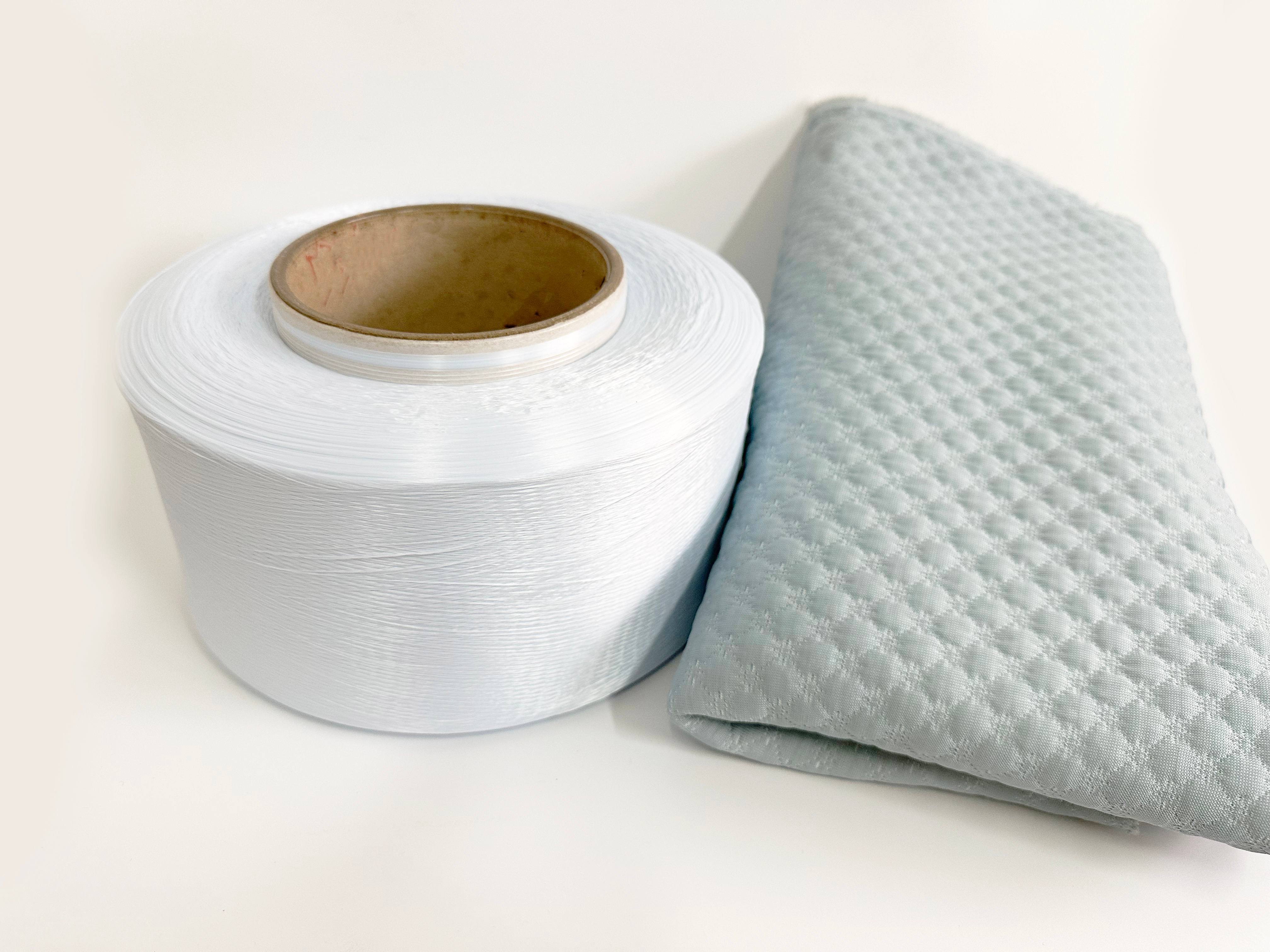
Most shoppers assume “cool to the touch” means the surface will feel icy like metal, but the actual test they apply is more mundane: press a palm against the fabric for five seconds. If the material pulls heat away quickly and doesn’t return it, that’s the baseline. Cheap nylon blends can fake the initial chill with a slick finish, but they warm up almost immediately because they trap body heat instead of shedding it.
The differences show up when buyers compare wetting and airflow. A real cool-touch textile usually has a high Qmax rating—the measure of instant thermal transfer—and also wicks moisture outward so evaporation can do its job. Without that second step, the cooling effect collapses during the night. Some brands rely on phase-change microcapsules or mineral-infused yarns, which hand feel can’t always detect, so testers often rub the fabric between fingers to see if it stays dry-slick or turns clammy.
After a few wash cycles, the gap widens. Treatments that rely on topical coatings tend to wash out, while fibers engineered with inherent thermal conductivity keep performing. Buyers who actually test will compare the same fabric before and after laundering, sometimes pressing it against the inside of a wrist for a more sensitive read. The difference between a lab claim and a bedroom result comes down to whether the cooling is built into the material or simply sprayed on top.
How Energy Costs Are Quietly Changing Export Pricing
A manufacturer in Stuttgart no longer quotes the same price to a buyer in Ohio twice. Six months ago, the cost of running its annealing furnaces was a line item buried deep in the ledger. Now it sits on the desk of the sales director, recalculated every Monday morning. When electricity spot prices jumped after a cold snap, the export quote shifted by nearly four percent without a single change in material or labor. Buyers notice, but they rarely hear the real reason: the grid, not the factory floor, is setting the terms.
Energy-intensive sectors have learned to hedge like currency traders, locking in power purchasing agreements that span borders. But smaller exporters cannot afford those instruments. Instead they use shorter validity windows on quotes, sometimes as little as 72 hours, and quietly build in a volatility buffer that grows with every geopolitical tremor. The result is a quiet repricing of global trade flows, where a port strike in Rotterdam or a gas pipeline shutdown in the Aegean ripples into the invoice a Danish furniture maker sends to a distributor in Toronto.
Some companies are turning this constraint into a selling point. A ceramics producer in Portugal now advertises 'grid-stable pricing' to clients in North America, guaranteeing a fixed rate for twelve months by owning a stake in a local solar farm. The export price ends up slightly higher than the spot market average, but customers pay for predictability. In a world where energy costs swing faster than exchange rates, the old assumption that manufacturing wages and raw materials dominate export pricing is quietly being retired. The new cost driver is measured in megawatt-hours, not man-hours.
Why Certain Ports Are Becoming Funnels for Cooling Yarn Trade
Ports that handle large volumes of cooling yarn rarely earn that role by accident. The shift is driven by where the yarn is spun and finished. Countries like China, Vietnam, and India have concentrated production of specialty fibers, and the ports closest to these clusters—Ningbo, Haiphong, Mundra—have built customs procedures and warehousing that match the fast turnarounds demanded by sportswear brands. A delay of even a few days can push a seasonal order out of its selling window, so importers consistently choose gateways with the fewest friction points.
Another factor is the physical nature of the product itself. Cooling yarns often contain moisture-wicking additives or hydrophilic treatments that can degrade if exposed to high humidity for long periods. As a result, ports with modern, climate-controlled storage and quicker dwell times have become natural funnels. Shippers are not just looking for the shortest sea route; they are looking for ports where containers move from vessel to truck without sitting in open yards, reducing the chance of quality claims before the yarn ever reaches a knitting mill.
The Shift Toward Blended Cool Yarns and What It Means for Exporters
The quiet move away from single-fiber yarns toward blends that actively cool the skin has accelerated over the past three seasons. Buyers no longer treat cooling as a niche performance feature; they expect it in everyday knits, shirting, and even bed linens. This means exporters who still rely on standard cotton or viscose are watching orders slip to suppliers offering nylon-viscose, Tencel-cotton, or mineral-infused polyester combinations that balance thermal regulation with a soft hand.
For exporters, the shift demands more than adding a new SKU. Blended cool yarns often require tighter control over spinning tension and twist levels, because uneven blending can create hot spots or an unpleasant roughness on the skin. Quality checks need to move beyond tensile strength and count, focusing on moisture wicking, drying speed, and the consistency of the cooling touch across a full batch. Exporters who treat these parameters as secondary will face rejections from brands that now run their own lab tests before accepting shipments.
There is also a geographic angle. Markets in Southeast Asia and the Middle East are pulling harder for cool-touch blends due to longer hot seasons, while European buyers want the same performance without sacrificing sustainability certifications. Exporters who can document the origin of each fiber and prove that cooling additives survive repeated laundering will find themselves in a stronger negotiating position. Those who treat blended cool yarns as a passing trend risk being locked out of premium contracts within two years.
What Long-Term Buyers Want That Most New Suppliers Miss
When buyers look past the first order, they aren't just checking your production capacity or price list. They are quietly testing whether you understand how their business actually works after the honeymoon phase ends. Most new suppliers focus on winning the sample or beating the quote, but long-term buyers care about something harder to measure: your ability to absorb friction before it reaches their desk. That means flagging a material shortage two weeks before it delays a shipment, suggesting a packaging tweak that cuts freight damage, or remembering that their warehouse closes early on Fridays. These small, unglamorous moves signal that you see the relationship as a system, not a transaction.
Another thing buyers crave is consistency without constant hand-holding. A supplier who delivers flawless batches for three months and then goes silent when a machine breaks loses trust faster than one with slightly lower quality but honest, early warnings. Long-term partners don't wait to be asked about a dip in QC scores or a delayed sub-component. They bring the problem, the root cause, and a proposed fix in the same email. This kind of ownership is rare because it requires investing in your own processes before the buyer demands it. New suppliers often treat internal chaos as a secret to hide, not a problem to solve.
Finally, buyers want a supplier who pushes back intelligently. If a spec change will double the unit cost or a delivery date is physically impossible, saying yes now and failing later burns more goodwill than a clear, data-backed no. Long-term buyers respect partners who challenge assumptions with evidence, because it shows you are protecting their interest, not just chasing the PO. The suppliers who last are the ones who stop trying to be easy to buy from and start trying to be valuable to work with — even when that means delivering news nobody wants to hear.
FAQ
It is engineered with a modified cross-section and special additives that wick moisture and transfer heat away from the skin, giving a lasting cooling sensation without chemical finishes.
Demand is growing fast in South Asia, the Middle East, and parts of Latin America where hot climates and rising sportswear production create steady orders.
Yes, buyers in Europe and North America often require OEKO-TEX or REACH compliance, and some ask for proof of cooling performance through Q-Max testing.
Focus on energy-efficient production and highlight measurable cooling benefits in your technical data sheet, which helps justify a premium over standard yarns.
Athleisure growth, rising global temperatures, and a shift toward functional fabrics in everyday clothing are pushing more brands to source cooling yarns year-round.
Yes, if they specialize in niche blends or small-batch custom colors, because larger suppliers often avoid low-volume orders.
They oversell the cooling effect without lab data or ignore shrinkage and pilling standards, which leads to rejected shipments and lost trust.
PE fiber resists chemicals and UV better in some applications, making it attractive for outdoor and industrial workwear where standard polyester falls short.
Conclusion
The next wave of PE cool feeling yarn orders is likely to surface not in the established markets of Western Europe or North America, but in Southeast Asia, the Middle East, and parts of South America where rising disposable incomes and hot climates are pushing demand for functional fabrics in sportswear and everyday apparel. Buyers in these regions are increasingly sophisticated; they don't just accept the 'cool touch' label at face value. Instead, they run comparative tests on Qmax values, wash durability, and the real feel against skin after repeated laundering, which means exporters need to back up claims with tight lab data rather than marketing language. At the same time, energy costs are quietly redrawing the export pricing map. Factories in provinces with high electricity tariffs are losing their traditional cost advantage, while those able to run energy-efficient extrusion and texturing lines are holding or even lowering their FOB quotes. This shift is accelerating the rise of certain ports as funnels for cooling yarn trade: smaller coastal hubs with better rail links to inland polymer plants and fewer customs delays are now handling a larger share of container volume, bypassing once-dominant mega-ports that suffer from congestion and higher surcharges.
The market is also moving away from pure PE cool yarns toward blends, particularly with recycled polyester, nylon, or cellulosic fibers, because buyers want a softer hand, better moisture management, and lower carbon footprint without sacrificing the cool-to-the-touch effect. For exporters, this means rethinking raw material sourcing and spinning parameters, since blend ratios and yarn evenness directly affect how the final fabric performs in thermal regulation tests. What long-term buyers want, and what most new suppliers miss, is not just a lower price or a fancy spec sheet. It is consistent batch-to-batch color and denier, transparent documentation on polymer origin, and a willingness to share small trial lots before the order scales. Those who focus only on the initial inquiry tend to lose repeat business, while suppliers who treat every sample as a proof of process control are the ones quietly building multi-year contracts in this evolving export niche.
Contact Us
Contact Person: CONNIE
Email: [email protected]
Tel/WhatsApp: 86-0512-53671634
Website: https://www.lida-yarn.com/