

Paper Bag Machine Manufacturer: What to Look for in Quality and Performance
2026-11-16
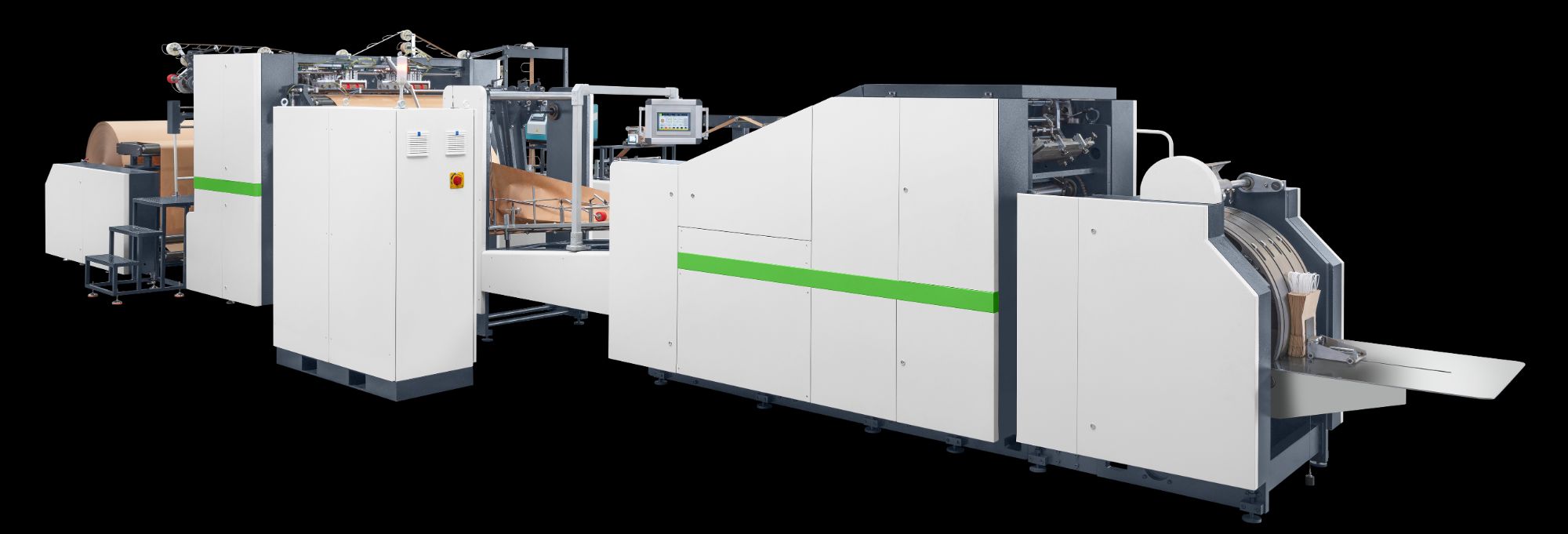
Most buyers assume any paper bag machine can do the job—until inconsistent seals and downtime eat into margins. The real difference between manufacturers lies in how their machines perform under pressure. That's where ROKIN enters the conversation: a name worth checking before you settle for less. In this post, we'll break down what quality and performance actually mean, so you can spot the difference before it costs you.
Can the Frame Handle Three Shifts a Day?
Most frames can run three shifts a day, but only if they were designed with that duty cycle in mind. A light-duty frame that was fine for eight hours won't automatically survive 24-hour cycling without accelerated wear. Check the base structure: thicker wall sections, deep ribs, and full-penetration welds on high-stress corners make a huge difference. If you're buying new, ask for the frame's expected service life in hours and request a fatigue analysis rather than just a static load rating.
Heat is the quieter problem. When a machine runs continuously, the frame and its mounts warm up unevenly. That thermal expansion can shift alignment enough to cause scrap parts or premature tool wear. Frames made from stress-relieved steel or mineral castings tend to hold their geometry better over a full day. If you already have the frame, run a 24-hour test with a dial indicator on a few reference points and compare the readings after start-up and again after the third shift.
Don't overlook fastener creep and vibration. Constant cycling loosens bolts, especially around joints that get hit with reversing loads. Mark all critical bolts with torque stripes, and schedule a walk-around at the shift change to catch anything backing off. If the frame has been in service for years, a quick vibration survey can reveal whether one corner is flexing more than it should. That kind of check takes less than an hour and tells you whether the frame is still earning its keep across three shifts.
Why Bag Tear Rates Reveal More Than Spec Sheets
Spec sheets list tensile strength and tear resistance under idealized lab conditions, but real-world tear rates capture how the material behaves under uneven stress, sharp edges, and rushed handling. A bag that passes a standardized test can still fail on a loading dock because specs don't account for cumulative micro-tears.
Tracking tear rates across shipments reveals patterns that no single datasheet can: weak points near heat seals, zipper snags, or abrasion from conveyor belts. These failure clusters point to design flaws or material fatigue that static specs miss entirely.
Suppliers often hide behind impressive numbers, yet repeated tear data exposes the true cost of downtime, product loss, and customer complaints. Smart buyers ignore glossy spec sheets and ask for field tear statistics instead.
The Real Cost of Downtime: Service Response Times
When a service goes down, the clock starts ticking in ways most businesses fail to measure. It's not just the lost transactions or the idle employees staring at frozen screens—it's the invisible erosion of trust that accelerates with every passing minute. A delay of ten seconds might cost a few abandoned carts, but a delay of ten minutes can push loyal customers toward a competitor they never considered before. The real price isn't a line item on a spreadsheet; it's a slow bleed in user confidence that rarely shows up in quarterly reports.
Service response times act as a proxy for operational maturity. A team that consistently responds within minutes has likely invested in monitoring, alerting, and runbooks that turn chaos into routine. Meanwhile, teams that measure response in hours often rely on heroics—someone manually digging through logs while customers vent on social media. That gap isn't just about technical skill; it reflects whether an organization treats downtime as a rare catastrophe or an expected operational event. The former builds resilience, the latter breeds burnout.
Perhaps the most overlooked cost is the second-order effect on internal teams. Every minute spent firefighting is a minute stolen from feature development, security patches, or technical debt reduction. When response times lag, engineers get pulled from proactive work into reactive triage, and the backlog quietly grows. Over a year, those fragmented hours add up to entire sprints lost—not to downtime itself, but to the aftermath of slow recovery. The organizations that thrive aren't the ones that never fail; they're the ones that make recovery boringly fast.
How Quick Changeovers Affect Your Bottom Line
Every minute a line sits idle during a changeover is time you're paying for without producing anything sellable. Shaving even fifteen minutes off a switch translates into more available production hours per week, which means you can take on extra orders or build a buffer against rush jobs without adding shifts or buying new equipment.
Faster changeovers also reduce the temptation to run oversized batches to avoid setups. When switching is quick and painless, you can schedule smaller runs that match actual demand, cutting down on finished goods inventory and the cash trapped in stock. Less warehouse space, less handling, fewer markdowns on obsolete products—these savings show up directly in operating margin.
There's a labor angle too. Crews that spend less time wrestling with tools and adjustments are less likely to make mistakes during the transition, lowering scrap and rework. Over a quarter, those avoided losses and recovered hours compound into a noticeable difference in profit, not just a marginal efficiency gain.
Noise Levels and Operator Fatigue: An Overlooked Metric
Most discussions around workplace fatigue center on shift length, task repetition, or mental workload—rarely does anyone glance at the decibel meter. Yet in industrial settings, steady background noise from machinery, ventilation, or even constant radio chatter acts as a low-grade stressor that quietly chips away at an operator's alertness. Unlike sudden loud sounds that trigger a startle response, sustained moderate noise forces the body into a state of heightened physiological arousal without the person ever realizing it. Heart rate climbs, muscles tense subtly, and the nervous system stays on edge, all of which accelerate the onset of mental exhaustion by mid-shift.
What makes this metric particularly slippery is that fatigue from noise often masquerades as boredom or disengagement. An operator working next to a humming compressor for eight hours may not feel “tired” in the traditional sense, but their reaction times progressively slow and their error rate climbs. Studies in human factors engineering have shown that exposure to noise levels above 70 dB—common in many plants—can impair cognitive performance within two to three hours, even when the worker reports feeling fine. Because the effect is cumulative and invisible, supervisors rarely connect a late-shift quality dip to the acoustic environment. Instead, they blame training gaps or personal motivation.
Ignoring this link leaves a blind spot in both safety programs and productivity planning. Simple interventions—relocating break areas away from high-noise zones, adding acoustic absorption panels, or rotating operators through quieter tasks—can yield measurable reductions in fatigue-related incidents without overhauling workflows. The key is to start treating ambient noise not as a background nuisance, but as a controllable load on human performance. Once that shift in perspective happens, the path to smarter task scheduling and healthier operators becomes far clearer than any decibel reading alone would suggest.
Warranty Terms That Actually Matter
A five-year warranty sounds impressive until you flip to page twelve and discover it only covers the frame, not the motor, battery, or electronics. The terms that actually matter are buried in definitions and exclusions — often written to protect the manufacturer, not you. Look for warranties that explicitly state coverage for the core components you rely on daily, with clear language about what "normal wear and tear" means. If a brand hides behind vague phrases like "reasonable use," that's a red flag, not a reassurance.
Transferability is another overlooked clause that separates genuine confidence from marketing fluff. A warranty that dies with the original owner quietly lowers resale value and signals the company doesn't expect the product to outlast the first buyer. The strongest warranties are fully transferable at no cost, survive multiple owners, and don't demand registration within thirty days of purchase to remain valid. Those administrative hoops exist to shrink the pool of people who can actually claim coverage.
Finally, pay attention to the repair process, not just the coverage period. A ten-year warranty is worthless if you must ship the item at your own expense to a facility three states away, then wait six weeks for a decision. The most meaningful terms include prepaid return labels, local service options, or advance replacements for common failures. When a company makes it easy to get a fix rather than fight for one, that's when the fine print starts working in your favor.
FAQ
Look past the main frame and check the tension control rollers, cutting blades, and glue application heads. High-end machines use hardened steel blades that stay sharp for millions of cycles, while cheaper models need frequent replacement. Also inspect the drive belts and bearings for brand names or part numbers, which indicate whether the manufacturer sources from reputable suppliers or generic factories.
Ask for a continuous run video that shows the machine starting, running at full speed for at least ten minutes, and stopping for a roll change. The video should have a visible counter and timestamp. If the manufacturer hesitates or only provides a short clip, the speed claim likely reflects ideal conditions with thin, easy-to-form paper and no glue adjustments.
The difference usually comes down to sensor calibration and servo motor tuning. A well-tuned machine compensates for variations in paper thickness and humidity without operator intervention. Cheaper machines rely on fixed timing, so each roll change or weather shift causes misalignment, jams, or weak seals. Ask about closed-loop feedback systems and how often the manufacturer recalibrates before shipping.
Many contracts only cover replacement parts under warranty, but not the labor or travel for a technician to install them. Clarify the response time for remote diagnostics, whether software updates are free for a certain period, and the average lead time for critical spare parts. Also ask if the manufacturer offers training for your maintenance team, since local technicians often charge premium rates for unfamiliar machines.
Paper weight, fiber orientation, and coating type can change how bags form, fold, and seal. A responsible manufacturer will request samples of your intended paper and run a test batch before finalizing the order. If they claim the machine handles every paper type without testing, that is a red flag. You want a supplier who asks detailed questions about your material specifications rather than one who only promises versatility.
Servo motors instead of pneumatic cylinders cut electricity and compressed air usage significantly, especially on machines running multiple shifts. Automatic standby mode when no bags are in the feed path and heat recovery from the sealing unit also add up. Ask for a power consumption curve at different speeds, not just a peak wattage number, because real savings come from how the machine behaves during idle and start-stop phases.
If you plan to produce multiple bag styles, add features like handles or windows later, or expect your product line to change within three to five years, modular design avoids buying a completely new machine. However, if you only make one bag type with stable volume, a standard machine is cheaper and easier to maintain because there are fewer custom parts. The key is to ask whether future add-ons require factory modification or can be installed on-site.
Be cautious if they refuse to provide a list of existing customers in your region, avoid sharing detailed technical drawings, or push a price that seems too low compared to competitors. A manufacturer with a solid track record will gladly arrange a factory visit or video tour of their production line. Also check how long they have used the same brand name; frequent rebranding often hides unresolved quality complaints.
Conclusion
When evaluating a paper bag machine manufacturer, the conversation too often stops at speed and bag size. But the real markers of quality show up on the factory floor. A frame that cannot handle three shifts a day will flex and misalign within months, leading to uneven seals and jammed rollers. Bag tear rates are a sharper indicator of build precision than any glossy spec sheet—high tear rates usually point to weak tension control or poorly machined guide paths. Then there is downtime. A machine is only as good as the service behind it. If a manufacturer takes days to dispatch a technician, every hour of waiting eats directly into your delivery promises. Quick changeovers matter just as much: a forty-minute switch between bag sizes might not seem dramatic, but across dozens of orders per week, that lost time compounds into missed margins.
Noise level is another overlooked factor. Machines running above 85 decibels for a full shift wear down operators, slow reaction times, and increase turnover. A well-designed paper bag machine should not require ear protection to have a normal conversation beside it. Finally, warranty terms reveal how much confidence a manufacturer has in its own engineering. Look for warranties that cover frame alignment, roller bearings, and drive components for at least three years—not just the first twelve months. Avoid vague language about "normal wear" that lets the manufacturer escape responsibility. When you combine a rigid frame, low tear rates, fast service, practical changeovers, tolerable noise, and a meaningful warranty, you are far more likely to get a machine that performs consistently in real production, not just in a demo video.
Contact Us
Contact Person: CARA
Email: [email protected]
Tel/WhatsApp: +8619519778302
Website: https://www.rokinmachinery.com