
OEM Tennis Socks: A Complete Guide to Custom Production and Sourcing
2026-08-27
Custom tennis socks are more than just a team uniform upgrade—they’re a performance tool. But translating your design into a sock that holds up through slide-heavy rallies and still breathes on hot courts? That’s where most brands hit a wall. This guide breaks down the full OEM journey, from yarn selection to factory audits, so you can skip the trial and error. And when you’re ready to source seriously, Mingjun is the kind of manufacturing partner that actually gets the details right—without the usual back-and-forth.
What Actually Goes Into a Quality OEM Tennis Sock?
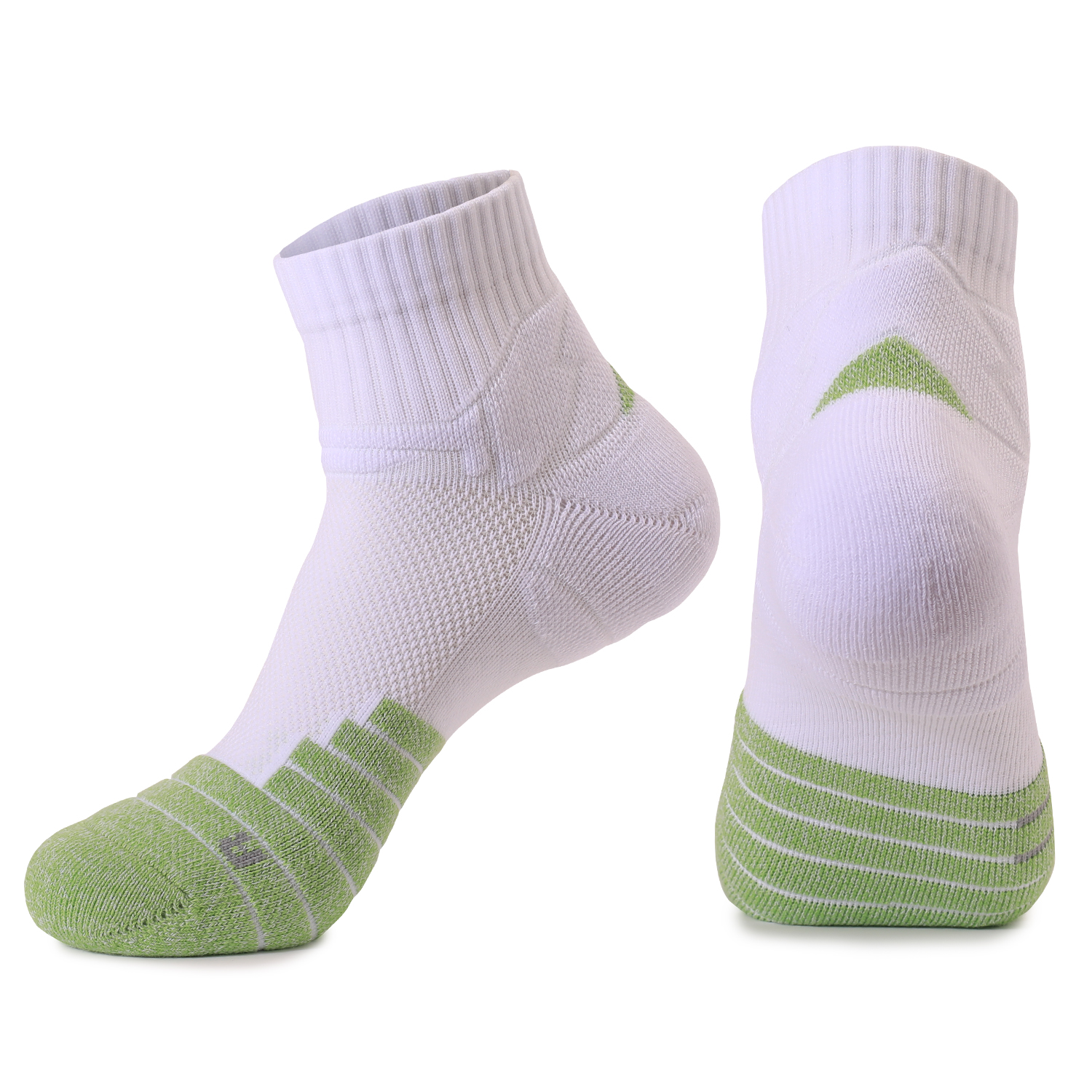
Most brands just pick a stock template and slap a logo on it, but a genuinely good tennis sock starts with the yarn blend. You want a high-nylon core with just enough cotton or modal on the surface for comfort—pure cotton breaks down fast from the constant lateral stops and toe drags. The real durability comes from nylon filament twisted around the elastic, not from adding more cotton. If the spec sheet doesn't list the denier of the nylon or the percentage of Lycra, it's probably a generic running sock rebranded for tennis.
Then you look at the construction zones. A quality OEM sock will have a true terry loop under the forefoot and heel, but reduced cushioning in the arch so the foot doesn't swim inside the shoe. The heel pocket needs extra reinforcement, usually a dense knit or a spliced-in panel, because that's where friction wins every set. Many cheap versions skip the separate toe seam and use a flat seam, which rubs against the pinky toe during a hard split-step. Ask for a hand-linked toe closure—it costs more but eliminates that blister point.
Finally, the fit engineering matters more than any fancy branding. A real tennis-specific sock has graduated compression starting at the midfoot and easing toward the calf, plus a ribbed ankle zone that stays put without digging in. Look for moisture-wicking channels knitted into the instep rather than a chemical coating that washes out after three cycles. If the factory can't show you a stretch test video or a wash durability report for the elastic, you're getting a cosmetic sock, not a performance one.
How to Vet a Factory Without Stepping Foot Overseas
Distance used to mean guesswork when choosing an overseas manufacturer. Today, a stack of digital tools and a skeptical mindset can get you remarkably close to the truth about a factory's capabilities, quality controls, and working conditions without buying a plane ticket. Start by requesting a live video walkthrough, not a polished promo reel. Ask the factory contact to walk the floor in real time, pause at specific stations, zoom in on machinery nameplates, and show the raw material storage area. Watch for hesitation, scripted answers, or a camera that conveniently avoids the back corners.
Cross-check everything they tell you against independent sources. Pull the factory's business license and export records from public databases or third-party verification platforms. Send samples for lab testing, but also ask for references from current clients in your industry, then contact those references directly and ask about defect rates, communication delays, and how the factory handled a past production crisis. A factory that hesitates to share client contacts or balks at a surprise video call is telling you something important.
Finally, use a local inspection partner for an unannounced audit. A respected third-party auditor can verify everything from fire exits and worker age documentation to the calibration stickers on measuring tools. Pair that with a small trial order that forces the factory to prove their processes under real conditions. The goal isn't perfect certainty, but enough layered evidence to make a confident sourcing decision from your desk.
The Real Cost Breakdown Behind Custom Tennis Socks
Most people assume the price of a custom tennis sock is mostly fabric and stitching. But once you order in smaller batches, the setup charges for knitting patterns, logo placement, and color matching eat into the margin quickly. A single design tweak before production can cost more than the yarn itself.
There's also the hidden labor of sampling. Brands often pay for multiple physical samples before approving the final pair, and those sample fees rarely disappear—they get folded into the per-unit price. Add in packaging, label compliance, and shipping from a specialty mill, and a $4 sock can easily land at $9 or $10 by the time it reaches the court.
The real difference comes from order size. Below 500 pairs, many factories charge a flat digitizing or plate fee per color per location, which doesn't scale down. So two-tone logos or gradient stripes can push the total cost up by 35% even though the material cost stays nearly flat. That's why some clubs end up paying premium prices for very ordinary-looking socks.
Design Details That Separate Pro-Level Socks from Basics
Look closely at how the yarn changes across the foot. Cheap basics knit the whole tube from one gauge, so pressure points flatten after a few washes. Pro-level versions switch to a denser, more elastic knit through the arch and ankle, while the instep gets a more open mesh. That shift isn’t random; it matches where your foot swells during a run or a long shift.
The toe seam is the fastest way to tell them apart. Basics fold the fabric over and leave a ridge that rubs against your smallest toes. Better designs close the toe with a flat, hand-linked seam or a seamless, virtually invisible join, then add a low-profile heel pocket that cups rather than wraps. You feel the difference the first time you slide your foot in, not after an hour.
Cushioning in pro socks follows the load path. Expect denser terry loops under the ball of the foot and heel, while the top of the foot stays thinner to avoid bunching. Some pairs also use a Y-shaped heel construction and an elastic band around the midfoot that keeps the sock from twisting. These are the details you won’t see on the shelf, but they show up in every step.
Minimum Order Quantities and Lead Times Nobody Explains
Most suppliers quote a minimum order quantity as if it’s a fixed rule, but the number often changes depending on who asks and when. A factory might tell one buyer five hundred units, then tell another buyer two thousand for the same product. The real reason is rarely about production cost alone; it’s about how much buffer the supplier wants for setup, material waste, and the risk of a new client walking away. If you accept the first number without pushing back, you’re leaving margin on the table.
Lead times are even murkier. A supplier may promise thirty days, but that’s usually just the production window after all materials have arrived and the deposit has cleared. It doesn’t include the days lost to sampling, color approvals, packaging tweaks, or the queue ahead of your order. Nobody explains that the clock often starts when the factory decides it starts, not when you send the purchase order. That gap is where most delays actually live.
Smart buyers treat both numbers as the opening position of a negotiation, not a contract. Ask what changes if you order slightly more or slightly less, and ask for the lead time broken into stages—material lead time, production lead time, and finishing. When suppliers can’t or won’t break it down, that’s a signal the schedule may already be optimistic. The best way to avoid surprises is to get those assumptions in writing before you commit.
Common Production Mistakes That Delay Your First Batch
Many teams treat the move from prototype to production as a simple matter of ordering more parts and renting a bigger space. But a bench build hides all the small workarounds that never made it into documentation: the connector that needed a dab of adhesive, the firmware flashed by hand, the bracket bent slightly to fit. Once those steps are handed to a contract manufacturer or a new technician, they fail in ways that only show up during final assembly. The rework and back-and-forth eat into the schedule far more than the original build ever did.
Another source of delay is waiting until the design is “finished” before checking compliance, certifications, or export rules. A material that worked perfectly in testing might not be allowed in the target market, or a power supply might pass electrical tests but fail the specific standard your retailer requires. Discovering this after tooling has been cut means either paying for a rushed redesign or shipping late while you sort out paperwork. The fix is boring but effective: lock the regulatory checklist at the same time you lock the BOM.
Change control is where many first batches quietly fall apart. A last-minute part substitution to save cost or fix an availability issue often doesn’t get communicated to every vendor, line worker, or quality inspector. You end up with mixed inventory, inconsistent units, and hours spent tracing which serial numbers have which components. None of these mistakes are glamorous, but each one can turn a planned two-week production run into a two-month recovery effort.
FAQ
OEM means a factory produces socks to your specifications—size gradients, cushioning zones, knit patterns, logo placement, yarn blends. You aren’t limited to stock colors or standard sizing. The factory uses its machinery and expertise, but the design and final product carry your brand identity.
A blend of combed cotton, nylon, and elastane usually performs well. Cotton handles moisture absorption, nylon adds durability in heel and toe zones, elastane keeps the sock from sliding during lateral stops. Some brands add polyester wicking panels or reinforced arch bands. Avoid 100% cotton for serious play; it loses shape and dries slowly.
It varies widely by factory. Small specialized mills may accept 300–500 pairs per design, while large manufacturers often require 1,000–2,000 pairs per colorway. If you need multiple sizes, that count is often split across the size run, so plan your size curve before quoting.
Start by shortlisting factories with sports sock experience, not just generic hosiery mills. Request physical samples with your target yarn weight. Negotiate the tech pack—stitch density, terry loops, cuff height. Then agree on a pre-production sample and only after approval move to bulk. Don’t skip a third-party inspection before shipment.
Yes, most factories offer poly bags, header cards, or boxed sets as separate services. You’ll need to supply dielines and confirm label dimensions early. Some mills also offer hang tags or woven logo bands inside the sock cuff, but these add lead time and tooling fees.
Beyond the per-pair price, watch for sampling fees (often credited later), mold or plate charges for logo knitting, testing fees for colorfastness, and freight cost jumps due to bulky packaging. Also budget for a 3–5% overrun or underrun allowance—many factories reserve that right in the contract.
If the factory has an existing sock mold that fits your needs, allow 30–45 days for sampling and another 30–40 days for production. Sea freight adds 20–35 days, so total is often 80–110 days. For a completely new knit structure, add three weeks for mold development.
Conclusion
A genuinely reliable OEM tennis sock starts with far more than a soft feel or a low quoted price. You have to dig into the fiber blends, the knitting density, and the durability of the heel and toe reinforcement, because these hidden details determine whether a sock survives a season of hard court slides or disintegrates after a few washes. Vetting a factory from your desk is entirely possible if you demand live video walkthroughs of the production floor, request unannounced sample pulls, and cross-check certifications with independent audit databases rather than trusting a sales rep's PDF. The real cost picture also demands scrutiny: the per-unit price you first receive rarely includes mold fees for custom logos, surcharges for special yarn colors, blister packaging, or the freight forwarding charges that quietly inflate your landed cost by twenty percent or more.
What separates a pro-level sock from a basic one is often invisible to a casual buyer—targeted compression zones around the arch, a seamless toe closure that prevents blistering, and moisture-wicking fibers that keep their shape after repeated tension. Minimum order quantities and lead times are rarely as rigid as factories claim; smaller runs are possible if you accept fewer colorways or reuse existing molds, but expect longer wait times because your order gets slotted between larger clients. The most common first-batch failures come from vague spec sheets, skipped wear-testing, and assuming the factory understands your market's sizing. Written confirmations of every material and stitch count, plus a pre-production sample you actually test on court, will save you from delayed shipments and costly rework.
Contact Us
Contact Person: Tiga
Email: [email protected]
Tel/WhatsApp: 8613058331729
Website: https://www.china-socksfactory.com/