
OEM Non-Woven Tote Bag: The Ultimate Custom Eco-Friendly Solution for Your Brand
2026-11-16
Your brand's first impression often starts with what people carry out the door. A custom non-woven tote bag does more than hold items—it puts your logo on shoulders, in hands, and along busy streets long after the sale. For businesses looking to stand out without harming the planet, OEM non-woven tote bags are a practical, eco-friendly blank canvas. At Top Packaging, we help you turn this everyday essential into a quiet but persistent ambassador for your brand. Whether you're planning a product launch, retail upgrade, or event giveaway, the right tote bag blends low-cost impact with genuine sustainability. Here's why this simple switch could become your smartest marketing decision yet.
The Non-Woven Tote Bag Feel: Lightweight, Sturdy, and Ready
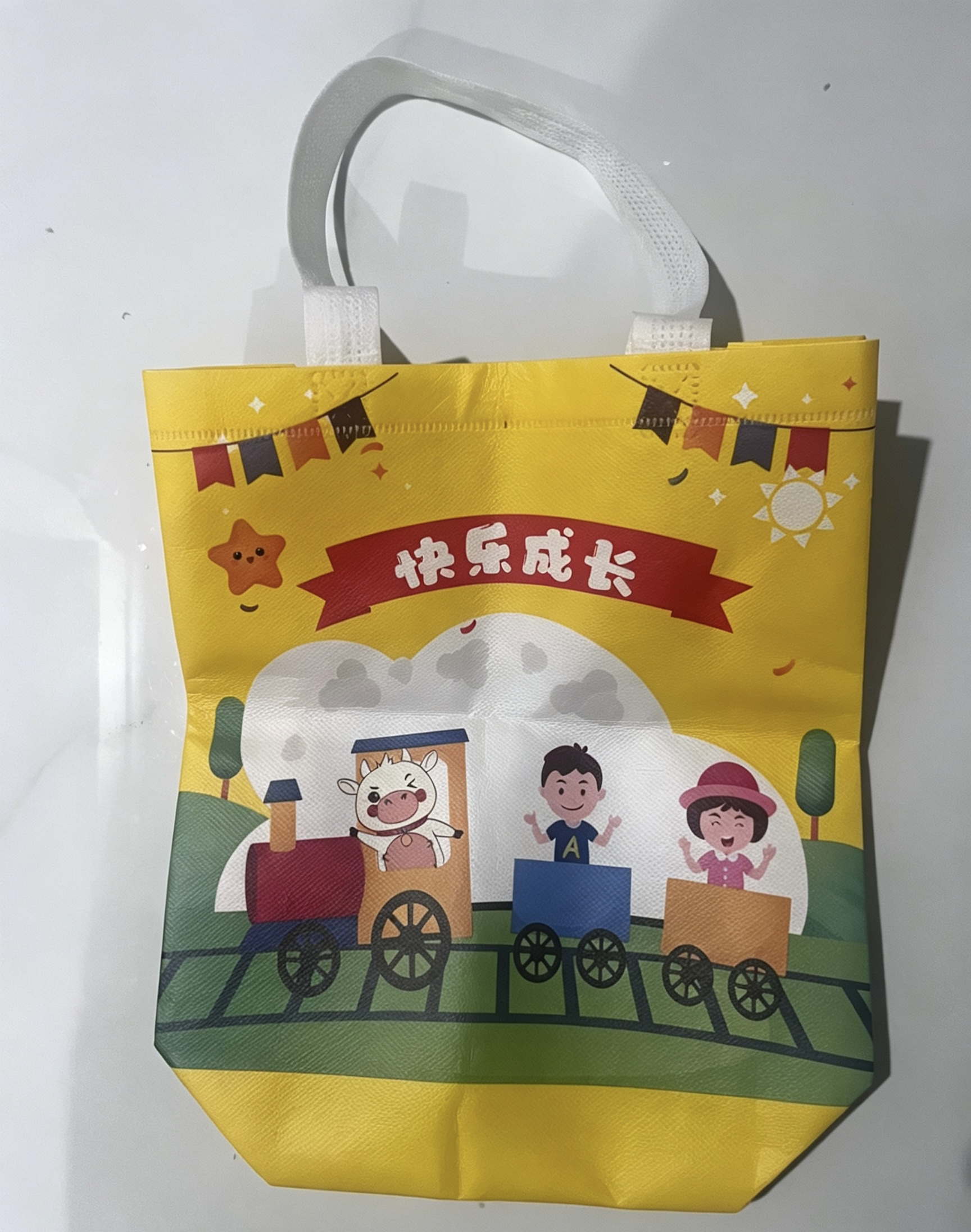
Run your hand across the fabric and you’ll notice it isn’t trying to imitate cotton or canvas. The fibers have a dry, slightly textured surface that feels more like thick paper than cloth. Despite that, there’s no stiffness left over from manufacturing—the bag folds flat without a fight, then regains its shape the moment you open it. It weighs almost nothing, yet the material has enough body that it doesn’t collapse into a shapeless heap when you set it down.
The sturdiness shows up in the details rather than in sheer weight. Handles are sewn deep into the side panels, so a loaded bag doesn’t pull at the stitching with every step. The bottom is reinforced enough to hold a few heavy cans or a stack of books without sagging. Even when something sharp inside presses against the wall, the non-woven layers resist punctures better than a flimsy plastic bag would.
What makes it feel ready is the lack of any break-in period. You don’t need to soften the handles or stretch the seams—it works the first time you sling it over your shoulder. It stays upright while you pack, wipes clean with a damp cloth, and hangs by the door without taking up space. That combination of lightness and toughness means you reach for it on a quick market run, a library stop, or a full day of errands without giving the bag a second thought.
Custom Branding That Doesn't Shout (But Gets Seen)
Most brands try to win attention by turning up the volume. The ones people actually remember tend to do the opposite. A debossed monogram on a matte sleeve, a single thread of contrast stitching inside a collar, a color that only appears when the light hits the edge of a business card—these details don't ask for your eyes. They earn them.
The trick is in the tension between restraint and intent. When every design choice has a reason, even a quiet mark becomes impossible to ignore. It's not about hiding your name. It's about placing it where only the curious will find it, then letting them feel like they discovered something worth keeping.
Eco-Conscious Without the Compromise
Sustainability often gets a bad rap for forcing trade-offs: scratchy fabrics, dull designs, or performance that fizzles after a few washes. We've never accepted that bargain. Every material we source, from GOTS-certified organic cotton to recycled nylon with a silky hand-feel, is chosen because it meets rigorous environmental standards while genuinely outperforming conventional alternatives. The result feels less like a sacrifice and more like a quiet upgrade you won't need to brag about.
The proof is in the details most brands skip. Our dyes are low-impact and non-toxic, yet they hold their depth after fifty cycles. Seams are reinforced to outlast trends, and packaging is plastic-free without being flimsy — because reducing waste shouldn't mean adding frustration. We test everything against real-life messes, commutes, and weekends away, not just lab conditions. If a sustainable option can't keep up, we keep looking until we find one that can.
That's the thing about true eco-consciousness: it doesn't announce itself with a beige palette or a lecture. It simply works better, lasts longer, and leaves a lighter footprint without asking you to think twice. Whether you're after a jacket that repels rain without PFAS or a tee that won't lose its shape, the compromise has already been engineered out.
From Grocery Runs to Commutes: A Bag for Every Day
The same bag that swallows a gallon of milk, a bunch of kale, and a box of cereal without bulging awkwardly is the one you grab for a 45-minute train ride. It doesn't switch personalities—it just has enough structure to stay upright in a shopping cart and enough softness to collapse against your hip on a crowded platform.
The trick is in the pockets. Not the over-engineered kind, but three or four that actually match how you move through a day: an outer slip for a phone and transit card, an inner zip for keys and lip balm, and a main compartment that opens wide enough to see the bottom. You stop doing the frantic pat-down at the checkout line.
Carry it by the top handles when it's heavy with groceries, switch to the crossbody strap when your hands are full with coffee and an umbrella. The fabric wipes clean after a leaky container of soup, and the base doesn't soak through when you set it down on wet pavement. That's the whole point—it's not a bag for special occasions. It's a bag for every ordinary, unglamorous, completely necessary day.
How Your Logo Lands on a Bag People Keep
A logo does not become part of someone's daily routine by accident. It starts with the bag itself: the weight of the cotton, the way the handles are stitched, the depth of the gusset. If the material feels thin or the print looks like it will crack after three grocery runs, the bag gets shoved in a closet and forgotten. But when a tote has a sturdy base and a print that flexes with the fabric, people reach for it again without thinking.
Placement matters more than size. A small, centered mark near the top seam reads as understated and easy to pair with any outfit, while a large front-and-center graphic can feel too loud for errands. The smartest approach is to let the logo sit quietly on a natural canvas tone, using a single ink color that softens after a few washes instead of peeling away. That slight fade is not damage; it is the bag becoming familiar.
The final test is repetition. A bag people keep is one they have already used to carry books, farmers' market finds, and maybe a damp swimsuit once or twice. The logo holds because the print method was chosen for the fabric's movement, and the stitching held through overloaded trips. By the time a stranger asks where they got that bag, the logo is no longer just a logo — it is part of an object with a small history.
OEM Simplicity: One Order, Zero Guesswork
What "one order" actually means is that nothing gets lost between your purchase order and the production floor. The same document that carries pricing and lead time also carries the full material spec, dimensional tolerances, and inspection criteria—no separate emails, no shared drives, no verbally confirmed changes.
Every revision is frozen at the moment of confirmation. If a tolerance shifts, it shifts for the entire run, and the change is visible to everyone who touches the job. That's the part most suppliers miss: the guesswork doesn't come from missing information, it comes from information that isn't tied to the order itself.
So when we say zero guesswork, we don't mean we're confident. We mean there's literally nothing left to interpret. You approve one version, and that version is what gets built, inspected, and shipped.
FAQ
They're made from spunbond polypropylene, which uses less energy to produce than cotton and can be recycled after a long service life. Unlike single-use plastic bags, they're meant to be reused hundreds of times, and many suppliers incorporate post-industrial recycled content.
You can choose everything from bag dimensions, handle length, and fabric weight (typically 60-120 GSM) to edge binding, pocket additions, and zipper closures. Colors are matched via Pantone, and even the stitching thread can be customized.
Screen printing is the most common and cost-effective for bold logos, while heat transfer suits full-color graphics on smaller runs. For a premium look, laminated non-woven bags accept offset printing with photo-realistic detail.
Yes, a standard 80 GSM bag easily carries 10-15 kg. Reinforced seams and cross-stitched handles prevent tearing, and the fabric resists water and mild abrasion, making it suitable for groceries, books, or gym gear.
Most factories start at 500 pieces, but some smaller workshops accept 200-300 pieces with a modest surcharge. If you need only a few dozen for a trial, consider blank stock bags with a small custom tag instead.
Absolutely. A pre-production sample with your exact fabric, color, and print is usually shipped within 5-7 days. There may be a sample fee, but it's often credited back when you confirm the bulk order.
Wipe with a damp cloth and mild soap; avoid machine washing as it can weaken the seams and fade screen-printed areas. Air dry away from direct sunlight to prevent the polypropylene from becoming brittle.
Conclusion
The first thing you notice about an OEM non-woven tote bag is the feel: it is light enough to fold and stash, yet sturdy enough to carry more than you expect. That balance makes it an easy everyday choice. When you add custom branding, the result is not a loud billboard but a quiet, repeated visual cue. The logo prints cleanly on the textured surface, showing up naturally in photos and in person without overpowering the bag's design. There is also a real eco-conscious benefit here, since these bags are made to be reused many times, reducing the need for single-use alternatives without compromising on durability or appearance.
This bag fits into all kinds of routines, from quick grocery runs to daily commutes and weekend errands. Because it is practical and comfortable to carry, people tend to keep it around, which means your brand stays visible long after the first use. The logo application method keeps colors sharp and resists cracking or fading, so the branding remains intact through countless trips. OEM simplicity ties it all together: you submit one order and the manufacturing, printing, and quality checks are handled for you. No back-and-forth over materials or confusing choices, just a finished product that aligns with your brand's values and gets used daily.
Contact Us
Contact Person: Shelly
Email: [email protected]
Tel/WhatsApp: 86-577-64286522
Website: https://www.topmovingpad.com/