
OEM Non Woven Geotextile Fabric Applications and Benefits You Need to Know
2026-09-16
Most people assume all non woven geotextiles are basically the same—until a project fails because the fabric wasn't engineered for the job. OEM options change that equation entirely. Whether you're stabilizing a road base, protecting a landfill liner, or managing stormwater, the ability to customize weight, strength, and permeability means you're not settling for "close enough." That's the kind of precision JInseed Geosynthetics Solution brings to the table, and it's why more contractors are making the switch. In this post, we'll break down the applications and benefits you actually need to know.
Not All Non Woven Fabrics Behave the Same in Wet Soil
Many growers assume any non woven fabric will perform the same once buried in damp ground, but that assumption falls apart quickly in the field. The structure of the fibers themselves dictates how water moves through the material and how long it holds up under constant moisture. Spunbond polypropylene, for example, tends to let water pass through its web more readily than a needle-punched fabric made from short staple fibers, which can trap water in its dense matrix. That difference alone changes how roots respond and how soil temperature fluctuates beneath the cover.
Wet soil introduces biological and chemical stresses that some non wovens shrug off and others cannot. A fabric with high UV stabilization but poor resistance to microbial breakdown might stay intact above ground yet start shredding after a few weeks under mulch. Meanwhile, a biodegradable non woven designed for short-term weed suppression can degrade so fast in saturated conditions that it loses all function before the crop is established. The way the fabric is bonded also matters: thermal bonding often survives moisture better than chemical binders, which can soften and release fibers into the soil.
Practical testing reveals that even two fabrics with the same gram weight can behave opposite ways in wet soil. One may wick moisture sideways and keep the soil surface dry, while the other forms a slick barrier that causes runoff and uneven wetting. Growers who switch from one type to another without accounting for these differences often see higher disease pressure, stunted roots, or unexpected weed breakthroughs. The only reliable approach is to test a small strip under actual field moisture conditions before committing to a whole season's layout.
Where OEM Geotextiles Replace Gravel Layers and Save Money
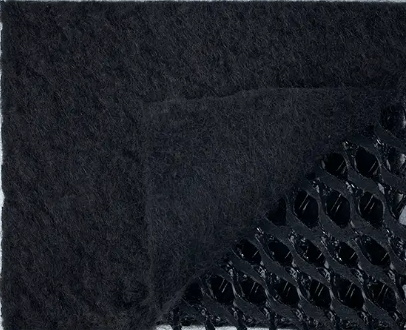
When site conditions rule out a conventional gravel drainage layer, OEM geotextiles step in as a lean, high-performance alternative. Instead of hauling in and spreading tons of crushed stone, crews can unroll a engineered fabric that separates soil from aggregate, filters fines, and lets water pass through at a controlled rate. This swap cuts material costs, reduces truck traffic, and eliminates the need for compacting multiple lifts of gravel. On soft subgrades or tight urban sites, it also spares the project from over-excavation and the recurring expense of replacing a clogged stone blanket.
The long-term savings show up in maintenance budgets too. A geotextile layer keeps subgrade fines from migrating upward into the base course, preserving the structural integrity of pavements, roadways, or foundation pads. Without that separator, gravel layers often become contaminated within a few seasons, forcing crews to dig out and reinstall the entire drainage system. By substituting a single roll of OEM geotextile for what used to be a full gravel section, owners see lower initial outlay and fewer repairs down the line, while still meeting the same hydraulic and separation performance requirements.
Designers who specify geotextiles over gravel also gain flexibility in demanding environments. Slopes, retaining walls, and landfill caps often need a drainage layer that won't shift under its own weight or require heavy equipment to place. An OEM geotextile can be anchored quickly, conforms to uneven terrain, and works in rain or dry conditions without the same weather delays that plague aggregate placement. The result is a faster, cleaner installation that frees up money for other critical components of the project.
The Quiet Role of Geotextiles in Road Longevity
Most drivers never see the layer of synthetic fabric laid beneath the asphalt, yet it quietly determines whether a road will crack after three winters or hold its shape for decades. Geotextiles work at the interface between aggregate base and subgrade, keeping fine soil particles from pumping upward under traffic loads. Without that separation, the stone loses its interlock, rutting follows, and the pavement surface starts to fail long before its design life ends.
Their second job is drainage. Woven and nonwoven geotextiles let water pass through while holding back soil, which prevents saturated pockets from forming under the wheel path. In freeze-thaw climates this matters more than design charts tend to show, because trapped moisture expands and heaves the road from below. A geotextile that functions as a filter can keep the base dry enough to resist that cycle season after season.
There is also a reinforcing effect that gets less attention. High-strength geotextiles, sometimes called stabilization fabrics, spread wheel loads over a wider area and add tensile strength to the base layer. This allows thinner aggregate sections on weak subgrades, cutting material cost and truck trips. It is not glamorous work, but roads that last quietly depend on fabric doing its job out of sight.
Matching Pore Size and Weight to Real Site Conditions
Real site conditions rarely line up with generic product specs, so pore size and fabric weight need to be read together, not picked from a chart. Fine silts and clays call for smaller openings to keep particles from migrating, while coarse sands and gravels can tolerate larger pores that let water move faster. Weight, usually measured in ounces per square yard, affects tear resistance during backfill and long-term stability under traffic, but heavier is not automatically better if the fabric only needs to act as a light filter.
Start with what the ground actually does: check soil texture, how quickly water pools or drains, and whether equipment will drive over the area. Behind a retaining wall with silty backfill, a nonwoven fabric with a modest apparent opening size and medium weight holds soil back while still releasing pore pressure. Under a gravel driveway over sandy subgrade, a heavier woven geotextile with larger pores keeps the layers separate without clogging, because the coarse soil does not need fine filtration.
Avoid assuming the same product will work across a whole site. Two fabrics with identical weight can have very different pore structures, and a slope that stays stable in dry weather may fail after heavy rain if the fabric cannot pass water quickly enough. Installing a small test strip before the full job often shows whether the chosen pore size and weight actually match the drainage and load conditions on that exact ground.
Why Contractors Rethink Generic Fabric After the First Failure
Cheap woven polypropylene sheets look identical on the shelf, but once they’re under a gravel driveway or behind a retaining wall, the differences show up fast. Tears from sharp aggregate, clogged pores that turn drainage into pudding, and seams that pull apart under modest tension are common first-year complaints. Contractors learn that a roll’s low price means little when the fix requires pulling up base rock and starting over.
That first failure usually rewrites the buying checklist. Instead of matching a spec by weight alone, crews start asking about puncture resistance, flow rates, and UV stability before the fabric ever leaves the yard. They also pay more attention to installation: lapping seams correctly, avoiding dragging the fabric over broken stone, and keeping it covered before the sun breaks down the fibers.
The shift isn’t about brand loyalty or hype; it’s about labor cost. Every failed wrap or underperforming separation layer burns hours that no one bills back. Once a contractor has torn out one failed section, generic fabric stops being a material savings and starts looking like a liability.
A Practical Look at Filtration, Separation, and Reinforcement
Filtration rarely gets the credit it deserves. In most process lines, it sits quietly between the messy input and the polished output, catching what nobody wants to think about—fines, gels, broken fibers, stray agglomerates. A practical view starts with the mesh or media itself: not just the nominal micron rating, but how it behaves when pressure spikes, when viscosity shifts mid-run, or when a batch runs longer than planned. Real operators learn to read the pressure drop curve the way a mechanic listens to an engine. A sudden climb doesn't always mean blinding; sometimes it signals a change in particle shape or a polymer that's starting to cross-link earlier than expected.
Separation often gets lumped with filtration, but the two solve different problems. Filtration stops particles based on size; separation handles differences in density, phase, or surface chemistry. Think of a decanter centrifuge pulling clarified liquid off a dense sludge, or a hydrocyclone splitting a slurry by specific gravity. The practical angle is rarely about choosing the fanciest unit—it's about matching residence time, temperature, and feed consistency to the separation mechanism. Many a well-designed system underperforms because the upstream feed changes seasonally, or because operators never tuned the backpressure valve after a pipe reroute.
Reinforcement is the quiet partner. In filter media, reinforcement prevents blinding, extends bag life, and keeps pleats from collapsing under differential pressure. In structural terms, it might be a backing mesh behind a fine membrane, or a scrim layer inside a nonwoven depth filter. The practical question isn't whether to reinforce, but where and how much. Too little reinforcement and the media tears or sags; too much and you've added flow resistance and cost for no gain. The best designs make the reinforcement disappear into the function—you only notice it's there when someone swaps in a cheaper version and the whole line's runtime drops by a third.
FAQ
An OEM non woven geotextile is manufactured to your specific project requirements rather than pulled from generic stock. You can dictate everything from fiber type and weight to puncture resistance and roll dimensions. This matters because a road base separation layer might need very different specs than a landfill drainage blanket, and custom fabrication ensures the fabric actually matches the loads, soil conditions, and hydraulic demands on site.
You'll see them under access roads and haul roads to keep aggregate from punching into soft subgrade, in French drains and trench drains as a filter around perforated pipe, behind retaining walls to stop soil migration while letting water escape, and beneath riprap or erosion control mats along shorelines. Landfill cells also use them as cushion layers to protect geomembrane liners from punctures.
Non wovens generally offer much higher flow rates and better soil retention simultaneously. The needle-punched or heat-bonded structure creates a maze of tiny openings that let water pass easily while holding back fine particles, which prevents clogging over time. Woven fabrics tend to have larger, uniform openings that can either blind off quickly or let too much sediment through. For any job where water movement matters more than tensile strength, non woven is usually the safer bet.
Custom specs eliminate the habit of overbuying a heavier fabric just to be safe, which wastes money and can slow installation. You also avoid the opposite problem of underspecifying and dealing with tears or clogging later. The right OEM partner will ask about soil gradation, expected flow rates, installation stresses, and UV exposure, then tailor the fabric so every parameter works together. That leads to fewer callbacks, less material waste, and a longer service life.
Check whether they have in-house testing for grab tensile, puncture resistance, apparent opening size, and permittivity, not just a spec sheet copied from somewhere else. Ask about their fiber sourcing and whether they can provide batch-level test reports. A supplier who asks detailed questions about your site conditions before quoting is a good sign. Also confirm lead times and whether they can handle custom roll widths or lengths without huge minimum order quantities.
Absolutely. They often serve as a separation layer between contaminated soil and clean fill, as a filter around leachate collection pipes, or as a protective cushion over geomembranes in capping systems. In wetland restoration, non wovens can help stabilize sediment while allowing native vegetation to root through. The key is choosing a fabric with chemical resistance appropriate for the contaminants present, and specifying a permittivity that won't clog with fine silts or chemical precipitates.
The biggest one is focusing only on weight per square yard and ignoring hydraulic properties. A 8 oz fabric and a 6 oz fabric can have almost identical flow rates, or the heavier one might be worse for drainage if it's too dense. Another mistake is underrating installation stresses, especially in rocky subgrades or where construction traffic will run directly on the fabric before aggregate placement. And many people forget about UV exposure during staging, which can degrade unprotected polypropylene within weeks if left uncovered.
Request accelerated aging data or case studies from similar projects, and match the polymer type to the environment. Polypropylene is fine for most neutral pH soils, but polyester may hold up better in highly alkaline conditions. Make sure the fabric's apparent opening size is compatible with the surrounding soil to prevent internal clogging. Finally, require the supplier to provide certified test results for each production run, not just a generic brochure, so you can verify the delivered rolls actually match what you specified.
Conclusion
The assumption that any nonwoven fabric will perform equally in wet ground falls apart quickly on a jobsite. Soil moisture changes how fibers hold their structure, how water moves through the mat, and how much fine material gets trapped or passes. A fabric that works in sandy, free-draining conditions can clog or tear in silty, saturated soil. This is why matching pore size and weight to the actual site matters more than grabbing whatever roll is cheapest. Contractors often discover this after a generic fabric fails under load or lets soil migrate, leading to rutting, pumping, or loss of base stone. Once that happens, they start asking for OEM geotextiles built around a specific set of site conditions—thicker where reinforcement is needed, more open where drainage is critical. That shift from one-size-fits-all to purpose-made fabric is not about brand loyalty; it is about avoiding the cost of digging out and redoing a failed layer.
Replacing gravel layers with a properly chosen nonwoven geotextile can cut material and hauling expenses without sacrificing performance. The fabric takes over separation and filtration duties, preventing subgrade soil from mixing into the stone base while still letting water drain. Over time, this quiet contribution extends road life by keeping the aggregate clean and load-bearing. In many projects, a single layer of heavy nonwoven fabric can substitute for several inches of crushed rock that would otherwise be imported, spread, and compacted. Filtration, separation, and reinforcement are not separate tasks once the fabric is selected with the right permeability and tensile strength. The result is a road or pad that holds its shape longer, needs less maintenance, and costs less to build. That practical combination of benefits is what makes OEM nonwoven geotextiles a quiet but essential part of many civil and site development projects.
Contact Us
Contact Person: Jerry Qiu
Email: [email protected]
Tel/WhatsApp: +65 84265294
Website: https://www.jinseed-geo.com