
Landing Craft Barge Factory: Engineering the Future of Heavy-Lift Marine Transport
2026-06-15
When the world’s most ambitious offshore projects call for moving colossal loads across unpredictable seas, ordinary vessels fall short. That’s where the next generation of heavy-lift transport takes shape: at Allheart's landing craft barge factory, engineering muscle meets maritime ingenuity. Every weld, every design tweak is driven by a single purpose—reliably delivering the immense, no matter the conditions. Dive in as we explore how this facility is quietly reshaping marine logistics from the ground up.
Crafting Giants: Inside Our Purpose-Built Manufacturing Hub
Step inside a space where raw materials meet relentless innovation. Our manufacturing hub isn’t just a factory—it’s a purposefully engineered ecosystem designed to turn ambitious concepts into towering realities. Every square foot is calibrated for precision, from the reinforced foundations capable of supporting massive assemblies to the overhead cranes that glide with millimeter accuracy. Here, scale isn’t a challenge; it’s the starting point.
What truly sets this facility apart is the seamless fusion of human expertise and automated mastery. Veteran craftsmen work side-by-side with intelligent robotics, each amplifying the other’s strengths. Collaborative robots handle repeatable mega-tasks without fatigue, while our engineers focus on the subtle details that machines can’t replicate—like the perfectly faired weld or a finish that catches light just right. It’s a symphony of skill and circuitry, all orchestrated under one massive roof.
Beyond the machinery, the hub breathes adaptability. Modular workstations reconfigure overnight to accommodate sudden design pivots. Climate-controlled curing bays ensure materials behave predictably, even when prototypes push known boundaries. We don’t believe in off-the-shelf limitations. Instead, we built a place where custom jigs, bespoke tooling, and unorthodox problem-solving are the daily norm. This is where giants aren’t just made—they’re mastered.
Redefining Capacity: Next-Gen Hull Designs for Extreme Loads
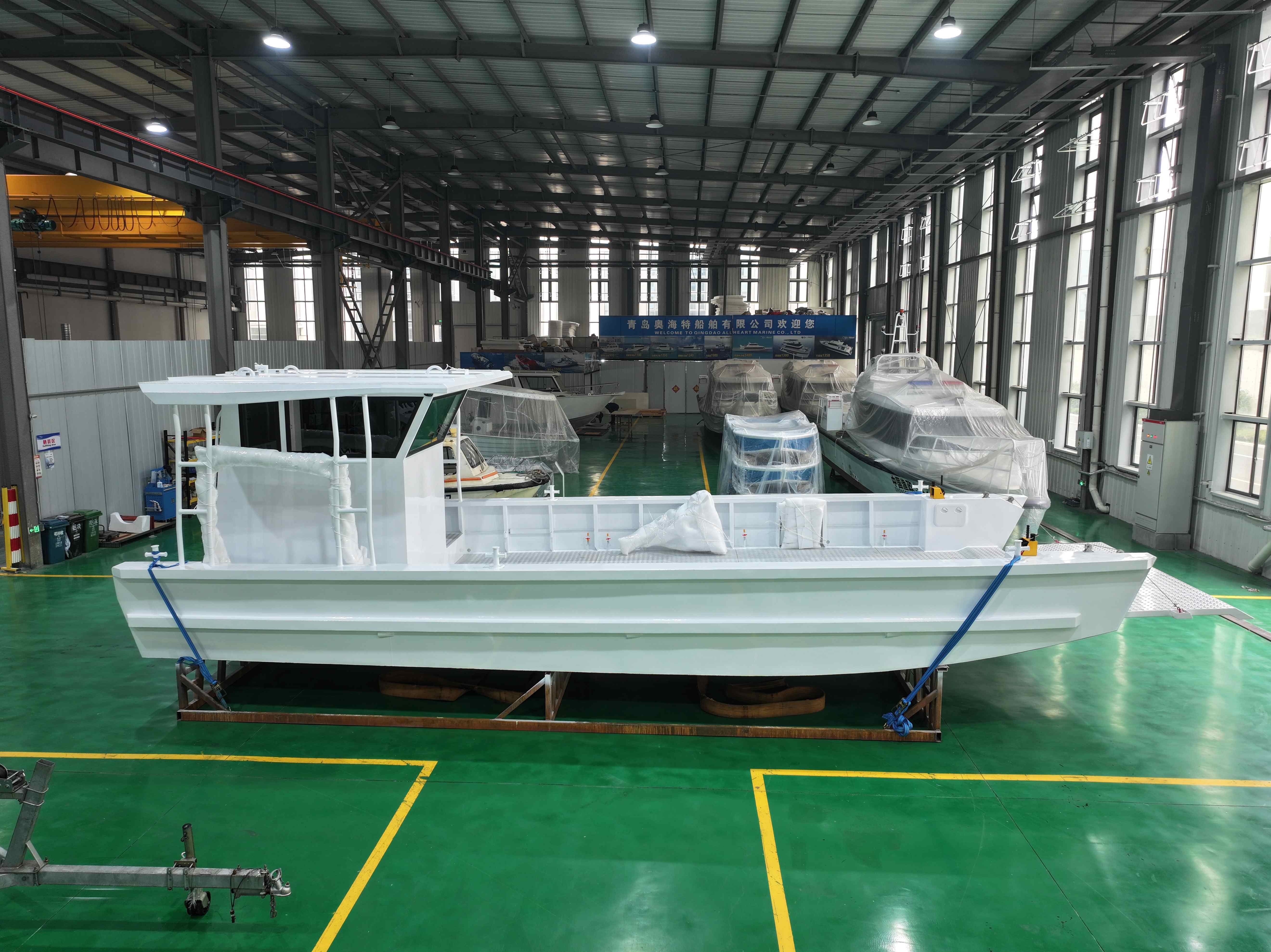
The relentless push for greater cargo volumes and operational efficiency has forced shipbuilders to rethink the very core of marine architecture. Contemporary hull designs, born from advanced computational fluid dynamics and real-world stress testing, now challenge centuries-old assumptions about structural limits. Instead of merely scaling up traditional forms, engineers are exploring biomimetic geometries—shapes that echo the load-bearing efficiency of natural structures like whale ribs or turtle shells. This shift doesn’t just add capacity; it fundamentally alters how hulls distribute the immense forces encountered during heavy weather or ice navigation, reducing peak stress moments and extending fatigue life.
A key breakthrough lies in hybrid framing systems that blend rigid core sections with strategically flexible zones. By allowing controlled deformation under extreme bending moments, these designs prevent localized failures that once plagued super-sized vessels. Materials play an equal role: advanced high-tensile steels, coupled with composite patches in stress-prone areas, create a hull that can absorb sudden shocks—like slamming into a rogue wave—without compromising watertight integrity. The result is a platform that can carry heavier payloads while maintaining, or even improving, safety margins. Some next-gen concepts even incorporate sensor-embedded skins that actively monitor strain, enabling crews to optimize loading in real time.
What truly sets these designs apart is their adaptability to very different operational profiles. A hull crafted for a mega-containership must handle massive static loads and torsional twists from stacked containers, while an Arctic LNG carrier needs to withstand ice-induced dynamic pressures. Modern engineering platforms run thousands of multi-physics simulations to balance these requirements, creating hulls that morph certain characteristics—like bow flare angle or double-bottom depth—based on the route and cargo type. This isn’t a one-size-fits-all evolution; it’s a tailored response that redefines what capacity means, shifting from sheer volume to a smarter, safer, and more resilient cargo envelope.
Precision Meets Power: The Engineering Behind Every Weld
Every seamless joint conceals a tense dialogue between micron-level finesse and raw kinetic energy. It’s a discipline where thermal dynamics, metallurgy, and control systems converge—a stray half-degree or mistimed pulse can unravel months of design intent. Here, the arc doesn’t simply fuse metal; it negotiates a truce between structural ambition and physical limits, guided by algorithms that learn from each molten pool.
Beneath the shower of sparks lies a choreography of real-time sensing. Lasers profile the seam mid-flight, magnetic arcs adjust to filler-wire resistance, and cooling rates are orchestrated to preserve grain structure—all while the process shrugs off factory-floor voltage swings. This is not brute force; it’s calculated aggression, where power is delivered in precise, modulated bursts to keep distortion within a human hair’s width.
The outcome reads like a contradiction: welds that are both tougher and more ductile than the parent materials they join. From earthquake-resistant skyscraper cores to vacuum-tight battery enclosures, these engineered bonds embed the logic of fracture mechanics into every bead. When precision genuinely partners with power, the weld becomes an argument for why something holds—and a quiet guarantee that it will, long after the blueprints yellow.
From Blueprint to Breakwater: Seamless Project Lifecycle
A breakwater begins long before the first boulder touches the sea. Initial feasibility studies blend site-specific metocean data with geotechnical surveys, shaping a concept robust enough to handle storm surges and tidal extremes. Hand sketches evolve into detailed 3D models as coastal engineers iterate on armour unit placement and toe stability, ensuring every layer—core, filter, underlayer—works together without over-designing.
The transition from design to construction hinges on a carefully synchronized procurement and staging plan. Quarried stone must match precise gradation curves, while concrete accropodes or tetrapods are cast under tight quality control. On-site, load‑out schedules align with favourable weather windows, and experienced operators place units using differential GPS and acoustic positioning. Adjustments happen in real time: a slight shift in orientation can improve interlocking and dissipate wave energy more effectively than the original drawings anticipated.
Even after the final armor stone settles, the lifecycle continues through structured monitoring and adaptive maintenance. Underwater inspections, settlement gauges, and drone surveys feed data back into digital twins, allowing owners to predict wear patterns and schedule targeted repairs before minor abrasion becomes a structural concern. This feedback loop turns each breakwater into a living asset, one that quietly absorbs lessons from every winter storm and remains resilient for decades beyond its initial handover.
Navigational Intelligence: Smart Systems for Safer Heavy Lifts
Modern heavy lifting operations demand more than raw power—they require a level of spatial awareness that was once solely the domain of experienced operators. Navigational intelligence refers to the fusion of sensory inputs and algorithmic decision-making that allows lifting systems to perceive their environment, interpret subtle cues, and adjust trajectories in real time. Through a combination of inertial measurement units, load moment indicators, and proximity sensors, these smart systems build a dynamic map of the work area. They can detect unmarked obstacles, account for shifting center of gravity, and even compensate for wind gusts that might otherwise go unnoticed until it’s too late. The result is a layer of situational intelligence that turns a standard lift into an adaptive response, reducing the cognitive burden on human operators and creating a safer margin for error.
Beyond individual lifts, this intelligence extends to fleet-level coordination, where multiple cranes or hoists communicate via decentralized networks to orchestrate complex picks without collision. Each machine shares its intended motion envelope, and the collective logic ranks potential conflicts, automatically sequencing movements to maintain safe separations. This becomes particularly critical on congested job sites where overlapping boom radii and load transit paths present constant risks. The system’s ability to re-plan on the fly—whether due to a sudden radio blackout or an unexpected personnel movement into a restricted zone—mirrors the kind of instinctive recalibration a veteran operator brings, but with faster reaction times and without fatigue. Such orchestrated awareness turns a chaotic site into a choreographed operation, where safety isn’t just monitored but actively engineered.
The true differentiator of navigational intelligence lies in its capacity to learn from past lifts, using historical data to refine predictions and alert thresholds. Edge computing units on the lifting equipment process sensor data locally, recognizing patterns that might precede equipment drift or instability. Over time, the system develops a nuanced understanding of its own operational envelope, flagging anomalies that human oversight might miss. This silent accumulation of insights transforms each project into a source of continuous improvement, making heavy lifts not only safer but progressively smarter. The technology fades into the background, letting crews focus on craft while an invisible backbone of certainty underpins every move.
Beyond Limits: How We’re Shaping Global Marine Logistics
It starts with rethinking what a shipping route can be. We're no longer content just connecting ports—we're designing dynamic pathways that adapt to weather, congestion, and demand in real time. By layering predictive analytics onto traditional navigation, we turn oceans into flexible corridors. This isn't just about moving goods faster; it's about treating the sea as a living system, one that rewards those who listen to its rhythms.
Beneath the surface, our approach to collaboration is quiet but relentless. We've woven together a partnership fabric that links harbors, trucking fleets, and last-mile networks into a single, breathing entity. Data flows freely, decisions happen at the edge, and delays become vanishingly rare. The result? A chain so tight it feels less like logistics and more like instinct.
We're also pushing past the expected boundaries of responsibility. Greener fuels, quieter engines, ports designed to coexist with coastal ecosystems—these aren't checkboxes for us. They're the baseline. Because when you shape global marine logistics with a longer horizon in mind, the limits you break aren't just your own. They're the ones that held an entire industry back.
FAQ
A landing craft barge is a specialized flat-bottomed vessel with a bow ramp that allows cargo and heavy equipment to be driven on and off directly onto a beach or unprepared shore. Unlike traditional barges that rely on docks or cranes for loading and unloading, these self-contained units can operate in austere environments without fixed port infrastructure, making them vital for remote logistics and construction projects.
A dedicated factory centralizes the entire build process under one roof, allowing for stringent quality control, streamlined assembly, and synchronized supply chains. It becomes a hub for innovation, where naval architects and engineers can constantly refine hull designs, ramp mechanisms, and propulsion systems based on real-world feedback, rather than relying on scattered third-party yards.
The factory integrates modular construction techniques, advanced welding automation, and high-strength but lighter steel alloys to create vessels that can carry heavier payloads at lower fuel consumption. It pioneers digital twin simulations to test ballast systems and structural integrity under extreme conditions before a single plate is cut, dramatically reducing trial-and-error and enabling rapid customization for emerging markets like offshore wind and disaster relief.
Key features include an extended and reinforced flat deck with uniform load distribution, a hydraulically operated bow door that doubles as a ramp able to bear tracked vehicles, and internal ballast tanks that can trim the vessel for beaching or floating off cargo. Many designs also offer spud legs for stability during offloading and shallow-draft hulls that let them approach areas other heavy transport simply cannot reach.
Absolutely. Their shallow draft is engineered specifically for minimal water depth, allowing them to nose onto beaches or riverbanks. The ability to use dynamic positioning or simple mooring in areas without infrastructure, combined with rugged construction that withstands grounding, makes them indispensable for Arctic logistics, jungle rivers, and isolated island construction projects.
Beyond using eco-friendly hull coatings that reduce drag and biofouling, the factory employs closed-loop water recycling in steel cutting, energy-efficient LED lighting throughout fabrication halls, and hybrid-electric ready propulsion designs. All scrap metal is sorted and returned to smelters, and new building methods reduce weld consumable waste by up to 20% compared to conventional shipbuilding.
They routinely move pre-assembled bridge sections, full-sized excavators, modular housing units, wind turbine blades and tower segments, military tanks and trucks, and even entire mobile hospital units. The deck space and weight capacity allow for out-of-gauge cargo that would otherwise need disassembly for container shipping, shaving months off project timelines.
New generations of high-tensile steel reduce hull weight while increasing yield strength, and composite fiber-reinforced polymer inserts are being tested in ramp hinges to handle repeated heavy rolling loads without fatigue. Integrated structural health monitoring systems, with embedded fiber optic sensors, give real-time stress data to crews, enabling predictive maintenance and safer operations in heavy sea states.
Conclusion
At the heart of our operations lies a purpose-built manufacturing hub where raw steel is transformed into the world’s most capable landing craft barges. Every stage, from initial cutting to final assembly, is executed under one roof, enabling us to maintain meticulous control over quality and timelines. Our engineering teams push the boundaries of naval architecture with next-generation hull designs that withstand extreme loads without sacrificing maneuverability or fuel efficiency. This isn’t just about building bigger vessels; it’s about rethinking structural integrity from the keel up, using advanced simulation and material science to create platforms that handle the heaviest lifts in the harshest marine environments. The precision poured into every weld is a testament to our belief that true strength lies in the details—our certified craftsmen and robotic systems work in tandem, subjecting each joint to rigorous testing because when you’re transporting multi-thousand-ton modules, there’s no margin for error.
What truly sets our approach apart is the seamless integration of multidisciplinary expertise, harmonizing the entire project lifecycle from concept to commissioning. Our teams navigate complex regulatory landscapes and logistical constraints so that owners experience a smooth journey from blueprint to breakwater. Embedded within our barges are smart navigational intelligence systems that bring unprecedented situational awareness to heavy-lift operations, reducing risk through real-time monitoring and dynamic positioning. This blend of brute mechanical power and digital finesse reflects how we are reshaping global marine logistics—not simply by delivering vessels, but by engineering solutions that unlock new possibilities for offshore construction, salvage, and intercontinental heavy transport. Where others see limits, we see blueprints for the next frontier.
Contact Us
Contact Person: Benny Hu
Email: [email protected]
Tel/WhatsApp: +8618354225697
Website: https://www.allheartmarine.com/