

How China Air Compressor Manufacturers Are Redefining Industrial Efficiency
2026-07-10
Industrial efficiency is no longer just about cutting costs—it's about smart innovation. Across global factories, a quiet revolution is unfolding as Chinese air compressor makers push boundaries once dominated by legacy brands. With advanced engineering and data-driven design, companies like Seize Air are turning compressed air systems into strategic assets that slash energy waste and boost uptime. What's driving this shift, and why are savvy plant managers taking notice? In this post, we unpack the trends reshaping the industry and reveal how modern compressors are rewriting the rules of productivity.
The Technology Shift Driving Smarter Air Compression
In modern industrial settings, air compression systems are no longer standalone workhorses—they are evolving into intelligent, interconnected nodes within a broader digital ecosystem. The shift from reactive maintenance to predictive analytics is redefining operational efficiency. By embedding sensors and leveraging real-time data streams, these systems can now self-monitor pressure fluctuations, temperature variations, and energy consumption patterns, allowing them to adjust their output dynamically rather than running at a constant, wasteful pace. This intelligent orchestration not only reduces unplanned downtime but also extends equipment life, turning once-basic machinery into self-optimizing assets that actively contribute to a facility’s bottom line.
Variable-speed drive technology has been a pivotal advancement, replacing the fixed-speed motors that once dominated the market. By precisely matching motor speed to air demand, these drives eliminate the energy spikes typical of load/unload cycling. Combined with advanced control algorithms, they can learn a facility’s usage rhythms over time, preempting peak demands while coasting efficiently during lulls. This marriage of hardware intelligence and operational data ensures that every cubic meter of compressed air is generated at the lowest possible energy cost, a critical consideration given that energy accounts for the majority of a compressor’s lifecycle expenses.
Cloud connectivity and data visualization dashboards are finally giving plant managers a clear, real-time window into compressed air networks that were once opaque. Anomalies are flagged instantly, performance trends are charted transparently, and remote diagnostics become feasible—transforming how service teams respond to emerging issues. This transparency fosters a proactive culture where adjustments are made before small inefficiencies cascade into major failures. As systems become more modular and software-driven, the traditional boundaries of air compression dissolve, merging it into a facility-wide conversation about sustainability, resilience, and intelligent resource management.
Energy Efficiency at the Core of Modern Manufacturing
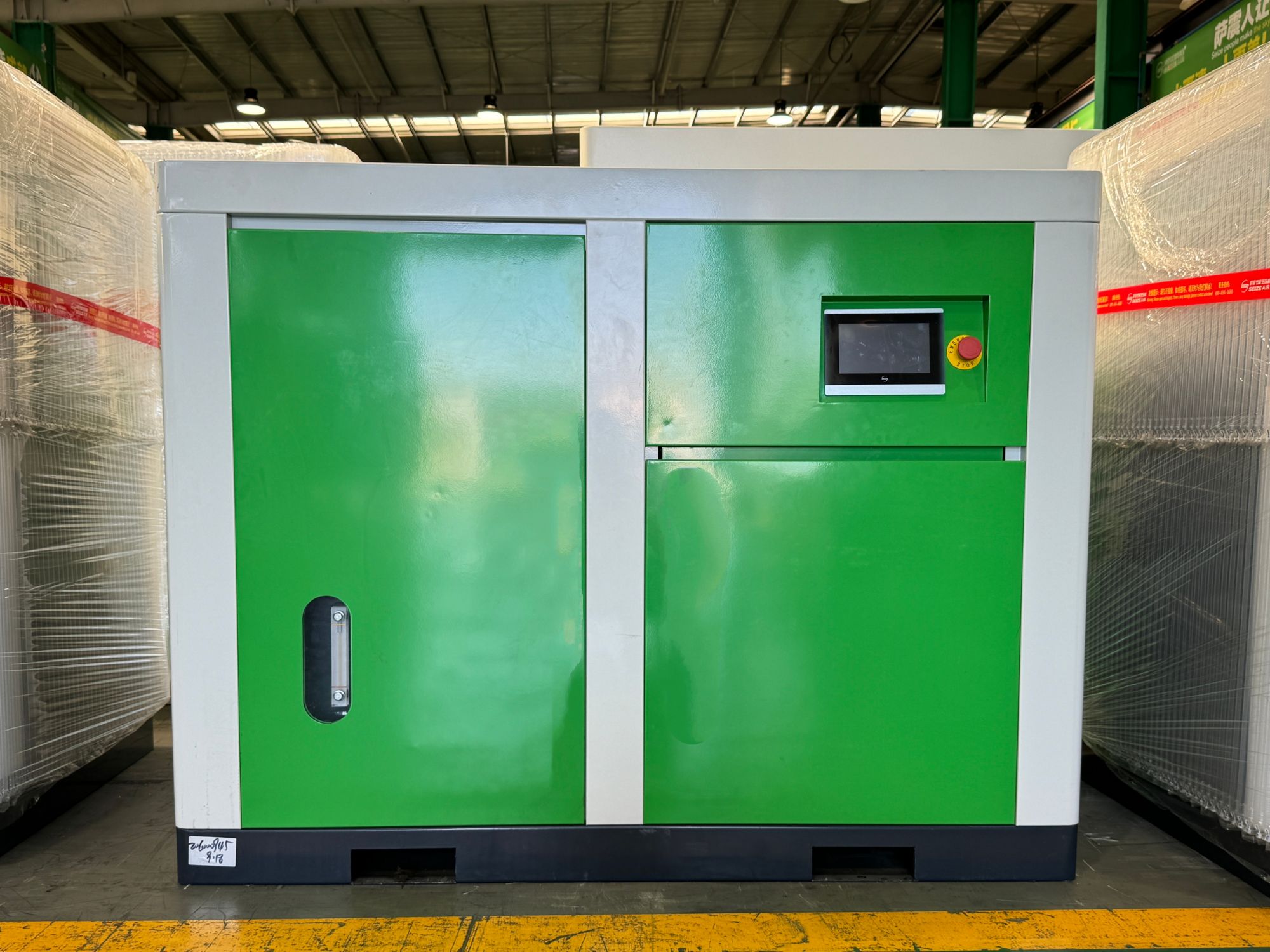
For decades, energy consumption was treated as a fixed operational cost—something to track but rarely to challenge. That mindset has shifted dramatically. Today, forward-thinking manufacturers treat energy efficiency not as a compliance checkbox but as a direct lever for competitiveness. When a production line trims its kilowatt-hours per unit, the savings cascade through the entire value chain: lower utility spend frees capital for R&D, stabilizes margins during market dips, and even opens the door to premium contracts with environmentally conscious buyers.
What makes this shift tangible is the granularity of modern monitoring. Sensors now track energy use down to individual motors, pumps, and heating elements, generating real-time profiles that reveal hidden waste—a compressor cycling unnecessarily, a idling conveyor belt, or a peak-time surcharge that could be avoided with smarter scheduling. Armed with that data, plant managers don't just cut usage; they reshape processes. One automotive parts supplier, for example, rescheduled its powder-coating ovens to run overnight at off-peak rates, slashing energy bills by a fifth without touching productivity.
The ripple effects go well beyond the balance sheet. Smarter energy use often means less strain on equipment, which extends asset life and reduces maintenance downtime. It also positions manufacturers to integrate on-site renewables and battery storage with confidence, knowing exactly when and where power is drawn. In a landscape where raw material costs swing unpredictably and regulations tighten, energy efficiency has become the quiet backbone of resilient, future-ready operations—something no complex factory can afford to ignore.
How Smart Controls Are Minimizing Downtime
Unexpected equipment failures can throw entire operations into chaos, but smart control systems are changing that. By continuously monitoring temperature, vibration, and pressure, these systems learn normal behavior and flag deviations before they cause a breakdown. Instead of waiting for something to break, teams get an early heads-up that lets them intervene during planned pauses, not at the worst possible moment.
What really sets smart controls apart is their ability to adjust on the fly. When a sensor picks up signs that a component is straining, the system can automatically reduce load or reroute processes to keep things running. It’s not just prediction—it’s active problem-solving that keeps downtime from ever starting.
The shift in maintenance planning is striking. Rather than following rigid schedules, smart controls guide technicians toward the repairs that actually need attention, based on real wear and tear. This means fewer unnecessary checks and far fewer surprises. The result is machinery that runs longer, more reliably, with minimal disruption.
Custom Engineering for Complex Industrial Needs
Every industrial challenge comes with a unique set of constraints—tight spaces, extreme environments, or unconventional materials. Off-the-shelf solutions rarely align perfectly. That’s where bespoke engineering steps in, crafting systems that fit like they were always meant to be there. It’s not just about tweaking a standard design; it’s about rethinking the approach from the ground up, ensuring every component earns its place. The goal is harmony between the machine, the operator, and the production flow, often solving puzzles that nobody else has cracked before.
Real-world complexity demands more than theoretical models. Imagine a production line where corrosion resistance, pressure tolerance, and space efficiency all collide. Instead of compromising, custom engineering weaves these threads into a single, coherent solution. It might involve material science tricks, clever geometry, or advanced simulation that anticipates failure points long before metal is even cut. The result is equipment that doesn’t just function—it thrives under stress, turning potential bottlenecks into seamless operations.
Collaboration sits at the core of this process. Engineers work shoulder-to-shoulder with clients, dissecting the problem until its root is exposed. It’s a dialogue of discovery—sketches on whiteboards, prototypes that fail brilliantly, and iterations that gradually sharpen the edge. By the end, the final product feels almost obvious in retrospect, a testament to deep understanding rather than superficial fixes. No two projects ever look the same, and that’s precisely the point.
Scaling Production Without Sacrificing Quality
Growing a business often feels like a balancing act between speed and standards. The moment production ramps up, cracks can appear in quality control, leading to customer disappointment and brand erosion. The key isn’t to slow down growth, but to embed quality into every step of the scaling process. By designing systems that anticipate increased demand, companies can maintain consistency without micromanaging every output.
One practical approach is to standardize core procedures while allowing flexibility at the edges. This means documenting the non-negotiables—critical tolerances, material specs, testing protocols—while empowering teams to adapt less crucial elements to local conditions. Investing in precision tools and automated checks also reduces human error, making quality a natural byproduct of the workflow rather than a final inspection hurdle.
Finally, a culture that values craftsmanship over shortcuts must be reinforced from leadership down. When employees understand that quality isn’t a bottleneck but a differentiator, they become proactive guardians of the standard. Regular feedback loops between design, production, and customer service help identify small issues before they become costly recalls. Scaling then becomes a story of multiplying excellence, not diluting it.
The Global Ripple Effect of Chinese Innovation
The quiet hum of a delivery drone over Nairobi or the seamless tap of a smartphone payment at a Bangkok street market might seem worlds apart, but they share a common thread—Chinese innovation. It’s no longer about simply exporting products; it’s about exporting ideas, platforms, and entire ecosystems that reshape daily life across continents. From mobile-first financial tools that leapfrog traditional banking to affordable solar technology lighting up off-grid African villages, these solutions are not just technological exports but blueprints for solving universal challenges. The ripple effect is profound because it meets fundamental human needs with practicality and scale, demonstrating that innovation born in Shenzhen can resonate just as powerfully in São Paulo.
What makes this wave distinct is its adaptive, almost chameleon-like quality. Chinese tech doesn’t arrive as a rigid, one-size-fits-all package; instead, it morphs to fit local contexts, much like how e-commerce platforms integrate with existing mom-and-pop stores in Southeast Asia or how short-video apps become tools for informal education in rural India. This fluidity stems from a uniquely grounded approach to R&D—one that prioritizes rapid iteration and real-world feedback over theoretical perfection. As a result, the innovations spreading from China are often not the most advanced in a lab sense, but the most usable and resilient in chaotic, real-world environments. They thrive where infrastructure is patchy and where users are mobile-first, creating a new global default for digital and physical services.
Beyond gadgets and apps, there’s a subtler shift in global creative direction. We’re witnessing a slow but steady reframing of how the world imagines the future—a future where innovation isn’t synonymous with Silicon Valley skunkworks, but can emerge from dense megacities and small Chinese towns alike. This cultural ripple is visible in the way gaming aesthetics, automotive design, and even architectural concepts are now flowing outward, challenging long-held Western-centric norms. It’s not about replacement but enrichment; the global innovation tapestry is becoming more intricately woven, with Chinese threads adding new textures and patterns. In boardrooms and design studios from Berlin to Buenos Aires, the question is no longer if Chinese innovation will influence their market, but how quickly they can learn to ride the ripple rather than be overtaken by it.
FAQ
Variable-speed drive technology combined with advanced permanent magnet motors now allows compressors to adjust output precisely to demand, slashing energy waste by up to 30% compared to fixed-speed units.
A typical medium-sized plant replacing older models can see annual electricity costs drop by tens of thousands of dollars, often achieving full return on investment within 18 months.
Smart controllers monitor pressure, temperature, and flow in real time, automatically adjusting operations and predicting maintenance needs before failures occur, practically eliminating unplanned downtime.
Leading manufacturers now use precision-engineered components, rigorous testing protocols, and have obtained international certifications, consistently matching or exceeding the durability of traditional European brands.
Engineers are prioritizing heat recovery systems that capture waste heat for facility heating, and oil-free designs that cut contamination risks, aligning with global carbon neutrality goals.
Advanced sound insulation, optimized airflow paths, and low-vibration mounts have brought noise levels below 65 dB in many models, significantly improving operator comfort.
Many units now feature IP65-rated enclosures, corrosion-resistant coatings, and wide-temperature-range lubrication, making them suitable for dusty, humid, or extreme temperature settings.
Cloud-connected systems aggregate operational data across facilities, enabling fleet-wide analytics that identify patterns, optimize maintenance schedules, and continuously refine energy efficiency strategies.
Conclusion
The evolution of China's air compressor sector mirrors a broader industrial awakening, where smarter technology and relentless efficiency gains are reshaping global standards. A profound technology shift is underway, with manufacturers integrating intelligent controls, IoT connectivity, and advanced data analytics directly into compression systems. These innovations allow real-time performance monitoring, predictive maintenance, and adaptive energy management, effectively slashing downtime and extending equipment life. Rather than simply chasing lower build costs, Chinese firms are engineering for extreme energy efficiency, recognizing that electricity consumption accounts for the bulk of a compressor's lifetime cost. Through high-efficiency motors, optimized air-end profiles, and variable-speed drive integration, modern units now routinely exceed global efficiency benchmarks, directly reducing the carbon footprint of factories in sectors from textiles to automotive.
Beyond off-the-shelf solutions, custom engineering is emerging as a decisive competitive advantage. Manufacturers routinely tailor compression packages to unique industrial environments—whether handling corrosive gases in chemical plants or maintaining ultra-clean air in pharmaceutical lines—without inflating lead times or costs. This agility is backed by scaled production systems that leverage lean principles and automated quality checks, ensuring that every unit, from compact workshop models to multi-megawatt installations, meets stringent performance tolerances. The ripple effects are unmistakable: across Southeast Asia, Africa, and Latin America, Chinese air compressors are displacing legacy brands not through pricing alone, but by delivering tangible uptime gains and measurably lower total ownership costs. In an era where every kilowatt and every minute of downtime hits the bottom line, this quiet revolution in compressed air is redefining what industrial efficiency truly means.
Contact Us
Contact Person: Mia
Email: [email protected]
Tel/WhatsApp: +86 19821985894
Website: https://www.seize-air.com