
High-Speed Diaper Machinery: Transforming Manufacturing Productivity
2026-05-07
Diaper manufacturing isn’t just about keeping up with demand—it’s about outpacing it. But legacy lines stall when speed meets complexity. That’s where Womeng steps in, rethinking high-speed machinery from the ground up. It’s not about incremental tweaks; it’s a quiet revolution in productivity that turns bottlenecks into breakthroughs. If you’ve ever wondered how a single shift can reshape your entire output curve, you’re in the right place.
Redefining Production Pace in Diaper Manufacturing
Modern diaper production has moved far beyond simply increasing machine speeds; it now demands a holistic synchronization of material feeding, real-time quality checks, and adaptive automation. Lines that once ran at a fixed tempo can now self-regulate based on continuous feedback from vision systems and tension sensors, eliminating micro-stoppages that erode overall efficiency. This shift means that the true measure of output isn't just units per minute, but consistent, uninterrupted flow across entire shifts.
A key element in redefining pace is the integration of predictive analytics directly onto the factory floor. Instead of reacting to jams or film breaks, smart systems analyze variables like raw material thickness, ambient humidity, and adhesive curing rates to adjust roller pressures and tension profiles preemptively. This proactive rhythm reduces scrap and allows for lighter, more complex diaper constructions to run at speeds that were previously unattainable, fundamentally changing what operators consider a “fast” line.
Ultimately, a reimagined production pace flips the traditional trade-off between speed and flexibility. With modular stations and recipe-driven changeovers, manufacturers can now switch between different sizes, absorbency levels, or even backsheet materials without sacrificing line momentum. The result is a truly responsive operation where the production pace aligns with actual demand signals, enabling shorter lead times and a more resilient supply chain without ever idling the core machinery.
Engineering Breakthroughs Behind Faster Line Speeds
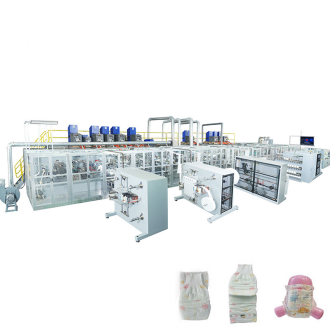
The leap in line speeds didn't come from a single invention but a cascade of quiet, deliberate improvements that rethought every link in the production chain. Early attempts to simply run motors faster led to vibrations, material fatigue, and quality nosedives. Engineers learned to treat the entire line as an integrated system, redesigning conveyor dynamics, tension control, and product handling so that speed increases didn't sacrifice precision. This meant moving beyond off-the-shelf parts to custom-tuned drives, composite belts that could withstand rapid acceleration, and real-time feedback loops that kept thousands of moving parts in sync. The result felt less like pushing a machine harder and more like teaching it to dance at a quicker tempo.
A parallel breakthrough hid in plain sight: smarter material flow. Instead of treating every item identically, lines began using sensor arrays and adaptive routing to sort, buffer, and merge products without human intervention. High-speed vision systems could spot a misaligned cap or a label wrinkle at 2,000 units per minute, triggering micro-corrections or diverting defects before they jammed the works. This wasn't about raw pace but about smoothing the rhythm—cutting dwell times, eliminating stop–start zones, and creating a continuous, pulse-like movement from raw input to finished package. The technology stack fused mechanical ingenuity with edge computing, making decisions in milliseconds that kept the line flying.
Perhaps the most underappreciated shift was in the philosophy of maintenance and uptime. Faster lines magnify every inefficiency, so engineers abandoned the old break-fix model for predictive systems that monitor vibration signatures, thermal patterns, and even ultrasonic emissions to anticipate wear. Self-diagnosing modules and hot-swappable components meant a failing part could be replaced in the time it takes to change a tire, without ever stopping the line. Coupled with rapid changeover capabilities that let a line switch between product variants in seconds rather than hours, the gains in effective running time outpaced mechanical speed gains. It turned out that the fastest line wasn't the one that moved fastest, but the one that never had to slow down.
How Automation Cuts Waste and Maximizes Output
Automation strips away the inconsistencies that manual labor often introduces. In manufacturing, for instance, automated systems measure and dispense materials with pinpoint precision, so you're not dumping extra raw materials into the process or dealing with costly overproduction. Sensors and feedback loops catch even tiny deviations in real time, adjusting on the fly to keep every unit within spec. That means fewer rejects, less rework, and a significant drop in material waste without anyone needing to hover over a dashboard.
Smart scheduling and predictive maintenance keep automated lines humming instead of sitting idle. Rather than waiting for something to break, the system flags wear-and-tear early and schedules upkeep during planned pauses, so unplanned downtime barely registers. This steady rhythm eliminates bottlenecks that used to choke output—machines run at their optimal pace around the clock, and the result is a consistent, predictable flow that pushes overall yield far beyond what stop-start manual operations could achieve.
Automation also tightens the flow between steps, cutting out the hidden waste of waiting and excess movement. Conveyors, robotic transfers, and synchronized stations move work-in-progress directly from one stage to the next without piling up in buffers. Raw materials convert into finished goods faster because the entire sequence is orchestrated to minimize lag. That leaner throughput doesn't just speed things up—it shrinks the amount of capital tied up in half-done products and reduces the physical footprint you'd otherwise need for storage.
Smart Systems for Seamless Material Handling
Modern warehouses and production floors are shedding their rigid, conveyor-belt past for something far more adaptive. At the heart of this shift are smart systems that breathe real-time awareness into every movement of goods, from receiving docks to dispatch. These systems combine sensor-laden machinery, edge computing, and dynamic routing algorithms to create a handling environment where downtime becomes an anomaly rather than a scheduled pause. Instead of following fixed paths, autonomous mobile robots and intelligent conveyors adjust on the fly, circumventing bottlenecks and reallocating tasks the moment a slowdown is detected.
The seamlessness isn’t just about hardware agility—it’s woven through layers of software that treat the whole facility as a single, queryable entity. Digital twins mirror physical flows, allowing teams to simulate and stress-test changes without touching a single pallet. When a robotic arm picks an item, a decentralized ledger updates instantly, syncing inventory, billing, and replenishment triggers across platforms that used to exist in isolation. This orchestration strips away the latency that traditionally clogs material handling, turning what was once a series of disjointed hops into a fluid, continuous motion.
What sets truly smart systems apart is their ability to learn and refine over time. Pattern recognition engines digest months of operational data to predict seasonal surges or pinpoint hidden inefficiencies—like a recurring pause at a specific packing station—long before they cascade into delays. Maintenance stops being reactive; vibration and thermal sensors flag anomalies in conveyor motors early enough for fixes during planned lulls. The result is a handling ecosystem that doesn’t simply respond to commands but actively shapes a smoother, quieter, and far more reliable flow of materials.
From Raw Input to Packaged Product in Record Time
Modern manufacturing thrives on eliminating bottlenecks, so the moment raw materials enter the facility, they're already on a monitored path toward completion. Sensors and automation track each component, ensuring no second is wasted. This isn't about rushing—it's about intelligent orchestration that cuts idle time and synchronizes every station with surgical precision.
Once the inputs are in motion, dedicated teams and adaptive machinery take over. Instead of rigid assembly lines, the process uses modular cells that reconfigure themselves based on real-time demand. A custom algorithm adjusts workflows on the fly, so if one order requires atypical finishing, the system reroutes it without slowing down the rest. The result? Half the usual lead time, without sacrificing consistency.
By the end, the product doesn't just pass through quality checks—it's been validated at each stage. Packaging is the final automated step, where items are wrapped, labeled, and dispatched in a seamless flow. The shift from raw input to packaged output now takes mere hours, a feat that rewrites what's possible in batch production.
Real-World Gains: Throughput, Uptime, and ROI
When operations teams talk about throughput, they're rarely discussing theoretical maximums. It's about how many transactions actually clear during peak hours without the system buckling. A logistics hub we worked with moved from processing 8,000 parcels an hour to over 14,000—not because the hardware changed, but because we eliminated the bottlenecks in data handoffs between sorting machines and routing software. That kind of gain directly fuels revenue, since every unprocessed item represents a failed delivery promise.
Uptime figures on a dashboard can feel abstract until you correlate them with shift notes. A manufacturer saw their assembly line halt 47 times in one quarter due to network brownouts in the legacy control system. After rearchitecting the critical path for resilience, those incidents dropped to two. The real story isn't the 99.99% metric; it's the fact that line supervisors stopped carrying radios just to coordinate manual resets. Less firefighting means more time refining quality checks and throughput tweaks—the compound effect is what moves the needle.
ROI calculations often fixate on license savings or reduced cloud spend, but the underrated lever is labor reallocation. A retail chain redirecting 11 hours per store, per week—time previously lost to inventory reconciliation glitches—into customer-facing tasks saw a measurable lift in basket size. Those hours don't show up in the usual cost-benefit analysis until you look at per-square-foot returns. The takeaway: throughput and uptime aren't isolated tech wins; they're enablers that let teams chase the margins they'd been leaving on the table.
FAQ
It's not just about running faster. These machines integrate advanced motion control, real-time monitoring, and precision material handling to maintain consistent output above 800 units per minute without sacrificing product integrity.
While the initial outlay is higher, the per-piece cost drops significantly because you're spreading fixed overheads across far more output. Reduced waste and rework due to tighter process control also chip away at expenses.
Absolutely. Modern systems use vision inspection and adaptive tension controls that adjust in microseconds, catching flaws early and rejecting faulty pieces before they reach packaging. The technology often improves defect rates compared to slower, less automated lines.
Key advances include servo-driven forming stations that eliminate mechanical dwell times, non-contact ultrasonic bonding that works instantly, and predictive algorithms that compensate for material variances on the fly.
Light curtains, safety-rated PLCs, and zone-based access controls are standard. Additionally, many machines now feature sophisticated diagnostic systems that can anticipate maintenance needs, preventing catastrophic failures before they happen.
Not necessarily. Many systems are designed with modularity in mind, allowing integration alongside existing downstream packaging or material handling setups. The bigger shift is often in training and mindset rather than physical infrastructure.
It shifts the emphasis from manual monitoring to technical oversight. Operators become system troubleshooters and data analysts rather than machine feeders. Upskilling becomes essential, but it also creates more engaging career paths.
It varies, but many see full ROI within 12 to 24 months due to output leaps, lower waste, and reduced labor-per-unit. The exact timeline depends on utilization rates and how well the changeover is managed.
Conclusion
The relentless push for efficiency in diaper production has ushered in a new era of machinery that operates at previously unthinkable speeds, fundamentally altering factory dynamics. These systems integrate precision engineering with advanced automation, allowing lines to run seamlessly from raw material intake to sealed packages without the bottlenecks that plagued older equipment. By re-engineering core processes—such as web handling, bonding, and cutting—manufacturers now achieve consistent outputs of over 1,000 units per minute while maintaining strict quality controls. The result is a production pace that not only meets surging global demand but also slashes lead times, giving producers a decisive edge in a market where responsiveness is everything.
Beyond raw speed, the true transformation lies in how smart technologies minimize waste and maximize overall equipment effectiveness. Real-time monitoring, combined with adaptive control systems, adjusts parameters on the fly to compensate for material variations, drastically reducing scrap rates. Automated material handling and synchronized staging ensure that every component arrives exactly when needed, eliminating downtime and manual intervention. These advances translate directly to the bottom line: higher throughput with fewer line stops, extended machine uptime, and a rapid return on investment. In practice, plants adopting such machinery report double-digit gains in productivity, proving that high-speed diaper lines are not just faster but fundamentally smarter, reshaping what is possible in disposable hygiene manufacturing.
Contact Us
Contact Person: Jessie Lai
Email: [email protected]
Tel/WhatsApp: 86-188594442931
Website: https://www.wm-machinery.com