

High Quality Ultrasonic Transducers: Unlocking Superior Performance in Industrial Applications
2026-08-12
In the realm of industrial processing, ultrasonic technology has become synonymous with precision and efficiency—yet its success hinges on a single, often overlooked component: the transducer. Behind every flawless weld, thorough cleaning, or precise cutting operation lies a transducer that converts electrical energy into mechanical vibration with unwavering accuracy. Enter Siansonic, a name that redefines what high-quality ultrasonic transducers can achieve. But what truly separates an ordinary transducer from one that unlocks superior performance? This exploration delves into the engineering nuances and real-world advantages that make Siansonic transducers the silent heroes of modern industry.
How Precision-Engineered Ultrasonic Transducers Elevate Industrial Processes
Precision engineering reshapes ultrasonic transducers into finely tuned tools that directly impact process consistency. By optimizing piezoelectric element geometry and bonding layers with minimal tolerance, these components vibrate at exact frequencies, eliminating hot spots in cleaning baths or uneven welds. A transducer designed with controlled acoustic impedance matching avoids energy waste, channeling nearly all electrical input into targeted mechanical output—whether that means dislodging micron-level contaminants or fusing delicate thermoplastic parts without residual stress.
Material choice is far from an afterthought. High-performance ceramics paired with corrosion-resistant housing metals let transducers survive aggressive chemical baths and high-temperature cycles without degradation. This resilience translates to stable performance over thousands of hours, slashing recalibration downtime. In thickness gauging or flow metering, precisely dampened transducers send crisp, short pulses that discern fine layers or rapid flow changes, turning raw ultrasonic signals into actionable data with minimal noise—a direct result of controlling ringdown and bandwidth through mechanical design.
Beyond standard specs, field-focused customization elevates processes further. Tailoring a transducer's front mass profile or incorporating phased array elements allows energy to be shaped and steered precisely where needed, such as focusing cleaning action into blind holes or mapping weld integrity in real time. This bespoke approach sidesteps one-size-fits-all limitations, letting manufacturers push speed and quality thresholds while keeping equipment footprints compact and energy consumption remarkably low.
The Core Components That Define a High-Performance Ultrasonic Transducer
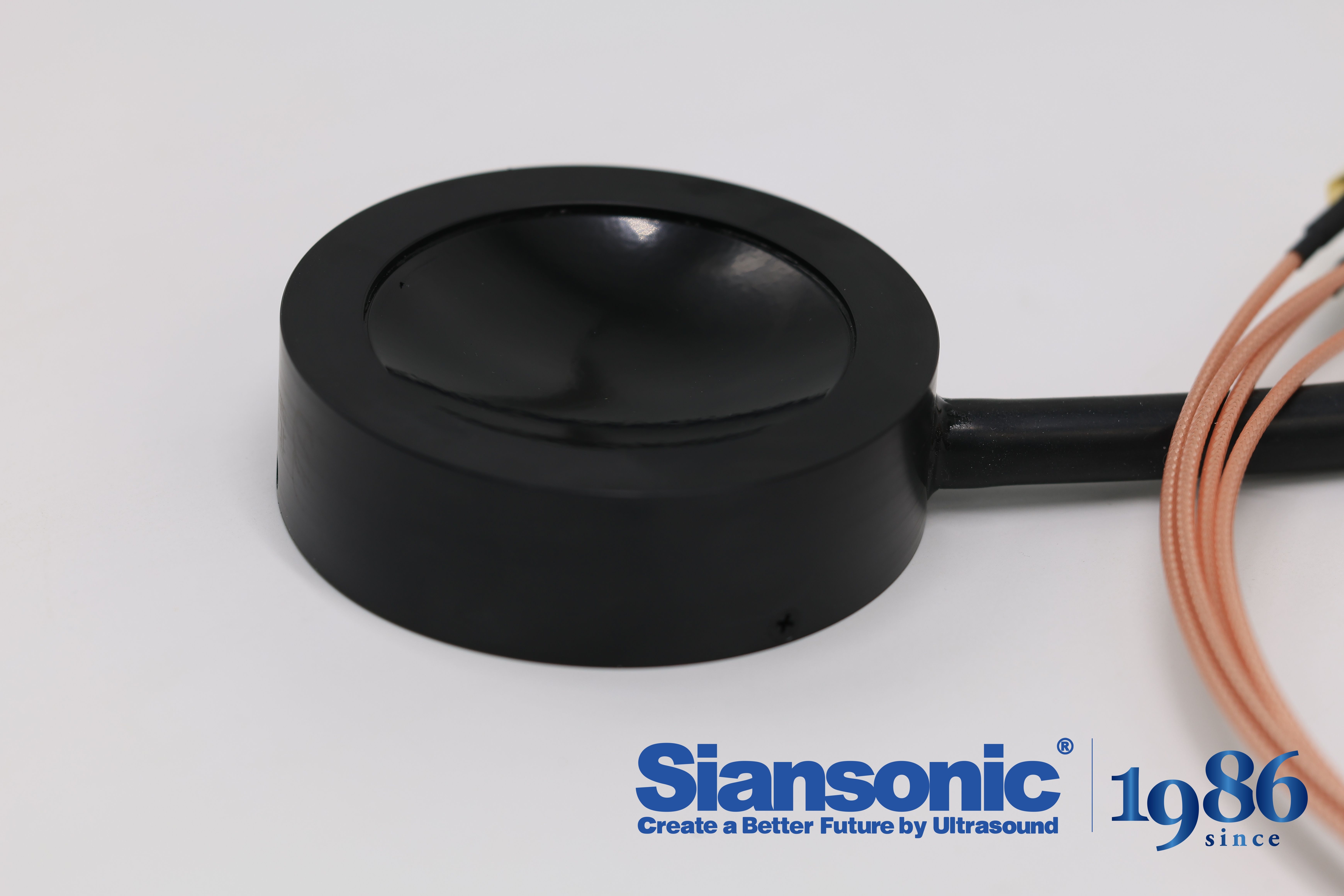
Take apart any high-performance ultrasonic transducer and you’ll find a handful of parts working together like a well-rehearsed band. The real star is the piezoelectric element—usually a disc or plate, carefully cut and tuned. When an alternating voltage hits it, this material physically vibrates at the same frequency, turning electrical energy into sound waves and back again. But raw vibration alone isn’t enough. Without a few critical companions, those vibrations would just bounce around inside the housing, drowning the outgoing signal in noise and ringing.
The piezoelectric material itself isn’t a one-size-fits-all choice. Lead zirconate titanate (PZT) has been the workhorse for decades, but newer single-crystal relaxor ferroelectrics can boost sensitivity and bandwidth significantly. The thickness sets the natural resonance, but coupling that mechanical energy into the outside world efficiently demands careful acoustic design. On the front face, a matching layer bridges the huge impedance gap between the dense ceramic and the relatively light medium—whether that’s air, water, or human tissue. A poorly chosen matching layer reflects most of the energy right back into the element, leaving the transducer deaf and mute.
Flip the element over and you’ll find the backing layer, a deliberately lossy composite that soaks up the rearward-traveling wave. A heavy, well-damped backing smothers ringing after the pulse, giving you crisp short-impulse responses—essential for high-resolution imaging or flaw detection. But it also steals some transmitting power. That’s the constant trade-off in transducer design: sensitivity versus resolution. Tune it right, and the combination of piezoelectric element, matching layer, and backing makes the difference between a blurry echo and a sharp, actionable signal.
Selecting the Right Frequency and Power for Specific Industrial Tasks
Getting frequency and power dialed in for an industrial task isn’t something you can just pull from a generic chart—it’s about reading the material, the geometry, and the outcome you’re chasing. Frequency tends to dictate where the energy lands: low frequencies drive deeper into a workpiece, making them a workhorse for bulk heating or large cross-sections, while higher frequencies hug the surface, perfect for hardening thin layers or delicate thermal processing. But the numbers on paper only get you so far; real-world setups often reveal quirks that force a rethink.
Power, on the other hand, is your speed dial. More power can shorten cycle times dramatically, but push it too hard without the right frequency match, and you risk overshoot, warping, or just wasting electricity. On lines where you’re treating parts with odd geometries or mixed alloys, you’ll often see operators ride the power curve manually—backing off during critical phase changes or ramping up to punch through a stubborn initial heat sink. The sweet spot is rarely where the manual says it is; it’s where the output stabilizes and scrap rates drop.
Fine-tuning almost always comes down to trial on the actual production floor. Tape a few thermocouples, run a batch, and watch how the part responds. A task like brazing might want a lower frequency to soak the joint evenly, while a shrink-fit assembly demands a fast, tightly controlled burst at higher frequency. Don’t ignore the coupling method either—coil design and workpiece positioning can shift the effective frequency and load, making that “perfect” generator setting less effective. Document what works for each job, but stay ready to adapt when material suppliers change or ambient conditions shift.
Durability Under Pressure: Materials and Design for Harsh Environments
When equipment operates in extreme conditions—think deep-sea drilling, high-altitude aerospace, or corrosive chemical plants—the margin for error shrinks dramatically. Material selection becomes a game of trade-offs: strength versus weight, corrosion resistance versus cost, thermal stability versus manufacturability. Engineers often turn to superalloys, duplex stainless steels, or advanced ceramics, each chosen not just for their baseline properties but for how those properties hold up when the pressure gauge climbs. A component that works flawlessly at room temperature might creep, crack, or corrode catastrophically under sustained stress in an oxygen-rich, high-temperature environment.
Design philosophy shifts as well. Instead of simply over-engineering with thicker sections, which adds weight and cost, modern approaches lean on geometry optimization and surface treatments. Ribbed reinforcements, shot-peened surfaces, and clever drainage paths can mitigate stress concentrations and fluid trapping. Coatings like diamond-like carbon or thermal-sprayed ceramics act as sacrificial barriers, but their performance relies on adhesion and compatibility with the substrate. A well-designed part often blends multiple strategies: a corrosion-resistant alloy core, a hard-facing weld overlay at wear points, and a low-friction coating to reduce fretting. The goal is to create a system that degrades gracefully, giving operators time to schedule maintenance before a failure occurs.
Testing under simulated harsh conditions remains the ultimate proving ground. Accelerated life tests in autoclaves or cyclic load rigs can compress years of service into weeks, but they require careful interpretation to avoid misleading conclusions. The best validation combines physical testing with computational models that account for electrochemistry, tribology, and thermo-mechanical fatigue. Field data from actual deployments then feeds back into design revisions, closing the loop. In the end, durability isn't a single property—it's an emergent behavior of materials, geometry, and maintenance protocols working together under relentless pressure.
Integrating Advanced Ultrasonic Solutions for Smarter Automation
The shift toward intelligent manufacturing demands sensing technologies that can keep pace with complex, real-time decision-making. Advanced ultrasonic solutions are stepping into this role, offering more than simple distance measurement. By capturing rich acoustic signatures, these systems can detect subtle variations in material density, surface texture, or even the presence of transparent objects—details that often escape optical or capacitive sensors. This depth of perception enables machines to adapt on the fly, reducing false triggers and enabling more nuanced automation workflows.
What sets modern ultrasonic integration apart is the fusion of compact transducer arrays with edge-based signal processing. Instead of flooding a central controller with raw echo data, smart sensors pre-analyze waveforms and output only high-level insights—object classification, fill level with turbulence compensation, or anomaly scores. This distributed intelligence slashes latency and bandwidth demands, allowing dozens of ultrasonic nodes to operate in harmony on a single line. For instance, in robotic bin-picking, such setups can guide grippers to randomly oriented parts without relying on perfect lighting or predefined CAD models.
The real leap forward comes from closing the loop between ultrasonic perception and machine action through adaptive algorithms. Imagine a conveyor system that automatically adjusts speed and vibration dampening based on the acoustic profile of the products passing over it, or a cleaning robot that modulates its brush pressure and fluid release after acoustically mapping surface roughness. These are not futuristic concepts but practical implementations made possible by treating ultrasound not as a simple trigger, but as a continuous, context-aware input that feeds into self-optimizing control loops.
Real-World Applications Where Quality Transducers Make the Critical Difference
In a busy hospital ICU, the difference between a stable patient and a crashing one often hinges on the accuracy of a tiny pressure sensor that feeds real-time data into a monitor. When a nurse glances at the arterial line waveform, she's not just looking at a squiggly line—she's trusting that the transducer beneath the bedside console is capturing fluctuations as subtle as two millimeters of mercury. A budget transducer that drifts over time or picks up electrical noise from nearby equipment can turn a life-saving intervention into a dangerous guessing game. That's why the best clinical teams insist on premium piezoelectric sensors with laser-trimmed calibration, because when vasopressors are being titrated, even a 5% error can mean the difference between organ perfusion and ischemic failure.
Quality transducers also play a quiet but massive role in the energy grid, where they monitor critical parameters like dissolved hydrogen in transformer oil or partial discharge within high-voltage switchgear. Utility engineers might monitor these values from a remote control center, making asset management decisions that affect millions of homes. Subpar acoustic or chemical transducers may yield false negatives, convincing the team that a 50-year-old transformer is perfectly healthy while it slowly degrades toward a catastrophic arc flash. A reputably built unit with ruggedized packaging and built-in temperature compensation, on the other hand, provides the kind of fidelity that lets engineers spot a deteriorating bushing six months before it fails—saving not just millions in unplanned outage costs but also preventing environmental damage or wildfires sparked by equipment failure.
Consider the latest generation of precision farming, where tractor-mounted infrared transducers scan crop canopies to calculate a vegetation index hundreds of times per second. The data stream enables variable-rate nitrogen application on the fly, reducing fertilizer overuse that would otherwise bleed into nearby watersheds. A low-grade sensor module with poor signal-to-noise ratio, however, might misclassify a patch of healthy soybeans as stressed, triggering an unnecessary burst of urea. That's a double blow: wasted input costs and a hot spot of nitrate runoff that can draw regulatory fines. Farmers who have made the switch to research-grade silicon detectors tell stories of slashing nitrogen bills by 20% while bumping yield consistency by half a percent, simply because they chose components whose spectral resolution and stability hold up through a dusty, jolting, 14-hour shift. In these contexts, the transducer isn't just a technical component—it's an economic and ecological lever.
FAQ
They turn electrical signals into precise mechanical vibrations, enabling tasks like cleaning, welding, and sensing that would be impossible or inefficient with conventional methods. Without them, many automated quality-control and material-processing steps would grind to a halt.
Premium transducers deliver tighter frequency control, higher electromechanical coupling, and better impedance matching. This translates directly into more consistent output, less energy wasted as heat, and the ability to run 24/7 in harsh environments without drift or premature failure.
They shine in precision cleaning of delicate electronics, high-speed plastic welding on automotive assembly lines, non-destructive testing of aerospace composites, medical device fabrication, and even in sonar systems for underwater inspections. Wherever consistency and micron-level accuracy matter, a high-quality transducer makes the difference.
Pay attention to the piezoelectric material grade, the bonding technique between the crystal and the matching layer, the housing's ingress protection rating, and the thermal stability of the entire assembly. Also check if the manufacturer provides detailed impedance plots and lifetime testing data under your specific load conditions.
Absolutely. In welding, for instance, a transducer with a purer resonance profile ensures symmetrical energy delivery, reducing weak bonds and scrap. In cleaning, better cavitation uniformity means fewer rejected parts. Over a year, the yield improvement often pays for the transducer many times over.
Heat shifts the resonant frequency and can degrade the piezoelectric properties. Top-tier transducers use materials with a high Curie point and incorporate passive cooling fins or active air/water cooling channels. They also feature feedback circuits that dynamically adjust the driving frequency to maintain peak resonance as conditions change.
Regularly inspect the front face for erosion or delamination, check the electrical connectors for corrosion, and verify the frequency response with an impedance analyzer every six months. When cleaning, avoid harsh solvents that can attack the housing seals, and always follow the manufacturer’s torque specs during reassembly.
Yes, the adoption of single-crystal piezoelectrics has boosted bandwidth and sensitivity dramatically. Advances in additive manufacturing allow complex, built-in cooling structures. Embedded digital signal processing chips now enable real-time diagnostics, so the transducer can signal when maintenance is due long before a performance drop occurs.
Conclusion
High-quality ultrasonic transducers are at the heart of modern industrial efficiency, transforming processes through precision engineering and robust design. By carefully matching frequency and power to the task—whether it's delicate cleaning of microelectronics or aggressive cutting of composites—these devices ensure optimal energy transfer and minimal waste. Their core components, from piezoelectric ceramics to advanced backing materials, are tuned for maximum signal fidelity and durability. Built with corrosion-resistant alloys and high-temperature polymers, they withstand extreme pressures, chemical exposure, and thermal shock, making them indispensable in harsh environments like chemical plants or deep-well drilling. This reliability reduces downtime and maintenance, directly boosting throughput and consistency across production lines.
Beyond ruggedness, advanced transducers enable smarter automation by seamlessly integrating with IoT platforms and real-time monitoring systems. Vibration analysis and adaptive feedback loops allow for self-adjusting operations, improving accuracy in welding, sealing, or thickness gauging without human intervention. In real-world applications, the difference between standard and premium transducers is stark: in medical device manufacturing, they ensure sterile, damage-free cleaning; in food processing, they maintain hygiene without chemical residues; and in automotive assembly, they deliver flawless welds at high speeds. Ultimately, investing in superior ultrasonic transducers unlocks not just performance but also new possibilities for innovation, safety, and sustainability in industrial workflows.
Contact Us
Contact Person: Ivy Zhang
Email: [email protected]
Tel/WhatsApp: +86 1081502288
Website: https://www.siansonic.com/