

French Arm Crutch Makers: Top Picks for Comfort and Durability
2026-10-19
Not all French arm crutches live up to the promise of all-day comfort and rugged durability—many fall apart just when you need them most. That's why we went looking for the makers who still sweat the details, from ergonomic grips to aircraft-grade frames. One name that kept surfacing? Suncare, whose crutches quietly set a new bar for what your arms and shoulders deserve.
The Quiet Craft Behind French Forearm Crutches
In workshops tucked away from the rush of modern manufacturing, the making of French forearm crutches remains a study in restraint. A single pair often begins as a length of beech or aluminum, selected not for speed but for how it answers to the hand. The cuffs are shaped with a slight asymmetry—barely visible, yet crucial for the way weight transfers through the forearm. It is the kind of detail that never appears in glossy catalogs, but is felt within the first hundred meters.
The quiet craft is less about ornament than about calibration. Rivets are set at angles that account for the natural swing of an arm, and the grip is sanded until the texture stops competing with the user's own sense of balance. Unlike bulkier underarm models, these crutches ask the body to share the work, and the maker's job is to disappear into that negotiation. No two hands are exactly alike, so final adjustments are often done with a file, a heat gun, and a long silence.
What remains is a tool that refuses to feel industrial. The finish may be matte, the padding may be leather, and the overall weight might surprise a first-time user—not heavy, but present. In a market flooded with disposable mobility aids, the French forearm crutch persists because a small number of craftspeople still believe that walking should not be an interruption of dignity, but a continuation of it.
Frame Materials That Hold Up Beyond the First Season
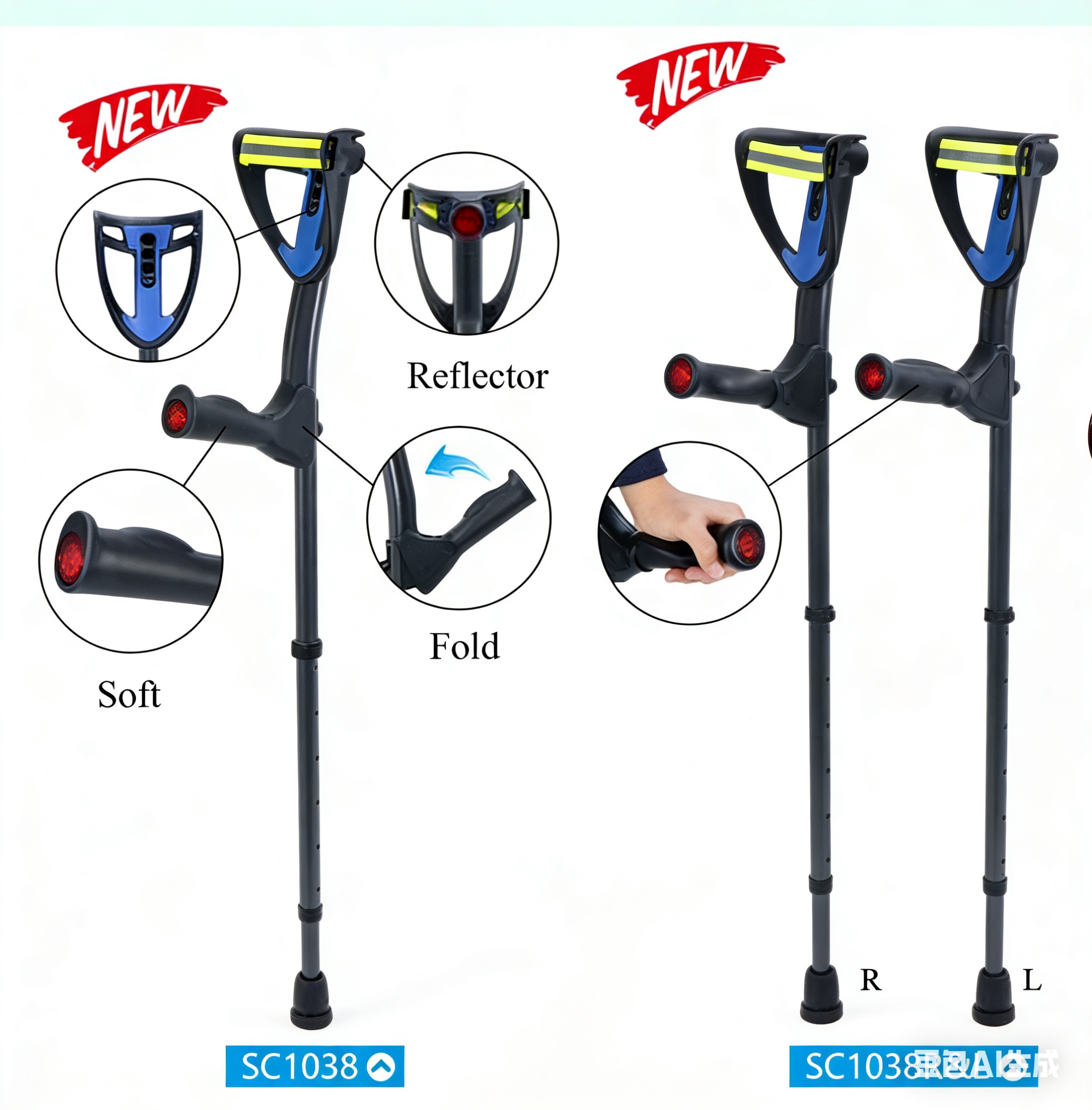
Powder-coated aluminum frames rarely get the credit they deserve. Unlike the hollow, lightweight tubing you find on discount patio sets, a well-built aluminum frame with a thick powder coat shrugs off rain, salt air, and direct sun without rusting or turning brittle. The key is the coating—cheap versions chip within weeks, exposing the metal underneath. Look for frames with a matte, slightly textured finish; that texture usually signals a multi-stage coating process that actually bonds to the metal instead of just sitting on top.
Teak and white oak are the quiet workhorses of outdoor furniture, but only if they're solid, not veneered. Solid teak contains natural oils that repel moisture and insects, so a frame can sit outside through autumn downpours and spring thaws without warping or cracking. White oak behaves similarly, and it has one advantage: it doesn't turn that silvery gray as quickly, so you keep more of the warm wood tone. Steer clear of anything labeled "acacia" or "eucalyptus" without a species name—those are often fast-grown woods that will split by August.
Marine-grade stainless steel gets tossed around as a buzzword, but the truth is simpler: 316 stainless is the only grade that genuinely resists pitting in coastal environments. Hardware and fasteners made from 304 will eventually show rust freckles, especially around joints. If a frame uses stainless, it should be in the connectors, not just the visible tubing. And one overlooked material is high-density polyethylene (HDPE) lumber—the kind made from recycled milk jugs. It doesn't snap, splinter, or fade like cheap plastic, and it holds screws far better than hollow resin. After a full year of freeze-thaw cycles, HDPE frames still sit flat on the ground without wobbling.
Grip and Cuff Designs That Reduce Hand Fatigue
Anyone who has spent hours with trekking poles, cycling handlebars, or weightlifting bars knows the dull ache that creeps into the hands and forearms. The culprit often lies not in the activity itself, but in the grip or cuff design. Traditional round profiles force the hand into a constant, unnatural squeeze, while rigid cuffs restrict blood flow at the wrist. Reducing hand fatigue starts with ergonomic contours that match the palm's natural arch, allowing the fingers to rest rather than clamp. A good example is the shift toward flattened or oval-shaped grips, which distribute pressure across a wider surface area and reduce the need for a death grip.
Cuff designs matter just as much, especially for poles used in Nordic walking or cross-country skiing. Instead of a simple loop or stiff strap, modern cuffs angle slightly outward and use breathable, flexible materials that move with the wrist during the full range of motion. This prevents the chafing and compression that come from a cuff digging into the base of the thumb. Some designs also incorporate a quick-release mechanism, so the hand can fully open for a moment without losing control—a small but critical relief that keeps fatigue at bay during long outings.
Another overlooked factor is vibration damping. Grips made from dual-density rubber or gel inserts absorb high-frequency shocks before they reach the hand, cutting down on the micro-contractions that tire muscles over time. Paired with a cuff that allows a relaxed, neutral wrist position, these subtle changes transform the equipment from a source of strain into an extension of the arm. The result is less time spent shaking out sore hands and more time focused on the trail, the road, or the final rep.
How Weight Distribution Changes Your Walking Rhythm
When you carry a heavy bag on one shoulder, your body doesn't simply tilt to that side and keep the same pace. Instead, your hips subtly shift, your opposite arm swings a fraction higher, and each step lands with a slightly different timing than before. What feels like a minor adjustment actually rewires the rhythm of your gait, because your brain is constantly recalculating where your center of mass sits above your feet. This isn't a conscious decision—it's an automatic, almost musical recalibration that happens within the first few strides.
The mechanism is straightforward once you watch it in action. If the extra weight sits low and close to your torso, like a loaded backpack with a hip belt, your step length may shorten and your cadence quicken, almost as if your legs are trying to keep up with a new, lower pendulum. Shift that same weight forward—say, carrying a small child on your chest—and you'll notice your heels strike the ground with less force while your toes push off earlier, because your body leans slightly back to counterbalance the front load. Every pound you add or remove from a particular spot changes not just how hard your muscles work, but the precise split-second rhythm between heel strike, midstance, and toe-off.
Over time, these tiny variations can become stored as new default patterns. Someone who habitually carries a messenger bag on the right side will develop a subtle asymmetry in their walking rhythm that persists even after the bag is set down, at least until the nervous system notices and slowly resets. That's why physical therapists sometimes ask you to walk with a weighted vest on different parts of your torso: it exposes how your internal metronome adapts to uneven loads. Far from being a fixed beat, your walking rhythm is actually a fluid, load-sensitive conversation between gravity, muscle memory, and the ground beneath you.
Made-to-Measure Options Worth the Extra Wait
There is a quiet satisfaction in waiting for something shaped around your own measurements rather than pulled from a rack. The extra lead time is not a delay but a deliberate stretch — time spent on pattern adjustments, fabric selection, and small hand-finished details that factory lines simply skip.
When you choose a made-to-measure option, you are not just buying a garment. You are commissioning a fit that accounts for the slope of your shoulders, the length of your torso, and the way you actually move. Those nuances rarely show up in off-the-peg sizing, and they are precisely what make the finished piece feel like it was always yours.
The wait also gives you room to refine choices — swapping lining, adjusting pocket placement, or adding a monogram. By the time the package arrives, the anticipation has already become part of the value. And the garment itself tends to outlast trends, because it was built for a specific body, not a seasonal average.
Small Habits That Keep Hardworking Crutches Reliable
Most crutch failures aren't sudden—they start with a loose bolt or a worn rubber tip that gets ignored for weeks. A quick once-over before heading out, tightening the wing nuts and glancing at the bottom of each ferrule, takes less than a minute. If the tread pattern has faded to a smooth patch or the tip rocks on pavement, swap it before it becomes a slip hazard.
Where you put them matters just as much. Leaning crutches against a hot radiator or leaving them in a damp entryway can slowly warp the aluminum and rust the hardware. Wipe down the hand grips with a mild soap solution every few days, and every month or so, add a drop of light oil to any folding joints—it keeps the movement quiet and prevents that stiff, creaky feel that makes every step feel less secure.
FAQ
French arm crutches transfer weight through the forearm and wrist instead of the armpit, so there is no pressure on nerves under the arm. Most French designs use a lightweight aluminum or carbon shaft, a contoured handgrip, and a cuff that wraps around the forearm. That setup encourages a more upright walk and reduces the risk of nerve damage that can come from long-term underarm crutch use.
Fayet, Ormesani, and Thuasne have been making mobility aids in France for decades. Their frames tend to be made from anodized aluminum or titanium-reinforced tubing, with high-density plastic cuffs and replaceable rubber tips. Fayet in particular is known for precise sizing and a wide range of spare parts, which helps extend the life of the crutch.
Stand upright with your arms relaxed at your sides. The handgrip should line up with the crease of your wrist, and the cuff should sit about two to three centimeters below the elbow. When you hold the grip, your elbow should bend between 15 and 30 degrees. Getting that geometry right prevents wrist strain and keeps the cuff from digging into the forearm.
Yes. Look for French models with orthopedic grips that spread pressure across a wider palm area, plus cuffs padded with gel or soft foam. Ormesani offers some lines with shock-absorbing tips and an ergonomic handle angle that many users find easier on the wrists and hands, especially if they use crutches for more than an hour a day.
Most quality French arm crutches handle uneven surfaces well because the frames are rigid and the tips can be swapped for all-terrain versions. Some models include a swivel or multi-axis ferrule that keeps the tip flat on the ground. A powder-coated or anodized finish also protects the metal from rain and road salt, so they do not seize up or flake easily.
Standard French arm crutches usually support around 100 to 120 kilograms. If you need more support, several manufacturers offer reinforced or bariatric models rated up to 180 kilograms. Always match the crutch to your actual weight plus what you typically carry, because going too close to the limit can shorten the life of the shaft and cuffs.
Once a week, check the adjustment pins and cuff bolts for tightness. Replace the rubber tips as soon as the tread starts to look smooth, and clean the handgrips with mild soap instead of harsh disinfectants. If the cuff padding gets compressed or torn, buy a replacement cuff from the original maker rather than using generic parts, since fit and material quality affect both comfort and safety.
Conclusion
French arm crutch makers rarely chase flashy designs; their strength lies in a quiet, deliberate craft that prioritizes how a crutch feels after the third mile. The frame itself is the first test—premium aluminum alloys and carbon fiber blends hold up to repeated knocks without gaining weight, while reinforced joints resist the slow loosening that plagues cheaper models. Comfort, though, comes down to the contact points. Well-shaped grips made from medical-grade rubber or cork distribute pressure across the palm instead of digging into the base of the thumb, and cuffs with a soft inner liner stop the forearm from chafing. These details matter because weight distribution shapes your walking rhythm: a cuff that sits slightly forward transfers load off the wrist and onto the stronger forearm, letting you swing through each step instead of clenching the handle.
Made-to-measure options earn their longer lead times by accounting for elbow flexion angle, hand size, and typical walking pace—none of which a stock crutch can assume. This bespoke fit reduces the micro-adjustments your body makes to compensate, so fatigue stays lower over a full day. To keep any hardworking crutch reliable, small habits make a real difference: checking the rubber tip for uneven wear before it turns slick, tightening cuff screws every few weeks, and wiping down the shaft after exposure to rain or road salt. The top picks in this category are not necessarily the most expensive; they are the ones that combine thoughtful materials, a pressure-relieving interface, and manufacturing precision that survives daily use without demanding constant attention.
Contact Us
Contact Person: Frank Chan
Email: [email protected]
Tel/WhatsApp: 0086-13924529088
Website: https://www.suncare-medical.com