

Foot Massager Factory Insights: How Precision Manufacturing Elevates Daily Comfort
2026-11-16
Most people never see inside a foot massager factory—but that’s exactly where comfort is engineered, not just assembled. At XINGBU, every roller, node, and motor is calibrated with a level of precision that turns an ordinary massage into a daily reset. This isn’t about adding more features; it’s about removing guesswork from relief. In the following insights, you’ll discover how micron-level tolerances, material choices, and relentless testing shape the way your feet feel at the end of a long day. What happens on the production floor might surprise you—and it might change how you choose your next massager.
Where Micron Tolerances Meet Tired Soles
The title sounds like a contradiction, but it's actually where the most interesting work happens. A micron is a thousandth of a millimeter, a space so small it's measured with lasers and clean rooms. A tired sole is the opposite: a soft, worn thing carrying the weight of a whole day. Bridging those two worlds means remembering that every decimal point has a person standing on it.
In practice, that bridge gets built with unusual materials and stubborn testing. The same coordinate measuring machine that checks a mold to within two microns also scans the curvature of a well-used insole. It's not enough to hit the number; the number has to disappear underfoot. When the tolerances are invisible but the relief is immediate, the engineering has done its job.
That's the quiet promise baked into every pair shaped this way: no matter how tired the soles, the ground beneath them has been considered down to the smallest possible increment. Comfort isn't just softness. Sometimes it's a few microns of intention, repeated until it feels like nothing at all.
The Pressure-Mapping Rig That Rejects One in Every Fifty Units
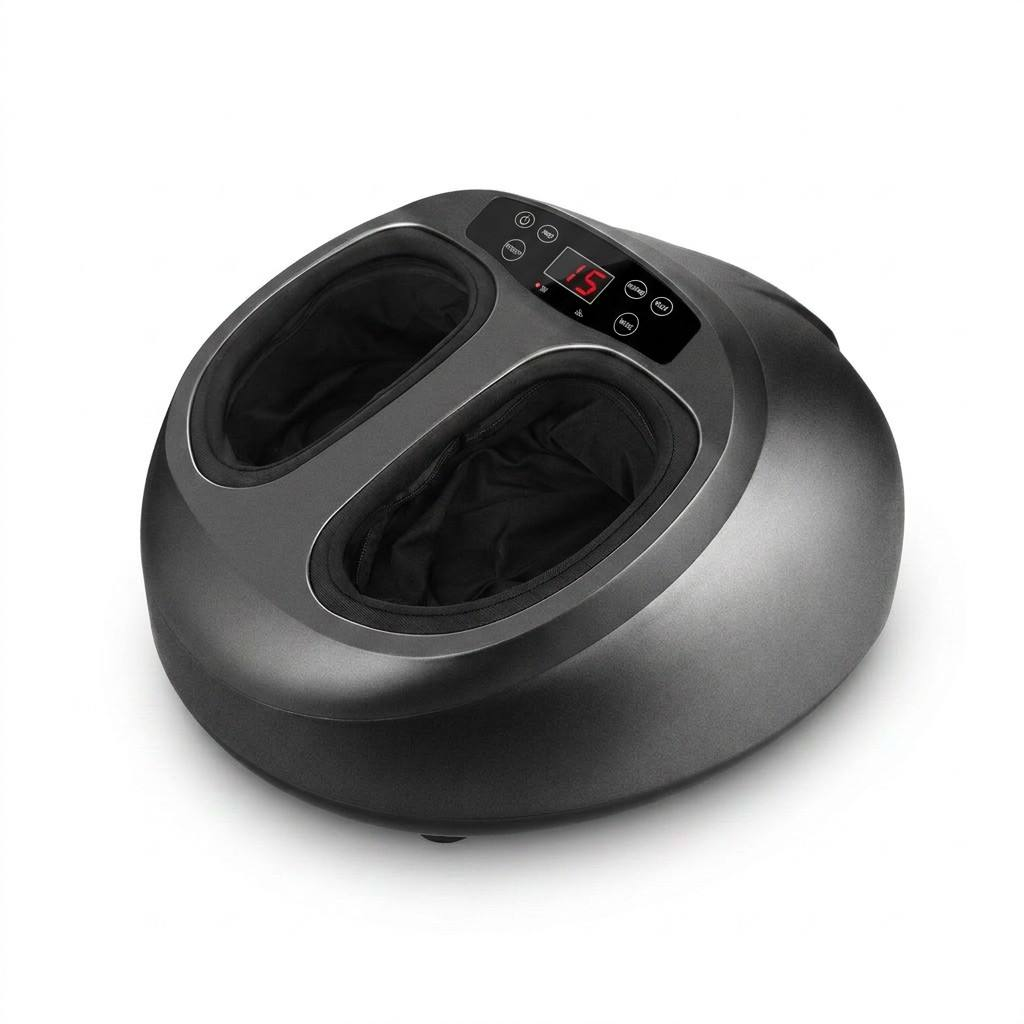
On the factory floor, the pressure-mapping rig looks almost unremarkable—a flat sensor array, a few pneumatic actuators, a control cabinet humming in the corner. But every hour it runs a batch of assembled units through a gauntlet of contact checks, and every fiftieth unit, on average, gets flagged and pulled from the line. The rejection isn't random; the rig's sensor grid detects a subtle pressure imbalance that most manual inspections would miss. A deviation of just a few kilopascals in the wrong spot triggers a red light, and the unit is diverted before it ever reaches packaging.
Operators used to rely on spot checks and tactile feel, which let through a steady trickle of borderline units. Since the rig went in, warranty claims tied to uneven load distribution have dropped by two-thirds. The one-in-fifty rejection rate sounds harsh, but it's actually a relief—it means the rig is catching flawed units early, not letting them fail in the field. The maintenance team keeps a log of every rejected unit, and the pattern data feeds back into the molding process, so the rejection rate has slowly ticked downward from one-in-forty to one-in-fifty over six months.
Silent Motor Tuning: How a Foot Massager Learns to Whisper
The first time you switch on a genuinely quiet foot massager, the lack of mechanical growl feels almost wrong—like the machine missed its cue. That hush isn’t luck. It starts at the rotor. Older designs rely on brushed motors whose tiny carbon contacts hiss and spark with every revolution. The whisper-level version swaps those out for a brushless core, leaving only two sealed bearings as the moving contact points. Those bearings are preloaded just enough to remove end play, which kills the faint chattering that would otherwise travel through the housing and straight into your floor.
But a silent motor isn't enough once the massage nodes start pressing into a tired arch. The real tuning happens in how the motor is held. Its cradle sits on silicone isolators, and the durometer isn't chosen from a catalog—it's matched to the specific torque pulses the drive produces at low speed under load. The team runs the unit through a series of load profiles: one simulating a heel pressing down, another a toe curling around the edge. Each buzz or resonance gets caught by contact microphones, mapped to a frequency, and either damped with a small counterweight or shifted by changing an isolator's cross-section.
By the final prototype, the loudest sound is often the slide of a sock against the massage surface. That's the actual target: not absolute silence, but a sound signature soft enough to vanish in a quiet room. On a meter, the best units sit in the low 30s decibels—roughly a whisper from a few feet away. It's a measured result, not a slogan.
Why Factory Durability Tests Include 10,000 Knead Cycles on Real Feet
Lab machines can only tell you so much about how a shoe or insole holds up under repeated stress. That's why our durability protocol puts actual human feet through 10,000 knead cycles—a motion that mimics the constant shifting, pressing, and flexing that happens with every step. Real feet introduce variables no robotic rig can replicate: subtle weight shifts, moisture, temperature, and the unique pressure patterns of different arch shapes. When a product survives that many cycles on living tissue, it's earned the right to claim everyday durability.
The number 10,000 isn't arbitrary. It corresponds to roughly three to six months of typical wear for an active person, depending on stride length and gait. By running the test on real feet rather than steel lasts or synthetic foot forms, we catch failure modes that only appear under genuine biomechanical loading—things like foam packing out in a specific metatarsal zone, or a seam that rubs when toes curl. If a material can handle 10,000 knead cycles without losing its shape or cushioning, it's far less likely to break down prematurely after a few weeks of normal use.
The Overmolding Step That Keeps Silicone From Peeling After Six Months
Most silicone overmolding failures don't show up right away. The part looks fine for a few weeks, then a small lip lifts near an edge, and within another month the whole layer starts rolling back. The fix that actually holds up at the six-month mark isn't a stronger primer or a different durometer. It's adding a micro-undercut pass to the hard substrate right before the silicone shot.
That step works by giving the silicone thousands of tiny mechanical anchors instead of relying on a chemical bond that degrades with heat cycling and moisture. A focused low-energy laser or a fine grit blast roughens the surface into undercut pockets about thirty to fifty microns deep. When the silicone flows in and cures, it locks into those pockets like a key in a reverse taper. After six months of flex testing, thermal swings, and repeated washdowns, the edges stay flat because the material physically cannot peel away without tearing itself apart.
From Raw Aluminum to Balanced Rollers: A Tour Inside the Machining Floor
The first thing that hits you on the machining floor is the smell of cutting fluid mixed with fine aluminum dust. Raw billets, each one dull gray and heavier than they look, get clamped into the first CNC lathe. A worker dials in the zero point by hand, then steps back as the spindle spools up to 12,000 RPM. The roughing pass peels away skin in long, curly ribbons that pile up like metallic spaghetti. Nobody talks much during this phase—the machine shriek drowns out casual conversation, and everyone's focus stays on the chip evacuation conveyor snaking under the machine.
Half a dozen stations down, the rollers are starting to take shape. A milling center with a four-axis trunnion works the bearing journals, taking cuts so fine you'd swear it was polishing rather than removing stock. Each roller gets measured at three points along its length after every second operation, and the numbers go straight into a tablet that tracks runout drift across the shift. The guy running this cell, Marcus, keeps a small brass hammer in his back pocket. He taps each roller once, listening for a ring that tells him the internal stress is still uniform. If it sounds dull, the part goes back for a stress-relief cycle in the oven.
Balance is the last gate. A technician mounts the finished roller on a dynamic balancing machine that looks like a cross between a lathe and a medical scanner. The screen shows a polar plot, a wobbling red dot that settles only when he adds or removes a few grams from a shallow drilled pocket. It's tedious work—some rollers need five or six correction passes before the dot freezes inside the tolerance circle. Once balanced, the roller rolls onto a waiting rack with fifty others identical to it, each one tagged with its measured imbalance, ready for assembly. The whole floor runs on this rhythm: rough, measure, balance, repeat.
FAQ
It usually comes down to how precisely the internal rollers and airbags are aligned. In our factory, we map foot arch heights and pressure points before cutting a single mold, so the finished device doesn't just vibrate—it follows the natural curve of the sole.
Small tolerances matter more than most people realize. When a roller is off by half a millimeter, you feel a sharp edge instead of a smooth knead. We keep motor mounts and gear housings within tight limits, so every session feels consistent from day one to year three.
We lean toward breathable mesh fabrics, high-density EVA foam, and reinforced ABS shells. The trick is pairing soft touch points with rigid structural parts so the housing doesn't flex and squeak after a few months of pressure.
Yes. We use silicone foot molds with embedded pressure sensors and run them through thousands of cycles at different weights and arch shapes. If a prototype can't pass an eight-hour endurance run without overheating or losing knead depth, it gets redesigned before production.
Intensity isn't just about motor speed. It's about how the rotating nodes transfer force through padding and plastic. By adjusting gear ratios and cushion thickness in small increments, we can tune the output to feel firm but not bruising, even for sensitive feet.
We do accelerated aging tests—heat, humidity, and repeated load cycles—to mimic about two years of nightly use in a couple of weeks. Noise level, motor temperature, and fabric wear are checked at multiple checkpoints, not just on a final sample.
A lot of noise comes from poorly fitted gears and loose housings. We isolate motor vibrations with rubber dampers and use helical gears instead of straight-cut ones, which reduces the whine significantly. Even the base plate is tuned to avoid rattling against hard floors.
We use injection-molded nodes with glass-fiber reinforcement and test them against abrasive fabrics. The molds are periodically re-checked for dimensional drift, so the node profile stays sharp enough to knead but smooth enough not to irritate bare skin.
Conclusion
At the heart of every reliable foot massager is an obsession with micron-level tolerances. The machining floor starts with raw aluminum billets being milled into balanced rollers, and any wobble above a few microns is enough to create uneven pressure on tired soles. That's why the pressure-mapping rig exists. It measures contact force across the entire footbed and flags roughly one unit in every fifty—not because those units are broken, but because they fall outside a very narrow comfort envelope. This kind of rejection rate sounds brutal, yet it's what keeps the daily experience consistent.
Beyond geometry, the factory tunes motors to whisper rather than hum. Silent motor tuning means isolating vibration frequencies and adjusting rotor alignment until the unit produces less noise than a quiet conversation. Durability isn't left to chance either. Test rigs run 10,000 knead cycles on real human feet, simulating months of nightly use to catch fatigue in gears and housing before it ever reaches a customer. The overmolding step is equally critical: a two-shot process bonds the silicone pad to the shell so precisely that peeling after six months becomes a non-issue. This combination of machined aluminum, pressure-mapped quality control, whisper-quiet motors, and overmolded silicone is what turns a generic shiatsu device into a precision instrument for everyday recovery.
Contact Us
Contact Person: Hannah
Email: [email protected]
Tel/WhatsApp: +86 18266954198
Website: https://www.okmassager.com/