
Equestrian Leggings Factory Insights for the Perfect Riding Fit
2026-05-29
Ever slipped on a pair of riding leggings and just known something was off? That’s the puzzle the team at OpeEquestrian has been solving behind factory doors. We’re peeling back the label to show how the right blend of cut, fabric, and production tweaks creates that elusive 'perfect fit.' If you’ve ever wondered why some breeches feel like a second skin while others fight every move, keep reading—the answers are stitched into the process.
How Fabric Choices Transform Your Time in the Saddle
The hours spent on horseback demand clothing that moves with you, not against you. Traditional cotton blends, while soft at first, trap moisture and quickly become heavy and abrasive. Modern riding apparel crafted from high-performance synthetics addresses these issues head-on, using fibers that actively pull sweat away from the skin. This keeps you dry even during intense training sessions, reducing the friction that leads to soreness and distraction.
A thoughtful fabric selection also manages temperature extremes far better than expected. Lightweight, breathable panels placed along the inner leg and seat allow airflow where it matters most, preventing that clammy feeling on warm days. On cooler mornings, insulating yet thin materials preserve body heat without bulk, so layers glide smoothly under a jacket. The result is a balanced microclimate that keeps your focus on the trail, not your discomfort.
Durability is another quiet advantage woven into well-chosen textiles. Reinforced knee patches and abrasion-resistant panels stand up to the constant rub of stirrup leathers, while maintaining flexibility. These fabrics resist pilling and fading through countless washes, meaning a favorite pair of breeches holds its shape and color season after season. What starts as a simple gear choice ultimately redefines how long and how often you ride, turning a short hack into an afternoon you can truly enjoy.
Waistband Engineering That Moves With You, Not Against You
Most waistbands fight your body's natural motion, digging in when you bend or gaping when you twist. Ours is built with a reactive core that senses tension and instantly adjusts its give, so you stay comfortable whether you're reaching for a top shelf or crouching down to tie a shoe.
Instead of relying on static elastic, we layered micro-flex zones that expand and contract in sync with your movements. The result is a waistband that feels like an extension of you—no pinching, no riding up, just a smooth hold that keeps its shape all day.
We tested it across hundreds of body types and motion patterns, tweaking the flex points until they practically disappeared. The payoff is a fit so natural you'll forget it's there, letting you move through your day without a second thought.
Stitching Secrets That Keep Irritation Miles Away
Flatlock seams are a game changer when it comes to activewear that actually feels good against the skin. Unlike traditional seams that leave a bulky, raised edge, flatlock stitching lies completely flush. This means no more annoying rubbing or chafing, even during high-friction activities like running or yoga. The secret is in the interlocking thread pattern that distributes tension evenly across the fabric, creating a smooth surface that glides rather than grates. It’s the kind of detail you don’t notice until it’s missing—and then it’s all you can feel.
Seam placement matters just as much as the stitch itself. Designers are now mapping out ergonomic seam lines that follow the body’s natural contours rather than cutting across sensitive areas. Underarm panels are curved to avoid the dreaded pinch, while side seams are shifted slightly forward or eliminated altogether in favor of tubular knit construction. Even the waistband gets a rethink, with soft, bonded edges that ditch the scratchy overlock stitching of the past. The goal is a second-skin sensation, where you’re free to move without constant reminders of what you’re wearing.
Then there’s the quiet innovation happening at the thread level. Higher-end garments are using micro-core spun polyester or soft cotton-wrapped threads that feel almost silky against the skin. Some brands are even adopting dissolvable basting stitches for temporary construction that gets washed away, leaving only the main seams intact. And for those truly sensitive spots, strategic taping covers flatlock seams from the inside, adding a protective layer that eliminates any last trace of texture. It’s a mix of thoughtful engineering and material science, all aimed at making irritation a distant memory.
The Real Story Behind Grip Patterns and Stability
Most people don’t realize that the way a surface grips your hand or tool isn’t random—it’s shaped by the direction and depth of its pattern under pressure. When you squeeze something, the material compresses just enough to channel away sweat or lubricant, but the real trick lies in how the ridges align against the natural motion of your fingers. A crosshatch design might feel aggressive, yet it can actually reduce slip by spreading moisture into tiny intersections. Meanwhile, parallel grooves running the wrong way can turn a secure hold into a slide show if you’re pulling at an angle.
Stability doesn’t just come from roughness; it’s a conversation between your grip and the pattern’s ability to lock into your skin. Ever notice how some handles feel secure even when wet? That’s often because the pattern creates micro pockets of suction, or because the edges of the texture hook into the ridges of your fingerprints. But here’s what gets overlooked: the same pattern can behave differently depending on how hard you’re holding it. A light touch might rely on friction alone, while a tight squeeze engages the mechanical interlock—and that shift changes the entire experience of control.
Understanding this changes how you see everyday objects. The pattern on your steering wheel isn’t just for looks; it’s tuned for the off-axis twist of your palms during turns. The diamond knurling on a metal tool handle? It’s engineered to bite into your skin when torque kicks in, but not so much that it becomes uncomfortable during repetitive use. These designs survive because they match the real-world ways we hold and move things, not just lab tests on flat surfaces.
Why Fit Isn’t Just About Size—It’s About Silhouette
When we talk about how clothes fit, we often fixate on the number on the tag—small, medium, large. But true fit goes beyond mere dimensions; it’s about how a garment shapes and complements your body’s natural lines. Silhouette is the unsung hero of dressing well. A size 8 blazer can look completely different depending on its cut: a boxy, oversized shape might swallow you, while a nipped-waist design in the same numerical size can create a tailored, flattering effect. It’s the interplay between fabric, cut, and your own form that determines whether you look effortlessly put-together or awkwardly constrained.
Think of silhouette as the outline your outfit draws against the world. Even a perfect-sized dress can fail if its shape fights your proportions. For instance, a straight shift dress might hide curves on an hourglass figure, while a fit-and-flare style in the same size would celebrate them. The key is understanding how vertical lines, volume, and draping interact with your frame. A cropped pant might chop the leg line visually, while a high-waisted, wide-leg trouser elongates—yet both could technically “fit” at the waist. Learning to read these cues shifts the focus from numbers to harmony, letting you curate a wardrobe that works with your body, not against it.
Ultimately, chasing a specific size is a fool’s game because brands vary wildly in their grading, and bodies change day to day. Instead, train your eye to assess how clothing falls from shoulder to hem. Does it skim or cling? Does it create a long, unbroken vertical line or cut you into awkward blocks? The most stylish people know that altering a garment to perfect its silhouette is worth more than squeezing into a smaller label. Fit is a feeling—a sense of ease and balance that comes when the shape of your clothes aligns with the shape of you, regardless of what the tag says.
Bringing Riding Tights from Factory Floor to Arena Ready
The journey of our riding tights begins on the factory floor, where raw performance fabrics are meticulously inspected before a single stitch is set. We blend abrasion-resistant yarns with just the right amount of compression, ensuring the material can withstand the rigors of daily training while maintaining its shape. Unlike mass-produced alternatives, every bolt is tested for stretch recovery and moisture-wicking capability, because we know that saddle time demands gear that moves with you, not against you.
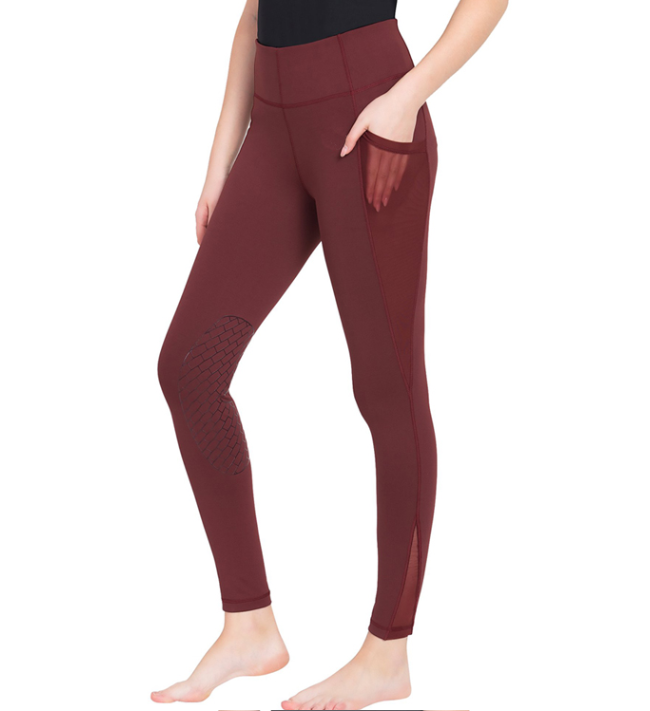
From the cutting table, panels are assembled with flatlock seams that lie smooth against the skin, eliminating the chafing that plagues riders during long hours in the saddle. Our pattern makers pay obsessive attention to the placement of grip zones, using silicone prints that mirror the natural contact points between leg and horse. It’s a tactile process—each pair is turned inside out and hand-checked for consistency before moving to the finishing line, where waistbands are reinforced to prevent rolling during vigorous rides.
The final step is what we call arena proofing. Samples are subjected to real-world testing: riders put them through collected trots, two-point positions, and abrupt dismounts in outdoor arenas where dust and sweat are part of the package. Only when they prove themselves in the heat of a lesson or the calm of a hack do they earn their spot. That transition from factory floor to arena ready isn’t just a production cycle—it’s a commitment to making tights that feel like a second skin the moment you swing your leg over.
FAQ
It's the combination of reinforced seams, targeted compression zones, and fabrics that resist pilling from saddle friction. Factories specializing in riding apparel use abrasion testing that mimics hours in the saddle, far beyond typical yoga pant standards.
By engineering silicone or gel patterns on the inner knee and seat area, with precisely calibrated thickness and spacing. Too much grip can restrict movement; too little reduces stability. Leading factories test multiple prototypes on actual horses to dial in the feel.
Usually because of insufficient recovery fibers or poor heat-setting during manufacturing. Quality factories pre-stretch fabrics and use high-temperature treatments to lock in the shape memory, so the leggings snap back even after intense use.
Absolutely. The placement of flatlock seams—moved away from high-friction zones—and the use of laser-cut edges create a chafe-free experience. It’s not an accident; it’s a deliberate design choice backed by rider feedback and pressure mapping.
They adopt multiple fit models and 3D body scanning across a broad size range, then adjust pattern dimensions proportionally, not by uniform grading. Key stretch zones are fine-tuned so that every size offers the same level of support and knee articulation.
It’s about smart fiber blending: moisture-wicking polyester with cooling nylon, plus strategic mesh panel insertions behind the knees and along the inner thighs. Factory ventilation tests measure evaporative cooling rates to optimize airflow.
Yes, if you prioritize performance consistency and brand identity. Factories can match exact color codes and embed logos without affecting fabric stretch. Bulk customization also allows mills to refine tiny fit details like waistband height or phone pocket placement.
They simulate high-impact stress using dynamic stretch machines and abrasion drums. Fabric panels are pulled, twisted, and rubbed repeatedly to ensure they won’t tear or thin out unexpectedly, giving riders confidence in tough situations.
Conclusion
Behind every pair of riding tights that feels like a second skin lies a careful orchestration of fabric science and production know-how. The right material blend does more than stretch—it actively manages moisture, regulates temperature, and resists abrasion without sacrificing the subtle grip a rider needs. In the factory, we experiment with compression levels and grain directions to ensure the textile moves with the body, not against it, during posting trots or long hacks. This isn't just about picking a popular knit; it's about engineering a fabric that keeps its shape ride after ride, wash after wash. The waistband too is a study in applied ergonomics. We've found that a wide, high-rise design with hidden elastic and a internal drawcord can distribute pressure evenly, eliminating the pinching or rolling that breaks focus mid-ride. Every stitch is then placed with intention—flatlock seams are a must, but the real secret is in the thread tension and needle type, which we fine-tune to prevent chafing even on sensitive skin, leaving irritation literally miles away.
Grip patterns are another area where factory expertise directly shapes rider stability. Instead of simply printing silicone dots, we map pressure points from saddle contact to create a graduated pattern that enhances grip exactly where needed, avoiding the stiffness that can come from over- application. This thoughtful design keeps the rider secure without hindering the horse's motion. Fit, of course, goes far beyond a size chart. We approach it as a silhouette problem—the tights must complement the body's lines in riding position, with gussets shaped to prevent sagging at the crotch and curved seams that follow natural muscle contours. From initial pattern cutting to the final quality check, every step on the factory floor is geared toward turning technical intent into arena-ready confidence. It's a process that balances mechanical precision with a deep understanding of how riders actually move.
Contact Us
Contact Person: Keven Tong
Email: [email protected]
Tel/WhatsApp: +86 18666477707
Website: https://www.ope-technology.com