

Corn Curls Cheetos Chips Extruder Machine Manufacturer Insights for Efficient Snack Production
2026-07-22
When it comes to crafting the perfect corn curls or Cheetos-style chips, the extrusion process is where the magic happens—and where many snack makers face their biggest hurdles. Understanding the machinery behind that crunch can be the difference between a so-so batch and a production line that hums with efficiency. At MINGDE, we've spent years refining extruder technology to tackle those exact pain points. In this article, we'll share hard-won insights on how the right equipment choice can boost output, cut waste, and keep your snacks consistently irresistible.
How Advanced Extrusion Tech Shapes Cheetos Texture
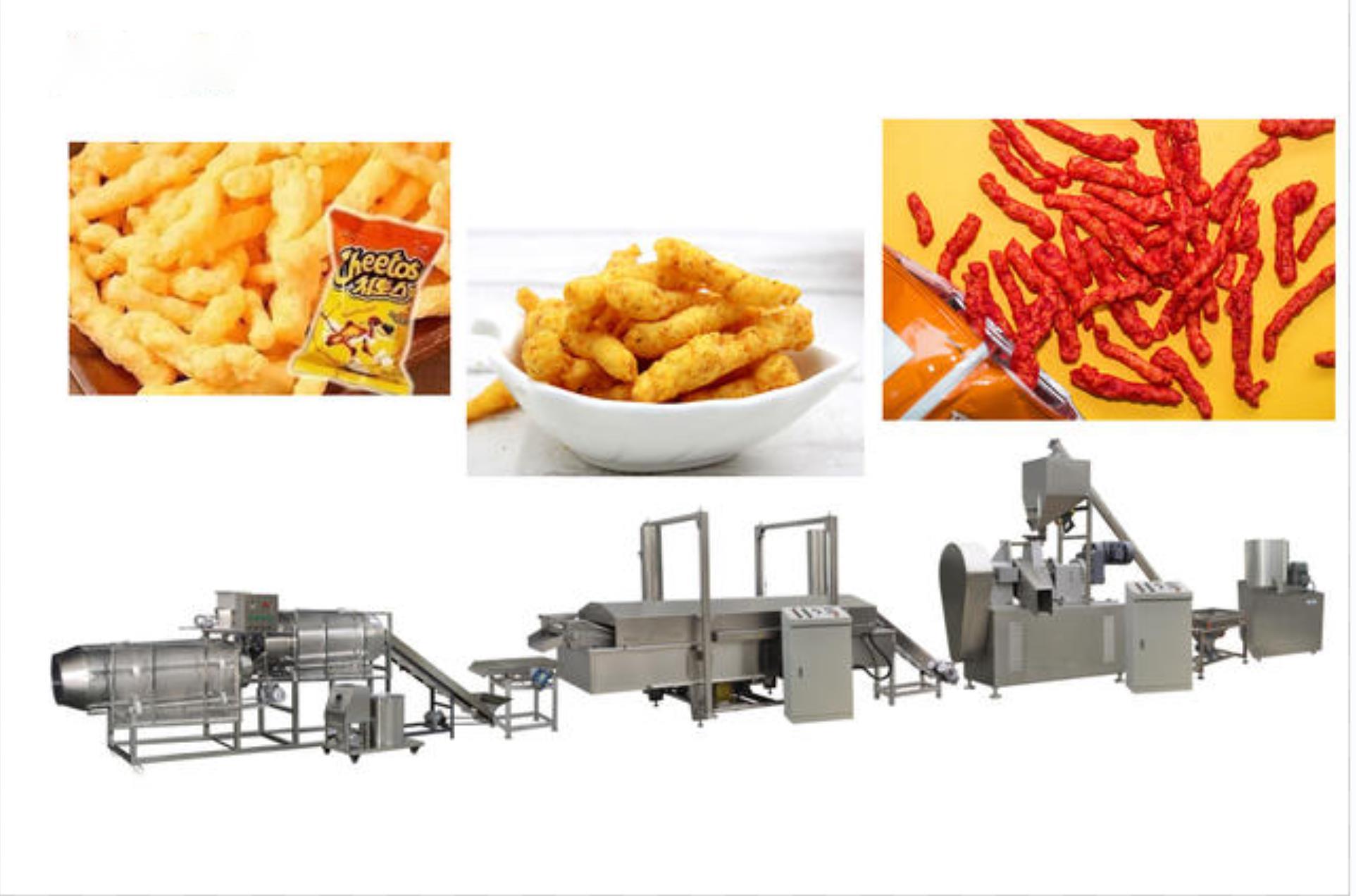
The transformation from a humble cornmeal slurry into those famously crunchy, airy Cheetos begins inside a high-temperature, high-pressure extruder. Unlike simple pasta presses, the machines used here subject the wet mixture to intense mechanical shear and precise thermal control. As the dough passes along the screw, starch granules gelatinize and proteins align, creating a molten, plasticized mass. The real texture-defining moment happens at the die, where a sudden drop in pressure causes water to flash into steam, puffing the product into its characteristic open, porous structure. Fine-tuning variables like moisture content, screw speed, and die geometry directly influences whether the snack emerges delicately crisp or satisfyingly dense.
Control over mouthfeel doesn't stop at the die face. Sophisticated cutting mechanisms slice the extruded rope into precise shapes, but the post-extrusion conditioning is equally vital. Rapid drying and coating systems lock in the brittle texture while adding flavor, preventing the dreaded soggy collapse. Some advanced lines incorporate inline sensors that measure expansion ratios and adjust parameters on the go, ensuring every curl or puff meets exacting standards. This marriage of thermodynamics, fluid mechanics, and real-time feedback lets manufacturers tweak bubble size, cell wall thickness, and overall friability—turning out snacks that crunch in a way that feels almost custom-engineered for the human bite.
Modern extrusion technology also embraces novel ingredient streams that would have been impossible to process decades ago. Pea protein, lentil flour, or ancient grains can now be coaxed into familiar Cheetos-like textures through twin-screw extruders with modular barrel sections. These machines permit sequential feeding of heat-sensitive additives and the injection of supercritical fluids to create finer, more uniform cell structures. By manipulating barrel temperature profiles and shear rates, texture profiles ranging from crumbly to shatteringly crisp become accessible without altering the base recipe, meaning a single platform can switch between indulgent, melt-in-your-mouth puffs and harder, dippable sticks—all by reimagining the very physics that shape our favorite snacks.
Streamlining Production Without Sacrificing Crunch
Many studios treat crunch like a necessary evil—an uncomfortable sprint to the finish line. Yet, blindly slashing crunch often surfaces hidden dependencies and last-minute fire drills that leave the team more exhausted than before. The real opportunity lies in stripping away the chaotic noise that makes crunch feel crushing, while preserving the intense, focused energy that actually ships games. When the pipeline is clean, deliberate crunch can evolve from a desperate scramble into a short, strategic push that feels almost exhilarating.
Practical streamlining starts with the unglamorous work of identifying repetitive friction points—asset handoffs that bounce through five people, build pipelines that break mysteriously at 2 a.m., or approval chains that wait on one person’s inbox. Automating these low-leverage tasks isn’t about removing human oversight; it’s about freeing up mental bandwidth so that, during the few weeks of peak intensity, the team spends its collective intelligence on creative problem-solving rather than wrestling with tooling. I’ve seen small investments in one-click sanity checks and pre-configured staging environments turn weekend-long integration hell into a Friday afternoon task.
What emerges is a rhythm where production no longer oscillates between idle waiting and alarming overtime. Instead, the entire schedule tightens around meaningful milestones, and crunch becomes a limited, almost ritualized window that everyone understands and signs up for. Importantly, this isn’t about tricking people into working harder; it’s about respecting their time so thoroughly that, when the final push arrives, there’s no invisible weight of wasted effort dragging them down. Teams that pull this off find that quality doesn’t just survive crunch—it rises, because the madness has been deliberately shaped into something effective.
The Secret Behind Consistent Corn Curl Expansion
Consistent corn curl expansion starts long before the snack hits the fryer. It’s rooted in the precise control of moisture and starch gelatinization during the extrusion process. When cornmeal is mixed with just the right amount of water and subjected to high temperature and pressure, the starch granules absorb moisture, swell, and eventually burst, forming a uniform melt. This uniformity is critical—any variation in moisture or temperature can lead to uneven expansion, causing curls that are either too dense or riddled with air pockets. Mastering this phase means calibrating the extruder’s barrel profile and screw speed to match the specific cornmeal grade, ensuring every curl emerges with the same light, airy texture.
Die design and ingredient integrity also play an understated but vital role. The shape, size, and even the land length of the die opening influence how the melt expands when it hits atmospheric pressure. A poorly designed die can create turbulence that disrupts the internal cell structure, leading to inconsistent curl shapes. Meanwhile, the quality of the cornmeal itself—its granulation, fat content, and degree of degermination—determines how smoothly the dough transitions from dense melt to puffed curl. Small adjustments, like a slightly tapered die or a minor tweak in cornmeal coarseness, can transform a batch from mediocre to flawlessly consistent.
Beyond equipment and ingredients, the environment plays a quiet but persistent role. Ambient humidity, barometric pressure, and even the temperature of the water used in the mix can subtly alter the dough’s rheology on a given day. Veteran operators know to make slight, intuitive compensations—perhaps a minuscule reduction in water feed on a humid afternoon or a minor barrel temperature bump when a cold front moves in. This blend of technical precision and hands-on judgment turns corn curl production from a simple recipe-following task into a craft where every bag delivers the same satisfying crunch, batch after batch.
Smart Manufacturing Choices for Better Margins
Shifting to smarter manufacturing isn’t just about upgrading machines—it’s about rethinking how every step in production can trim costs without cutting corners. The real margin gains often come from reducing waste, avoiding downtime, and catching defects before they ripple through the line. When you connect equipment to real-time monitoring, you stop guessing about when a part will fail and start fixing it while it’s still a minor hiccup. That kind of proactive stance quietly fattens margins month after month.
Another overlooked angle is flexible automation that adapts without a full line rebuild. Modular robotics and plug-and-play vision systems let a single line handle product variations in minutes, not days. This slashes idle time during changeovers and lets you take on smaller, high-margin batches without the usual setup penalty. The upfront cost might sting, but the ability to pivot fast into niche orders often pays back within a few production cycles.
Data-driven scheduling is where many operations leave money on the table. Sequencing jobs based on real-time energy pricing, material availabilities, and operator skill levels can shave off surprising amounts from the per-unit cost. Pair that with predictive analytics that nudges maintenance windows to off-peak hours, and the combined effect turns a barely profitable product into a solid contributor. It’s less about working harder and more about letting the system orchestrate the subtle trade-offs humans typically miss.
Avoiding Downtime in High-Volume Snack Lines
When every minute of production counts, the smallest hiccup on a high-volume snack line can cascade into thousands of lost bags. The real secret isn't just faster fixes—it's building a system that rarely breaks. That starts with treating maintenance not as a calendar chore but as a live conversation with your machinery. Sensors tracking vibration, temperature, and torque can spot a bearing that's thinking about failing weeks before it actually does. Pair that with a team empowered to act on those whispers rather than waiting for a scream, and you shift from reactive scrambling to quiet confidence.
Changeovers, often the silent killer of uptime, don't have to be a necessary evil. Smart cart design, pre-staged ingredients, and standardized tooling can slash those minutes into seconds. One plant we saw reduced a forty-minute seasoning swap to under seven simply by rearranging the flow of people and parts, not by buying new equipment. And when something does go wrong? A frontline team that knows the line’s rhythms—not just its manual—can troubleshoot before the control room even gets an alert.
Finally, remember that downtime isn't just mechanical. A sticky hopper or clumped seasoning can choke throughput just as surely as a broken chain. Controlling humidity in storage areas, auditing ingredient flow regularly, and keeping a close eye on packaging material tension might seem mundane, but they're the invisible threads that keep the whole operation humming.
Customizing Shapes and Flavors at Scale
Crafting unique shapes and flavors on a large scale is a delicate balance of art and precision engineering. It begins with advanced molding techniques that can replicate intricate designs consistently, whether for gummies, chocolates, or savory snacks. By using flexible, food-grade silicone molds paired with high-speed depositing systems, manufacturers can switch between thousands of shape variants without sacrificing throughput. Flavor customization goes hand in hand, with micro-dosing technology that infuses distinct taste profiles into each product—think layered fruity bursts or slow-release spice blends. The key is modular equipment that adapts quickly, letting lines pivot from seasonal novelty items to year-round favorites with minimal downtime.
Scaling up doesn't mean dulling down. Instead, it's about harnessing data-driven recipe management so that every batch, whether 10,000 or 10 million units, hits the same sensory notes. Intelligent automation tracks temperature, humidity, and ingredient viscosity in real time, adjusting on the fly to prevent flavor drift or shape deformation. This precision allows for limited-edition runs that feel bespoke yet are produced at mass-market speed. For example, a confectionery brand can roll out a region-specific spice blend encased in a culturally resonant shape—like a lotus for an Asian market or a cactus for a Southwest U.S. launch—all while maintaining the efficiency of a standard line.
But the true magic lies in the interplay between consumer insights and flexible manufacturing. Agile production systems can quickly integrate trending ingredients, such as adaptogens or protein enrichments, and pair them with shapes that capture the zeitgeist—like celestial patterns or nostalgic video game icons. This responsiveness isn't just about novelty; it's about creating emotional connections through personalized treats that feel made just for you, even when millions are produced. The result is a product line that constantly evolves, turning one-time buyers into loyal fans who crave the next custom creation.
FAQ
Consistent quality comes from precise temperature control during extrusion, uniform moisture content in the raw material, and proper screw design. The die configuration also plays a huge role in shaping the final texture. Look for machines that offer easy adjustments to these parameters without lengthy downtime.
Efficiency starts with automated feeding systems that maintain steady material flow. Quick-change die systems reduce changeover time between product types. Energy-efficient motors and heat recovery systems cut operating costs. Also, monitoring software that tracks production metrics in real time helps spot bottlenecks early.
Corn curls usually require a simpler die and lower expansion ratios, while Cheetos puffs need higher temperature and pressure to get that airy, puffed texture. The recipes differ too—corn curls often use degermed corn meal, whereas cheese puffs might incorporate starches and flavorings before extrusion. A versatile machine with adjustable barrel sections can handle both.
Look beyond the price tag. A solid manufacturer offers on-site testing with your specific raw materials, detailed process documentation, and responsive after-sales support. They should be willing to share case studies from similar snack plants. It’s also smart to check if they provide training for your operators and understand local food safety regulations.
Regular cleaning of the die and screw elements prevents buildup that affects product shape. Lubricating and inspecting gearboxes monthly keeps the drive system reliable. Keeping a log of barrel temperatures and pressures over time allows you to predict when wear parts might need replacing. Partnering with a manufacturer that offers remote diagnostics can also speed up troubleshooting.
Extrusion cooks the starch, which develops the base flavor and crunch. The expansion at the die exit creates the porous structure that affects mouthfeel. Screw speed and barrel temperature profiles can be tweaked to get a denser curl or a lighter puff. Post-extrusion seasoning adhesion also depends on the surface texture formed during expansion.
Newer machines feature modular screw designs that let you reconfigure for different products without buying entirely new units. Integrated vacuum systems can remove moisture for denser snacks. Touchscreen interfaces with recipe storage simplify changeovers. Some manufacturers now offer data analytics modules that predict maintenance needs and optimize energy use.
Conclusion
The distinct texture of Cheetos-style corn curls doesn’t happen by accident—it’s a direct outcome of how the extrusion equipment manages shear, temperature, and moisture in sync. Modern twin-screw extruders allow precise control over the gelatinization of corn masa, creating that airy yet sturdy crunch. By fine-tuning screw profiles and die geometries, manufacturers lock in the right cell structure so the snack stays crisp from the first bite to the last, even after seasoning. The goal isn’t just speed; it’s about hitting an expansion ratio that feels consistent batch after batch, while keeping the process forgiving enough to run around the clock without constant adjustment.
Bringing this kind of reliability to a high-volume line means looking beyond the extruder itself. Smart choices in preconditioning, drying, and oiling stages can lift margins without trimming quality. For instance, synchronizing cutter speeds with die face design prevents misshapen pieces and reduces waste. Predictive maintenance using real-time pressure and vibration data cuts unplanned stoppages that kill throughput. And when the brief calls for novelty—a spicy flavor twist or a ring-shaped puff—quick-change die plates and inline seasoning drums make it possible to pivot without rebuilding the entire line. The real edge comes from treating the extruder not as isolated hardware, but as the heart of an interconnected system built for both consistency and agility.
Contact Us
Contact Person: LILY SUN
Email: [email protected]
Tel/WhatsApp: 0086-13969103791
Website: https://www.snackfoodmachinery.com/