

Chinese Contact Plate Freezer: Efficient Cooling Solutions for Food Preservation
2026-04-17
In the fast-paced world of food preservation, efficiency and reliability are paramount. Enter the Chinese contact plate freezer – a game-changing technology that seamlessly integrates speed with precision cooling, ensuring your products stay fresh from farm to table. At Worldbase, we pride ourselves on offering cutting-edge solutions that not only meet but exceed industry standards. Our freezers are designed with sustainability in mind, reducing energy consumption while maximizing output. Whether you're a large-scale manufacturer or a small business looking to expand, our systems deliver consistent results that keep your goods in peak condition. Dive into this blog to discover how our innovative approach can revolutionize your operations and help you stay ahead in the competitive market. Ready to learn more? Click here to explore our full range of offerings and see the difference for yourself. Worldbase – where quality meets efficiency, every time.
What is a Chinese Contact Plate Freezer?
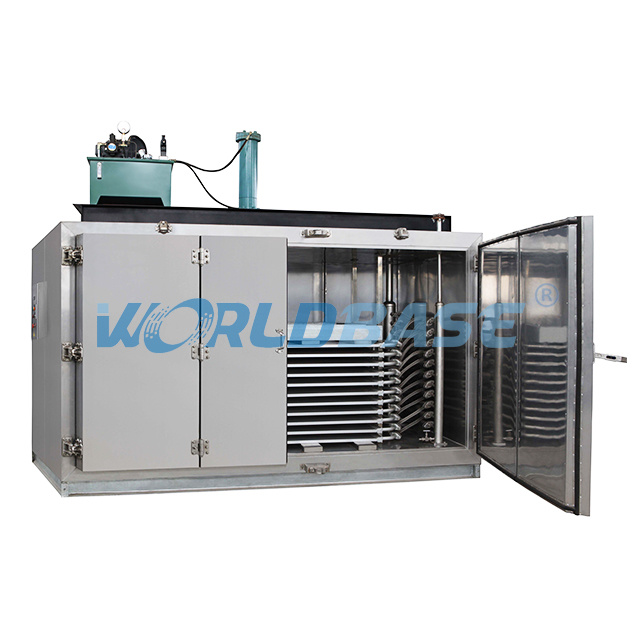
When you're looking to freeze food quickly and efficiently, a Chinese contact plate freezer might be the unsung hero in industrial refrigeration. These units are widely used in China and beyond, leveraging flat metal plates that make direct contact with the product, such as seafood, meat, or vegetables. This direct contact allows for rapid heat transfer, significantly reducing freezing times compared to traditional methods. They're often compact and modular, making them ideal for factories with limited space, and their robust design helps maintain consistent temperatures, ensuring food safety and quality.
What sets these freezers apart is their adaptability to various production needs. In China's bustling food industry, they cater to high-volume processing, handling everything from delicate shrimp to large cuts of beef without compromising texture. The plates can be arranged horizontally or vertically, offering flexibility in how products are loaded and unloaded. This versatility, combined with energy-efficient cooling systems, helps businesses cut costs while meeting strict hygiene standards, making them a go-to choice for manufacturers aiming to scale up operations.
Beyond just freezing, Chinese contact plate freezers are engineered for durability and ease of maintenance, with many models featuring stainless steel construction to resist corrosion in humid environments. They support rapid freezing that minimizes ice crystal formation, preserving the natural taste and nutritional value of foods. As global demand for frozen products grows, these freezers play a key role in enabling efficient supply chains, from local farms to international markets, showcasing how Chinese innovation in refrigeration technology supports sustainable food processing worldwide.
How Does It Work for Food Preservation?
Food preservation is a fascinating process that taps into basic scientific principles to extend the shelf life of what we eat. It works by targeting the main culprits of spoilage: microorganisms like bacteria, yeast, and mold, along with chemical reactions that degrade texture and flavor. Each preservation method, from ancient techniques like salting and drying to modern innovations like canning and refrigeration, creates an environment inhospitable to these spoilers, slowing their growth or halting them outright. For instance, removing moisture through drying deprives microbes of the water they need to thrive, while canning uses heat to kill organisms and a vacuum seal to prevent re-contamination. These methods aren't just tricks—they're tools rooted in biochemistry that help keep food safe and tasty long after harvest, reducing waste and allowing seasonal foods to be enjoyed year-round.
One standout example is fermentation, where preservation actually enhances the food rather than just preserving it. In this process, beneficial bacteria or yeasts naturally present on foods like cabbage or grapes convert sugars into acids, alcohol, or gases. The result, such as in sauerkraut or wine, not only inhibits harmful microbes through increased acidity but also develops unique flavors and textures that are prized globally. It's a dynamic approach that transforms raw ingredients into something new, highlighting how preservation can be creative and culturally significant, rather than a mere stopgap against decay.
Cold storage techniques, like refrigeration and freezing, offer another angle by slowing down enzymatic and microbial activity without altering the food's fundamental structure. By lowering the temperature, these methods reduce the speed at which spoilage organisms multiply and chemical reactions occur, effectively putting food in a 'pause' state. Think of freezing berries at peak ripeness—it locks in their nutrients and flavor, so you can enjoy a burst of summer in the dead of winter. This modern convenience relies on precise temperature control, a leap from the icehouses of the past, yet it showcases how straightforward adjustments in our environment can make a big difference in food longevity.
Key Benefits in Efficient Cooling
Efficient cooling systems not only enhance comfort but also significantly reduce energy consumption, leading to lower utility bills and a smaller environmental footprint. By optimizing temperature control, these systems prevent energy waste, making them a smart choice for both residential and commercial settings where sustainability is a priority.
Another key advantage is the extended lifespan of equipment, as consistent and precise cooling helps avoid overheating and reduces wear and tear on components. This translates to fewer repairs and maintenance costs over time, ensuring reliable operation and peace of mind for users who depend on their systems daily.
Moreover, efficient cooling can improve indoor air quality by maintaining stable humidity levels and minimizing the buildup of contaminants, creating a healthier environment for occupants. This added benefit makes it an essential feature in spaces where well-being and productivity are closely linked to climate control.
Applications Across the Food Industry
From farm to fork, the integration of advanced technologies is reshaping every corner of the food landscape. Take automated sorting systems, for instance, which now use high-resolution cameras and AI to detect blemishes in produce with remarkable precision, reducing waste and enhancing quality control. Meanwhile, smart packaging equipped with sensors monitors freshness in real-time, alerting consumers when products are nearing expiration, a simple yet impactful innovation that boosts food safety.
In distribution, blockchain is quietly revolutionizing traceability, allowing for transparent supply chains where each ingredient's journey can be verified at a glance. This isn't just about compliance; it's building trust with customers who increasingly demand authenticity. Restaurants and food service providers are leveraging data analytics to predict trends and optimize menus, creating personalized dining experiences that resonate on a deeper level, far beyond generic offerings.
Even in home kitchens, apps are bridging the gap, suggesting recipes based on pantry inventory or dietary preferences, making cooking more intuitive and less wasteful. These subtle shifts, often unnoticed, collectively drive efficiency, sustainability, and consumer satisfaction across the industry, proving that innovation thrives in the details.
Features of This Modern Freezing Technology
One standout feature of this modern freezing technology is its ability to preserve food texture and nutrient integrity with unprecedented precision. Unlike traditional methods that often cause ice crystals to form and damage cellular structures, it uses rapid cooling techniques that minimize crystallization, ensuring that fruits, vegetables, and meats retain their natural juiciness and flavor long after freezing. This advancement not only enhances food quality but also reduces waste by extending shelf life without relying on excessive preservatives.
In addition, the technology incorporates smart sensors and automation to optimize energy usage and operational efficiency. By dynamically adjusting cooling parameters based on real-time data, it reduces electricity consumption and minimizes environmental impact, making it a sustainable choice for both industrial and household applications. This adaptability also allows for seamless integration with modern kitchen systems, providing users with intuitive controls and customizable settings for various freezing needs.
Another key aspect is its versatility across diverse industries, from food processing to pharmaceuticals. The freezers are designed with modular components that support easy maintenance and scalability, enabling businesses to upgrade or expand their freezing capabilities without significant downtime. This flexibility, combined with enhanced reliability, positions the technology as a forward-thinking solution for evolving market demands and regulatory standards.
Choosing the Right Model for Your Needs
When it comes to selecting a model, it's easy to get lost in technical specifications, but the key is to step back and really think about what you're trying to achieve. Start by asking yourself a few fundamental questions: What specific problems are you aiming to solve, and what outcomes matter most to you? For instance, if you're building a system to recommend products, you might prioritize accuracy in predictions over raw processing speed. Or, if you're working on a chat application, user engagement and natural conversation flow could be more critical than supporting a vast number of languages. By clarifying your goals upfront, you can avoid the common pitfall of choosing a model based on popularity alone, which might not align with your unique context. This initial reflection helps narrow down the field, making the selection process more manageable and tailored to your situation.
Next, consider the practical constraints you're operating under, such as budget, available data, and technical expertise. A sophisticated model might offer impressive capabilities, but if it requires massive datasets you don't have, it could be a poor fit. Similarly, think about the computational resources at your disposal; a model that needs high-end hardware might not be feasible for a small team or a project with limited funding. Don't overlook ease of use and integration either—some models are designed with user-friendly interfaces and robust support, which can save you time and reduce headaches during implementation. Balancing these factors helps ensure that the model you choose not only meets your needs but also fits smoothly into your workflow without overburdening your resources.
Finally, it's wise to test a few options in a real-world setting before making a final decision. Set up small-scale experiments or pilots to see how different models perform with your actual data and tasks. This hands-on approach can reveal nuances that aren't apparent from documentation alone, such as how a model handles edge cases or scales under load. Keep an eye on flexibility and future growth as well; a model that can adapt to changing requirements or be fine-tuned over time might offer better long-term value. By combining thoughtful goal-setting with practical testing, you can make a confident choice that not only addresses your current needs but also supports your project as it evolves.
FAQ
A Chinese contact plate freezer is a specialized refrigeration system used in food processing, designed to rapidly cool or freeze food items by direct contact. It operates by placing food products, often in packaged or semi-packaged forms, onto metal plates that are internally cooled by a refrigerant. The plates transfer cold directly to the food, providing efficient heat exchange for faster freezing times compared to some traditional methods.
The main benefits include superior energy efficiency, as direct contact minimizes heat loss, and faster freezing speeds that help preserve food quality by reducing ice crystal formation. It's also compact and versatile, suitable for various products like meat, seafood, and prepared meals, often with better yield retention and lower operational costs in large-scale applications.
Unlike blast freezers that use air circulation, contact plate freezers rely on direct conductive cooling, which can be more uniform and quicker for flat or packaged items. Compared to spiral freezers, which are continuous and better for bulk items, plate freezers are often batch-based and excel at handling products that benefit from flat, even freezing, such as fish fillets or boxed goods.
It's particularly effective for freezing products with high moisture content or those requiring precise temperature control, like seafood, poultry, or pre-cooked meals. Industries use it in settings where space is limited, such as processing plants or ships, and for applications needing rapid cooling to extend shelf life while maintaining texture and nutritional value.
Regular maintenance involves checking plate surfaces for cleanliness to ensure optimal contact, inspecting refrigeration components for leaks or wear, and monitoring temperature controls. Proper defrost cycles and handling to prevent damage to the plates are also crucial to sustain efficiency and longevity in demanding food production environments.
Some challenges include the need for food to be relatively flat or uniformly shaped for effective contact, which can limit versatility. Initial costs might be higher than simpler systems, and batch processing can reduce throughput compared to continuous freezers. Additionally, improper loading or maintenance can lead to inefficiencies or product quality issues.
Many newer models are designed with eco-friendly refrigerants and energy-saving features, such as improved insulation and smart controls to reduce electricity use. They align with sustainability goals by minimizing food waste through better preservation and supporting efficient resource use in green-certified facilities, contributing to lower carbon footprints in the supply chain.
Emerging trends include the adoption of IoT and automation for real-time monitoring and optimization, enhanced materials for better durability and hygiene, and designs that cater to niche products like plant-based foods. Innovations focus on increasing speed, reducing energy consumption, and integrating with smart factory systems to meet growing demand for high-quality, preserved foods globally.
Conclusion
The Chinese Contact Plate Freezer represents a groundbreaking approach to food preservation, offering efficient cooling solutions by directly transferring cold energy through conductive plates. This technology stands out by rapidly lowering temperatures of food items placed in contact with these plates, minimizing thermal resistance and energy loss. Unlike traditional methods that rely on air circulation, this direct contact method ensures faster freezing times and superior preservation of food quality, texture, and nutritional value. It integrates key benefits such as enhanced efficiency and reduced operational costs, making it a versatile tool across the food industry. By focusing on precise temperature control, it addresses the need for reliable and scalable freezing solutions, catering to everything from seafood to processed goods. This innovation not only improves food safety by inhibiting bacterial growth but also supports sustainability through energy savings.
In practical applications, these freezers are designed with modern features like automated controls and modular setups, allowing customization to meet diverse needs. When choosing the right model, considerations include production volume, space constraints, and specific food types, ensuring optimal performance. The technology's adaptability makes it suitable for various sectors, from large-scale manufacturing to niche artisanal producers. By streamlining the freezing process, it reduces waste and extends shelf life, ultimately benefiting both producers and consumers. This advancement highlights how targeted cooling solutions can revolutionize food preservation, blending efficiency with practicality to meet evolving industry demands. Through continuous innovation, Chinese Contact Plate Freezers are setting new standards in fast, reliable, and eco-friendly freezing methods.
Contact Us
Contact Person: Mr Yang
Email: [email protected]
Tel/WhatsApp: +8613809083091
Website: https://en.worldbase.cn