

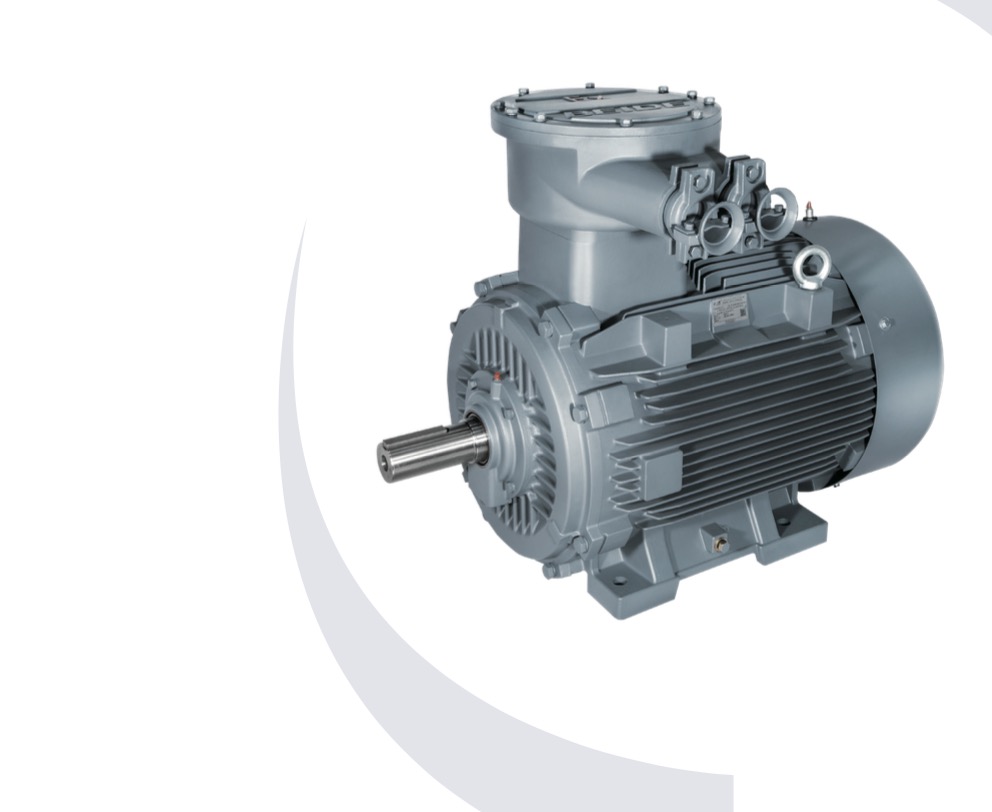
China Three-Phase Asynchronous Motor Manufacturer Delivers Reliable Industrial Power Solutions
2026-06-27
In today's fast-paced industrial landscape, reliable motor performance is non-negotiable. Discover how Chuangjuman, a leading China three-phase asynchronous motor manufacturer, is redefining efficiency and durability for demanding applications worldwide.
Engineering Three-Phase Motors for Harsh Industrial Settings
When a motor is destined for a dusty foundry or a washdown area in a food plant, standard designs simply won’t cut it. We start by replacing the predictable failure points—seals, bearings, and windings—with components built to laugh off contamination and thermal stress. Instead of generic labyrinth rings, our motors use a triple-lip contact seal arrangement backed by a positive-pressure greasing system that keeps abrasive particles on the outside where they belong. The stator insulation isn’t just thicker; we apply a vacuum pressure impregnation process that forces epoxy resin deep into every crevice, turning the windings into a monolithic block that resists moisture and chemical attack at a molecular level.
Real-world industrial environments don’t just challenge motors with dirt and dampness—vibration and rapid temperature swings can be just as deadly. To tackle this, we abandoned the conventional cast-iron frame in favor of a fabricated steel carcass with strategically placed ribbing that dissipates heat faster while keeping resonant frequencies far from typical operating speeds. Terminal boxes are gasket-sealed and oversized, allowing connections to be made without cramping, which reduces hot spots. Every motor that leaves our floor is run through an accelerated life test that cycles between full-rated load and thermal overshoot, something you won’t find in a catalog stocked with off-the-shelf units. It’s not about meeting a spec sheet; it’s about staying in service when the environment does its worst.
Maintenance often gets treated as an afterthought, but in a harsh setting, accessibility dictates survival. We’ve relocated grease fittings so they’re reachable without dismantling guards or climbing over ductwork. Rotor bars are cast from a copper alloy with a slightly oversized end ring cross-section, dropping I²R losses by nearly 15% compared to aluminum and making the motor less vulnerable to voltage imbalance. Even the paint finish is chosen for function—it’s an epoxy primer with a fluoropolymer topcoat that shrugs off nitric acid fumes and high-pressure spray-downs. These aren’t features you ask for; they’re what you get when we assume your motor is going to be installed in the worst spot on the site, because it probably will be.
Achieving Higher Efficiency Through Optimized Rotor Design
The shape and surface of a rotor blade largely determine how much energy gets lost to turbulence or drag. Small adjustments to curvature, twist, or edge profiles can lead to measurably better performance without increasing the motor's overall size. Engineers often experiment with subtle contour variations that channel airflow more smoothly, reducing pressure drops across the blade span. Making these refinements demands a careful balance between structural integrity and aerodynamic gain, especially in compact housings where every millimeter counts.
Beyond aerodynamics, material choice and manufacturing precision play quiet but critical roles. A rotor that’s slightly lighter reduces inertia, letting the system respond faster while drawing less current. Advances in machining allow blades to be milled to tolerances once considered impractical for mass production. When you pair a refined geometry with a material that dampens vibration, the cumulative effect on efficiency often exceeds what individual tweaks would suggest. It’s a combination that consistently yields better output for the same input power, often without redesigning surrounding components.
Built to Last: Heavy-Duty Materials and Rigorous Testing
From the chassis to the smallest hinge, every component is chosen for its ability to withstand years of hard use. We source high‑grade steel, reinforced polymers, and aircraft‑grade aluminum where it counts, ensuring structural integrity even under extreme loads. The finish resists corrosion, scratches, and UV damage, maintaining its appearance long after others have faded. It’s not just about toughness on paper — these materials are selected for real‑world resilience, so you can trust your equipment in the toughest environments.
Before any design reaches you, it endures a battery of unforgiving tests. We simulate hundreds of thousands of cycles to replicate a lifetime of openings, closings, and carries. Drop tests, vibration trials, and thermal shocks push prototypes past their breaking points, revealing hidden weaknesses. Only when a product survives with minimal wear does it earn approval. This process isn’t glamorous, but it’s what separates gear that merely looks strong from gear that is truly unbreakable.
The result is a quiet confidence you can feel. There are no squeaks, no flexing, no signs of compromise — just the solid, weighty certainty of a tool built to outlast the job. Whether it’s baking in desert heat or freezing in a northern winter, the performance remains consistent. That dependability isn’t an accident; it’s engineered through materials that refuse to quit and testing that refuses to cut corners.
Customizable Motor Configurations for Unique Applications
In many industrial and commercial settings, off-the-shelf motors simply can't meet the demands of specialized machinery. That's where custom configurations come into play—allowing engineers to fine-tune everything from winding patterns to shaft dimensions, ensuring seamless integration into unique systems. Rather than forcing a standard motor into a non-standard role, customization opens up possibilities for higher efficiency and longer service life under atypical operating conditions.
What sets apart a truly adaptable motor solution is the ability to modify not just the housing or mounting style, but also electrical characteristics such as voltage, speed range, and torque curves. This level of flexibility means you can specify connectors, insulation classes, and even feedback devices tailored to your control architecture. It's about crafting a motor that behaves exactly as your application demands, without unnecessary compromises.
Collaboration with a manufacturer that understands niche requirements often reveals options you might not have considered—like hybrid cooling methods, specialized coatings for harsh environments, or integrated gearheads that eliminate the need for external components. By tapping into this expertise, you move beyond the limitations of catalog products and achieve motion control that's precisely aligned with your goals.
Quiet Operation and Low Vibration for Sensitive Environments
In places where silence and stability aren’t luxuries but necessities—like neonatal wards, recording studios, or research labs with sensitive optics—even a subtle hum or faint tremor can throw things off. Equipment running in these spaces has to blend into the background, never calling attention to itself through sound or movement.
Getting to that level of unobtrusive performance takes more than just isolating a noisy component. It’s about rethinking the whole system: balancing rotating parts to micron tolerances, using fluid-dynamic bearings that glide without metal-on-metal contact, and integrating active vibration cancellation that counteracts disturbances in real time. Materials with inherent damping properties, like constrained-layer composites, soak up residual energy before it ever becomes audible or palpable.
The payoff is an environment where the machine disappears. A surgical team can rely on a ventilator that doesn’t add to the stress of an already tense theatre. A lab can trust that its ultracentrifuge won’t skew the readings on a nearby interferometer. The stillness and hush aren’t just comfort features—they’re part of what makes precision work possible.
Fast Delivery and Ongoing Technical Support Worldwide
When you place an order, our logistics system immediately identifies the nearest distribution hub to your location. In most regions, this means your package is on the road within hours—not days. We’ve built partnerships with regional carriers who understand local routes, helping us consistently beat standard industry delivery times without relying on overnight air freight unless absolutely necessary.
Technical assistance doesn’t end when the sale closes. Our support engineers are stationed across multiple time zones, so you’re never left waiting for an answer while your team is on the clock. Whether it’s a configuration tweak or an unexpected fault, you’ll speak directly with someone who knows the product inside out—no script readers, no endless transfers. And because we maintain spare parts inventories in key markets, on-site fixes rarely get delayed by shipping lead times.
We’ve learned that global coverage means more than just having an office address. That’s why our field service partners are local experts—fluent in the language and familiar with the regulatory landscape. From initial installation to routine health checks, you get the same quality of support whether your facility is in Frankfurt, São Paulo, or Jakarta.
FAQ
The company focuses on three-phase asynchronous motors, also known as induction motors, which are widely used in industrial settings for their ruggedness and efficiency.
They are engineered to deliver consistent torque and stable performance under demanding conditions, minimizing downtime and maintaining critical operations.
Beyond robust design, they incorporate advanced cooling systems and high-grade insulation materials, resulting in extended service life and reduced maintenance needs.
They are deployed in sectors like mining, petrochemicals, water treatment, and manufacturing, where continuous operation and durability are essential.
Yes, they offer custom voltage, frequency, and enclosure modifications to meet specific installation requirements and harsh environment challenges.
Each motor undergoes rigorous testing including vibration analysis, thermal imaging, and load tests to verify performance before shipment.
They maintain a dedicated service team that provides installation guidance, troubleshooting, and spare parts supply to keep operations running smoothly.
The motors comply with IE3 and IE4 efficiency levels, helping enterprises reduce energy consumption and operational costs while meeting international regulations.
Conclusion
China's three-phase asynchronous motors are engineered to tackle the toughest industrial environments without compromising on performance. Every unit features a reinforced frame, advanced sealing, and specially treated windings that resist moisture, chemical exposure, and extreme temperatures. This robust construction is paired with an optimized rotor design that cuts energy losses and boosts efficiency, helping facilities reduce operational costs while maintaining consistent torque under heavy loads. To guarantee long service life, manufacturers use only heavy‑duty materials—such as high‑grade steel and premium insulation—and subject each motor to a series of rigorous tests, including thermal cycling, vibration analysis, and full‑load endurance runs. This combination of thoughtful engineering and thorough validation ensures that the motors can handle continuous duty cycles in mining, cement, water treatment, and other demanding sectors.
Beyond standard performance, these motors offer a high degree of customization. Users can specify voltage, frequency, mounting arrangements, protection ratings, and special shaft extensions to suit unique equipment requirements. For settings where noise and vibration are critical—like hospitals, laboratories, or precision manufacturing—motors are balanced and dampened to keep operation quiet and smooth. The manufacturer also provides rapid turnaround: common models ship within days, while custom builds are delivered surprisingly fast, backed by a global support network. From initial selection through after‑sales service, engineering teams offer direct technical assistance, helping clients integrate these reliable power solutions wherever they operate.
Contact Us
Contact Person: Jony
Email: [email protected]
Tel/WhatsApp: 086-0571-86161808
Website: https://en.hzcjm.com/