

China Plate Heat Exchanger Solutions for Smarter Industrial Temperature Control
2026-11-21
Industrial temperature control often walks a narrow line between efficiency and downtime. In plate heat exchanger systems, even a small deviation in thermal performance can ripple into production delays or energy waste. ROTER approaches this challenge from the field, not just the datasheet—combining compact design with predictable heat transfer for engineers who need smarter, repeatable results. In this post, we look at the common pressure points in modern temperature management and how the right plate heat exchanger solution turns them into measurable operational gains.
What Plate Corrugation Depth Changes About Your Heat Transfer Curve
Corrugation depth doesn’t just add mechanical strength to a plate pack—it directly reshapes how the heat transfer curve behaves. With a shallower pattern, the fluid moves in a smoother, more orderly path, which keeps pressure drop low but also limits the turbulence near the wall. That often shows up as a flatter curve at lower velocities, where the overall heat transfer coefficient rises slowly because the thermal boundary layer stays relatively thick.
Switch to a deeper corrugation and the picture changes quickly. The fluid is forced into tighter, more frequent changes of direction, generating stronger local mixing and thinning the boundary layer even at moderate flow rates. On the curve, you’ll see a steeper climb in the heat transfer coefficient, but the trade-off appears on the pressure drop axis. The curve becomes more sensitive to flow changes, meaning small adjustments in pumping power can push performance up sharply or waste energy if the system isn’t rebalanced.
The practical reading of that curve shift comes down to operating window. Deeper plates buy you higher heat recovery in a smaller footprint, but only if your pump and fouling limits can handle the extra shear and velocity. Shallower plates offer a gentler, more forgiving curve for viscous or particle-laden fluids where a steep pressure rise would quickly become a bottleneck. So the corrugation depth isn’t a one-way upgrade—it’s a dial that tilts the whole heat transfer curve toward either efficiency or hydraulic restraint.
How Smart Monitoring Turns Temperature Drift Into Early Warnings
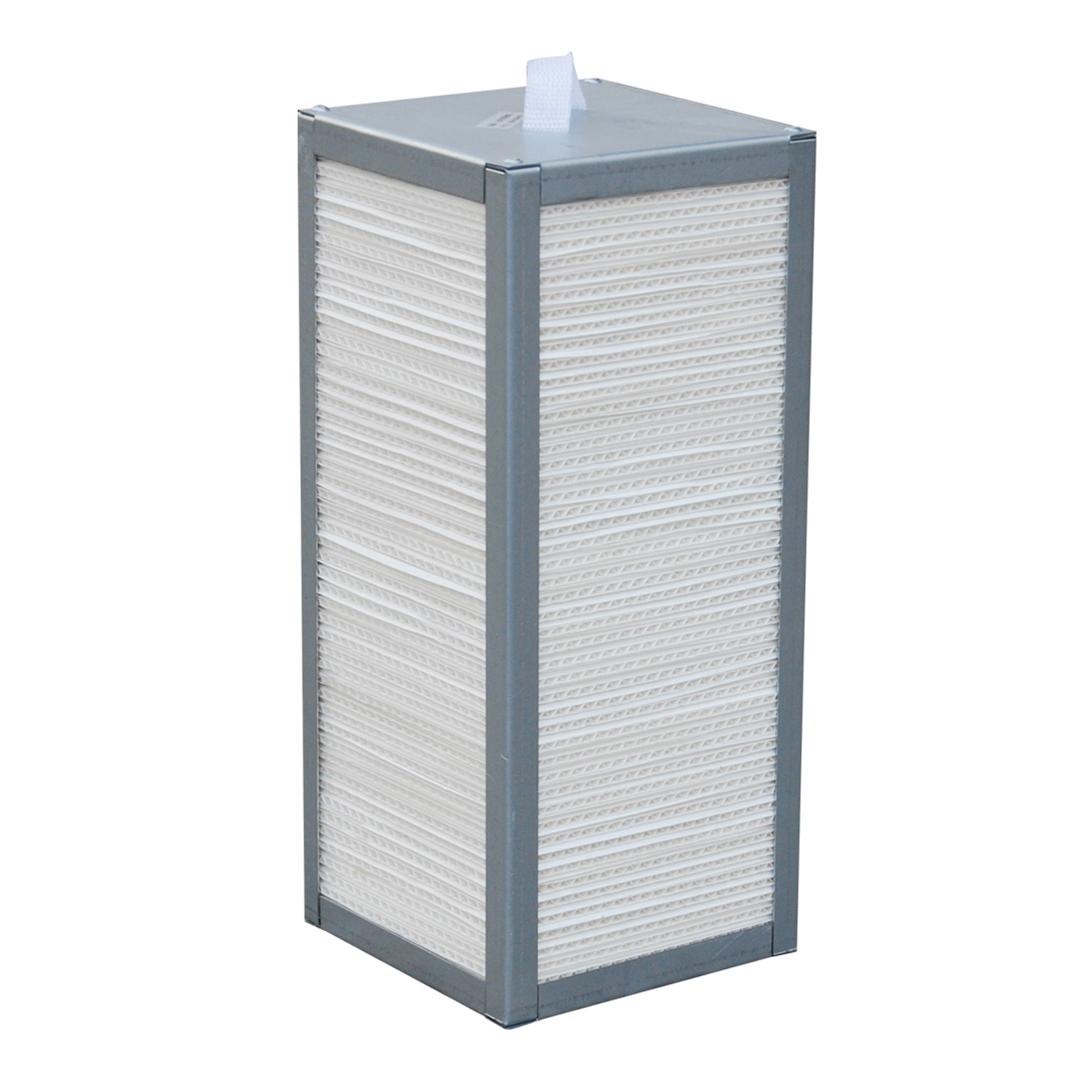
A temperature shift of a degree or two rarely looks like trouble on its own. Equipment keeps running, operators stay focused elsewhere, and the drift disappears into normal variation. But that small change often carries an early physical trace of wear, blockage, or failing lubrication. Smart monitoring picks up these subtle movements by learning the usual thermal signature of each machine, so a reading that is only slightly high for one asset can be recognized as meaningful for that specific unit.
The difference comes from context. Older systems tend to alarm on fixed limits, producing noise that eventually gets ignored. A more useful approach compares live temperature behavior with load, ambient conditions, and runtime patterns. That filters out harmless fluctuations and leaves only the shifts that hold shape over time. A slow rise tied to reduced cooling performance, for example, appears as a steady trend long before it becomes a trip event.
When these faint signals are caught early, the response changes from emergency repair to planned attention. A warm bearing might need lubrication, or a heat exchanger may simply need cleaning. The warning is specific enough to guide action without guesswork. In that way, temperature drift stops being a vague concern and becomes a working signal that helps teams schedule the right fix while there is still room to decide.
Compact Units That Still Deliver Full Thermal Duty in Retrofit Spaces
Older buildings rarely offer the luxury of a bigger mechanical room. When a chiller or boiler reaches the end of its life, the replacement usually has to slide into the same corner, through the same doorway, and connect to the same headers. Compact retrofit units handle this by tightening fin spacing, reducing cabinet depth, and relocating controls so the thermal output remains intact. The machine may be shorter or narrower, but the full design duty still shows up at the connections.
That matters most when structural changes would ripple into cost and schedule. Rather than opening walls or rerouting headers, the mechanical team can set a replacement that falls within the old service envelope. Microchannel coils, staged compressors, and split casing options have made that possible while keeping capacity at the original specification. The result is a swap that respects the building's existing constraints instead of treating them as obstacles.
Gasket and Plate Materials for Fluids That Eat Standard Alloys
A fluid that eats standard alloys rarely announces itself in a straightforward way. Hot sulfuric acid can chew through 316 stainless in hours, yet the same material may hold up in cold dilute conditions. Wet chlorine, mixed nitric/hydrofluoric pickling baths, and chloride-laden streams at elevated temperatures are especially unforgiving. In these environments, gasket and plate selection has to start with the exact chemistry of the process stream, not just the pressure rating or flange class. A gasket that looks compatible on a generic chart can fail quickly once trace halides, oxygen, or metal ions shift the corrosion mechanism from uniform attack to pitting or stress cracking.
Fluoropolymers often become the default because PTFE, PFA, and FEP tolerate a wide range of acids, solvents, and halogens. But sheet PTFE cold-flows under load, so a plain PTFE gasket may relax and leak in a hot acid line. Filled PTFE, PTFE-enveloped designs, and expanded PTFE with densified surfaces reduce that tendency without sacrificing much chemical resistance. Flexible graphite handles high temperatures well and resists most non-oxidizing acids, but strong oxidizers such as concentrated nitric or hot oleum can attack it. In those cases, gasket makers turn to purified graphite, oxidation-inhibited grades, or move away from graphite entirely.
When the fluid is aggressive enough, even the hardware choices shift. Plate-and-frame heat exchangers may need plates in high-nickel alloys like C-276 or Alloy 20, or in more exotic materials such as tantalum, titanium, or silicon carbide. Gaskets paired with those plates are usually elastomer-based for moderate temperatures—EPDM, fluoroelastomer, or perfluoroelastomer—but PTFE-encapsulated or bonded constructions appear once temperatures climb or solvents attack rubber. The practical rule is to ask for immersion test data in the actual process fluid, including any trace contaminants, rather than trusting a general compatibility table.
Why Chinese Heat Exchanger Builds Can Ship Faster Without Cutting Testing
Many buyers assume faster lead times mean someone is skipping the hydrostatic test or rushing the final inspection. In practice, the schedule advantage usually comes from where the supply chain sits. A heat exchanger workshop in Shandong or Jiangsu can pull tube sheets, seamless tubes, baffles, and flanges from suppliers that are often less than a day away by truck. That removes days of waiting between cutting, drilling, welding, and assembly, so the unit moves through the shop without idle gaps. The tests themselves are still there; they just start earlier because the parts arrive earlier.
The testing sequence is also arranged differently. Instead of treating inspection as a single gate at the end, many builders run pressure tests, helium leak checks, and dimensional verification in parallel with final assembly steps where it is safe to do so. A third-party inspector can witness a shell-side hydro test while the tube bundle is being finished, for example. That overlap is planned around the code requirements rather than used to bypass them.
There is also a less obvious factor: repeat work on standard sizes. When a plant builds similar fixed tubesheet or U-tube designs every week, the test rigs, lifting paths, and documentation are already proven. Workers do not have to stop and figure out how to rig a 12-ton channel cover or where to connect the test pump. That familiarity shortens handling time, not the test duration or acceptance criteria. The result is a shorter build cycle with the same hold points, the same witness checks, and the same paperwork trail.
Keeping Multi-Product Lines Stable When Thermal Loads Shift by the Hour
Hourly swings in thermal load used to force line shutdowns and rushed changeovers, but the real stability comes from treating the shift as a schedule instead of a disturbance. We stopped chasing setpoints and started mapping which product lines absorb heat at different rates during morning ramp, midday peak, and late afternoon drop-off. That let us stagger high-draw runs against lighter thermal profiles, keeping the overall envelope from spiking.
The control loop now reads load movement fifteen minutes ahead, not just current return temperatures. When a line finishes a hot batch, spare capacity on a neighboring line gets tapped before exhaust temperatures climb. Operators see a simple lane-balance screen rather than a dozen independent alarms. The result is fewer thermal trips and no need to derate output to protect the weakest chiller circuit.
What changed most is how product sequencing is decided. Long-duration, high-heat items no longer bunch together at hourly boundaries. They are spread through the day against short-cycle, low-heat products that act as thermal buffers. It is a scheduling rhythm that keeps chilled water and air handlers from swinging hard, which matters more than adding another cooling unit when demand moves hour by hour.
FAQ
Their compact design packs a large heat transfer surface into a small footprint, so plants can hit tight temperature targets without sacrificing floor space. The corrugated plates also create strong turbulence, which keeps heat moving efficiently even when fluid properties shift.
The modular frame allows plates to be added or removed as capacity needs change. Instead of replacing an entire unit when throughput climbs, operators can simply reconfigure the plate pack and keep control loops stable across a wider operating range.
Many suppliers pair mature manufacturing capability with engineering support that understands both standard and custom thermal requirements. This often translates into shorter lead times and easier access to gaskets, plates, and service parts when maintenance windows are tight.
Plate and gasket selection directly affects how well the unit handles corrosion, fouling, and pressure swings. Stainless steel, titanium, or specialized alloys combined with the right elastomer keep heat transfer consistent and reduce the risk of unexpected downtime.
Yes, because their high heat recovery potential lets plants capture waste heat from one process and use it in another. That reduces the demand on boilers and chillers, leading to lower energy consumption without requiring a complete system overhaul.
Regular inspection of gaskets and plate surfaces is key. Opening the unit for cleaning, checking for scaling or deposits, and re-tightening to the specified dimension helps maintain thermal performance and extends the service life of the equipment.
It usually comes down to space, temperature approach, and cleaning needs. Plate models are often preferred when a compact footprint and close temperature control matter most, while shell-and-tube may still be chosen for very high pressures or fluids with heavy particulate loading.
A practical supplier will help size the unit, confirm connection layout, and provide guidance on commissioning and troubleshooting. That kind of direct engineering support reduces the guesswork during installation and helps the heat exchanger settle into the plant's control strategy faster.
Conclusion
Plate heat exchanger selection in Chinese manufacturing has moved well beyond simple footprint and price comparisons. Corrugation depth, for example, reshapes the entire heat transfer curve rather than just raising surface area. A shallower pattern may keep pressure drop low for viscous or shear-sensitive products, while a deeper press encourages turbulence at lower flow rates and can lift the overall heat transfer coefficient enough to shorten batch times. When those units are squeezed into existing plant rooms, compact frame designs with optimized plate pack arrangements still hit full thermal duty without demanding extra floor space or major piping rework. Meanwhile, gasket and plate material choices are treated as part of the thermal design, not an afterthought. Aggressive fluids that attack standard stainless call for higher alloys or specialized elastomers, and the best suppliers match material selections to both chemistry and temperature cycling so that sealing life does not become the weak point.
The control side is just as important. Smart monitoring catches temperature drift early by reading subtle shifts in inlet-outlet differentials, pressure drop and flow balance, turning what used to be a mid-shift surprise into a scheduled maintenance task. For multi-product lines where thermal loads swing hour by hour, modern control packages compensate with staged flow adjustment and predictive setpoint changes instead of relying on operators to chase conditions manually. Chinese fabricators have also tightened the gap between order and delivery by keeping plate pressing, gasket production and frame machining in closer coordination, which shortens lead times without cutting hydrostatic or thermal performance testing. The result is a supply model that treats speed and reliability as part of the same engineering workflow rather than trade-offs.
Contact Us
Contact Person: Rhea
Email: [email protected]
Tel/WhatsApp: +8618800560886
Website: https://www.rotorairtech.com