

Bulk Rotary Engraving Material Solutions for Consistent High-Volume Results
2026-11-18
High-volume rotary engraving often exposes the weaknesses in ordinary materials—uneven wear, inconsistent depth, and waste that quietly eats into margins. This guide explores what changes when your workflow relies on bulk rotary engraving material solutions built for repeatability rather than one-off results. Along the way, we look at how LYSHIRE approaches material consistency, helping shops maintain steady output when order volumes climb.
The Quiet Variables That Shift Across a Long Rotary Run
The metrics that get talked about after a long rotary run are almost never the ones that decided it. Cadence, split times, and heart rate stay visible, but they drift because of quieter forces: the slight crown in the pavement, the way each curve loads one ankle differently, the wind that shifts from headwind to crosswind as you round the far side.
Over time the repetition changes how attention works. Landmarks blur into a loop, and the mind stops noticing distance in the usual way. What shifts instead is smaller and more physical: salt drying on the skin, a strap loosening, the point at which thirst stops being a signal and becomes a background ache.
Often the decisive adjustments are the ones nobody writes down. A slight shortening of stride on the shaded section, a change in breathing when the sun reappears, a pebble that finally settles under the insole. These quiet variables accumulate quietly until the run is no longer defined by pace but by how long you managed them.
Material Grades That Earn Their Place After the First Hundred Parts
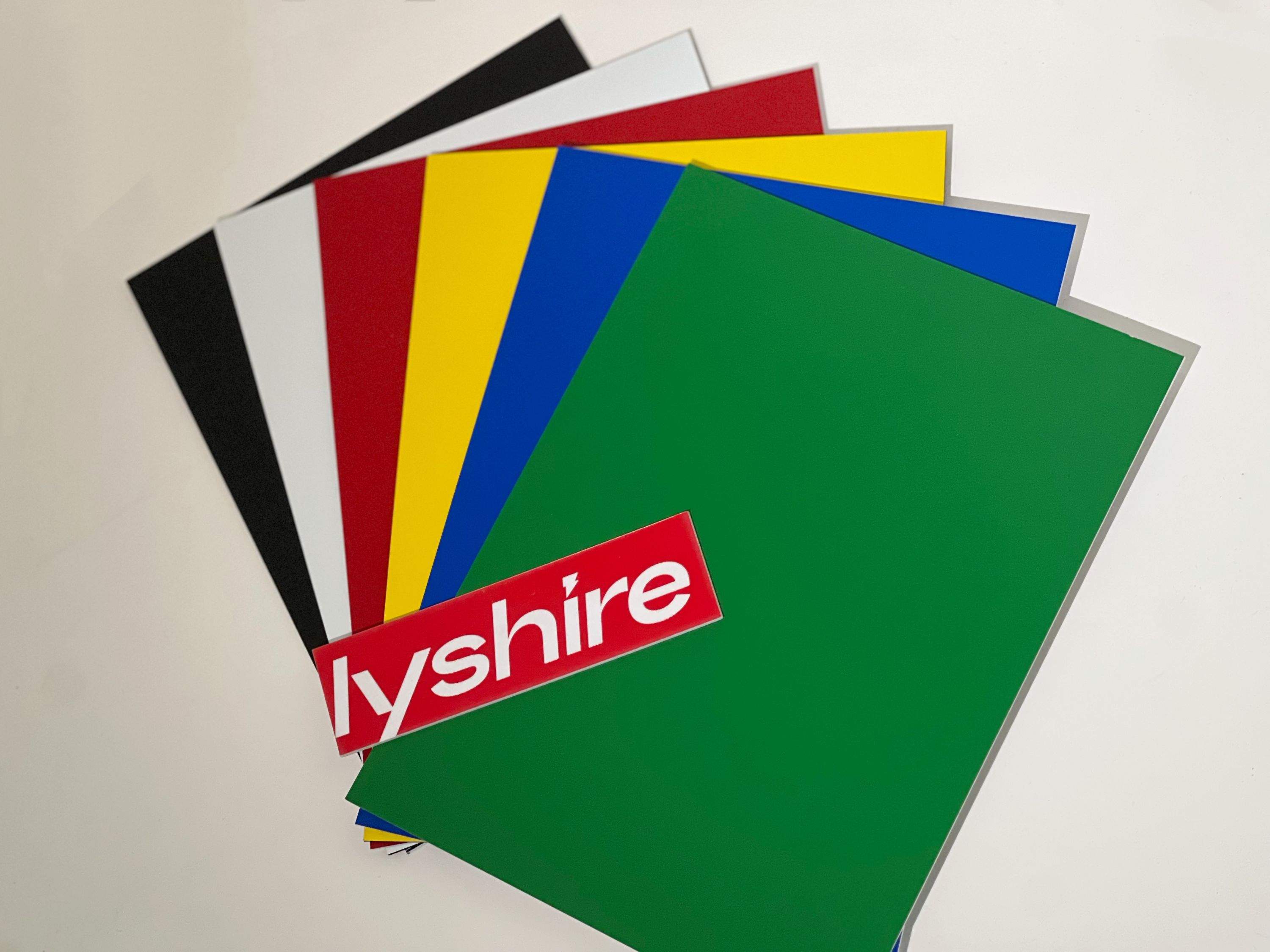
A material that looks great on a five-piece prototype run can start to show its real character somewhere around part eighty or ninety. That’s when small differences in melt stability, shrinkage, and how consistently the grade feeds through a hopper begin to separate dependable shop-floor materials from datasheet heroes. The grades worth reordering are usually not the ones that performed brilliantly on the first morning, but the ones that kept dimensions predictable when the barrel temperature drifted a few degrees on a humid afternoon.
After the first hundred parts, tool wear and residue buildup also enter the conversation. Some filled grades produce a fine, almost invisible abrasion that only becomes measurable once a mold has cycled enough times to matter. Others leave just enough outgassing or plate-out to make ejection slightly less clean. A material earns its place when it does not ask the operator to adjust clamp force, cushion, or cycle time every couple of dozen shots. That kind of consistency is more valuable than a slightly higher tensile number on a certificate.
Cost per pound can also be misleading until you look at what happens across a full morning of production. A cheaper material that creates occasional flash, stringing, or dimensional drift often costs more in sorting, regrind, and machine downtime than a premium grade that runs quietly through the entire lot. After a hundred parts, the real price shows up in how many good parts leave the cell without someone hovering over the settings.
Repeatable Depth Without Chasing the Bit
Depth falls apart when the monitoring volume shifts even a few decibels, because the ear reads loudness as proximity. Chasing a higher bit depth or a “more analog” converter rarely fixes that; it just adds another variable. The workable alternative is to anchor the front-to-back picture before touching any spatial processors. Set a fixed monitor level, pull back the low mids that blur the middle distance, and decide which two or three elements are allowed to stay dry. Those choices create the boundaries that make depth legible.
Once the anchors are set, the actual distance cues become repeatable. A short pre-delay with a dark early reflection will push a sound back the same way at 44.1 kHz or 96 kHz. If a reverb send is calibrated against a dry reference, the perceived room size stops drifting between sessions. The point is not to ignore resolution, but to stop looking for depth inside the bit stream. Depth lives in time, masking, and contrast, and those can be controlled with almost boring consistency.
The payoff is a mix that translates without last-minute heroics. When the same moves produce the same sense of distance every time, the work becomes less about rescuing a flat image and more about making deliberate front-to-back decisions. That is repeatable depth: a stable, unglamorous method that doesn’t need another converter upgrade to feel real.
Why Bulk Orders Punish Generic Stock
A bulk order looks like a win on paper, but it quickly exposes how little room generic stock leaves for negotiation. These are products with no real differentiation, so price becomes the only lever. When a large buyer asks for a discount, the margin on undifferentiated inventory shrinks to almost nothing, and the order ties up cash in goods that already had thin returns. The volume feels good in the moment, yet it rarely compensates for the lower unit profit and the strain on warehouse capacity.
Generic stock also lacks the buffer needed to absorb a sudden demand spike without disrupting normal operations. Fulfilling one oversized purchase often means pulling units away from steady, repeat customers and leaving shelves empty for weeks. Replenishment cycles are built around predictable movement, and a bulk request forces the team to choose between delaying regular orders or racing to restock at higher freight costs. Either way, the supposed efficiency of carrying standard inventory starts to work against you.
The deeper cost is the opportunity that disappears while all that generic inventory is locked into one account. Smaller, higher-margin buyers get pushed aside, and the business becomes more dependent on a customer whose loyalty is tied only to a lower price. Over time, this pattern erodes the value of the stock itself and makes it harder to justify holding large quantities of products that do not command any pricing power.
Feed, Finish, and the Tolerances That Actually Matter
Feed rate sets the upper limit on what a surface will look like before any finish pass. Run a 0.012 inch per rev feed across a face and the scallops are obvious; drop to 0.003 inch per rev and the same insert suddenly leaves a finish that needs almost no polishing. The catch is that cycle time climbs fast once you start chasing a number that the print may not even need.
Finish calls and tolerance calls are not the same problem, but they get tangled. A shaft journal with a true position tolerance and a 0.0004 inch total runout does not have room for tool marks or a sloppy feed. A bracket edge that just gets painted can run fast and coarse. Knowing which features mate with something else changes how you sequence the toolpath, and that saves more cost than any blanket tightening of tolerances.
The practical approach is to treat the drawing as a map of where the part earns its money. Slow down and take the lighter cuts where fit, sealing, or load transfer depend on geometry. Everywhere else, push the feed up until the setup or the tool complains. That balance is usually what separates a stable, profitable job from one that gets nickel-and-dimed by unnecessary finish work.
Closing the Gap Between First Article and Last Piece
The real test of a production run is not whether the first article looks right, but whether the last piece still carries the same intent. Early samples often benefit from fresh tooling, careful setup, and close attention. As hours pass, heat, wear, and operator fatigue quietly reshape outcomes. The gap between that first measured part and the final one is where customer trust either holds or breaks.
Narrowing that gap starts with treating process variables as living conditions rather than fixed settings. Tool wear can be tracked against dimensional drift, clamping pressure checked at intervals tied to actual cycle counts, and thermal growth observed before it becomes a defect. When adjustments are made from evidence gathered mid-run, the last piece stops being an outlier and becomes a continuation of the first.
It also helps to make consistency visible to the people doing the work. Simple trend boards, intermittent checks at the machine, and clear ownership of correction limits keep small shifts from compounding. Instead of relying on a final inspection to catch drift, the line itself begins to correct earlier. The result is less rework, fewer concessions, and a final piece that still speaks the same language as the first.
FAQ
The main factors are uniform sheet thickness, a consistent cap layer, and clean chip formation. When those stay stable from lot to lot, tool wear becomes more predictable and finished parts look the same across the entire run.
Two-ply acrylic and modified impact acrylic usually offer the most predictable results. They cut cleanly, leave sharp edges, and keep paint filling or top color contrast consistent without frequent tool changes.
Ask for batch-level traceability and check whether the cap layer is extruded or coated under the same conditions. Subtle changes in cap thickness or pigment loading often cause shifts even when a spec sheet looks identical.
Yes. Many programs allow custom sheet sizes, pre-cut blanks, and routed or die-cut shapes. That reduces handling time on the shop floor and can lower waste when you are repeating the same part geometry.
Most shops work between .020 inch and .125 inch. Thinner stock suits labels and overlays, while thicker sheets are better for signage, equipment tags, and parts that need more rigidity.
Use a harder cap layer with a well-bonded core, keep your cutter speed and feed dialed in, and clean the bit regularly. Consistent material properties matter as much as tooling because a soft or uneven cap will show defects quickly at volume.
Keep the material flat, in a cool dry area, away from direct sunlight and heat sources. Leave the protective film on until the sheet enters the work area, and let it acclimate to room temperature if it was stored in a colder space.
Yes. You can get photoluminescent, metallic, brushed, and matte finishes as well as ADA-compliant color contrast choices. Ordering these in bulk helps maintain the same visual standard across every sign in a facility.
Conclusion
Long rotary engraving runs have a way of exposing details that a short sample never reveals. Heat buildup, slight shifts in sheet flatness, and inconsistent chip clearance quietly change how a tool cuts from the first panel to the hundredth. When material is chosen only for its initial appearance, those quiet variables eventually show up as edge chipping, uneven depth, or finish changes. A material grade that still holds a clean shoulder and stable surface after several hundred parts is not a luxury; it is what separates a repeatable job from one that drifts. Depth control also becomes less about constant bit adjustment and more about predictable stock hardness and thickness, so the cutter is not chasing a moving target.
Bulk orders tend to punish generic stock because minor inconsistencies multiply across thousands of parts. Feed rates, chip evacuation, and final finish are tied to how the sheet reacts under sustained rotary pressure. Tolerances that matter in high-volume work are not just dimensional; they include consistent flatness, low internal stress, and clean cutting behavior at the edge. When those properties stay within a narrow band, the first article and the last piece come from the same process instead of from constant compensation. That is the practical payoff of specifying material for the run rather than for the sample.
Contact Us
Contact Person: Tina Hou
Email: [email protected]
Tel/WhatsApp: +86 17816238685
Website: https://www.lyshire.com