

Bulk Micronized Monopentaerythritol: Key Benefits and Industrial Applications
2026-07-12
In the competitive landscape of industrial materials, micronized monopentaerythritol has emerged as a game-changer for formulators seeking high-performance polyols. When sourced in bulk, its ultra-fine particle size unlocks superior dispersion and reactivity, critical for manufacturing advanced coatings, adhesives, and flame-retardant systems. But not all suppliers deliver the consistency and purity that demanding applications require. That’s where X.X.F.R steps in—offering precisely engineered bulk micronized monopentaerythritol that elevates both production efficiency and end-product quality. Curious about how this versatile compound can transform your formulations and why particle size matters more than you might think? Let’s dive into the key benefits and real-world industrial applications that are reshaping the market.
Micronized Monopentaerythritol – Decoding the Raw Material
Monopentaerythritol in its conventional form has long served as a cornerstone for alkyd resins and synthetic lubricants, but the micronized variant quietly reshapes performance expectations. By reducing particle size to a fine, uniform powder, it gains a dramatically higher surface area—unlocking faster dissolution, smoother dispersion, and a level of reactivity that coarse grades simply can’t match. This isn’t just about making particles smaller; it’s about rethinking how the raw material integrates into complex formulations.
What truly sets micronized monopentaerythritol apart is the way it behaves in downstream processing. Coatings formulators, for instance, notice fewer specks and a silkier film build, because the fine particles melt and crosslink more completely. In polyurethane systems, the improved consistency means less batch-to-batch variation and tighter control over hardness and flexibility. Even in intumescent coatings, where char formation is critical, the micronized grade contributes to a more homogenous carbonaceous layer under heat.
Yet working with this material demands respect for its quirks. Its high surface energy can lead to clumping if storage conditions aren’t bone-dry, and handling protocols often need adjustment to prevent dusting. That delicate balance between enhanced performance and practical handling is precisely what makes micronized monopentaerythritol a fascinating raw material to decode—it’s not a drop-in replacement, but a deliberate upgrade for those willing to fine-tune their processes.
Why Processing Matters: Micronization and Its Overlooked Advantages
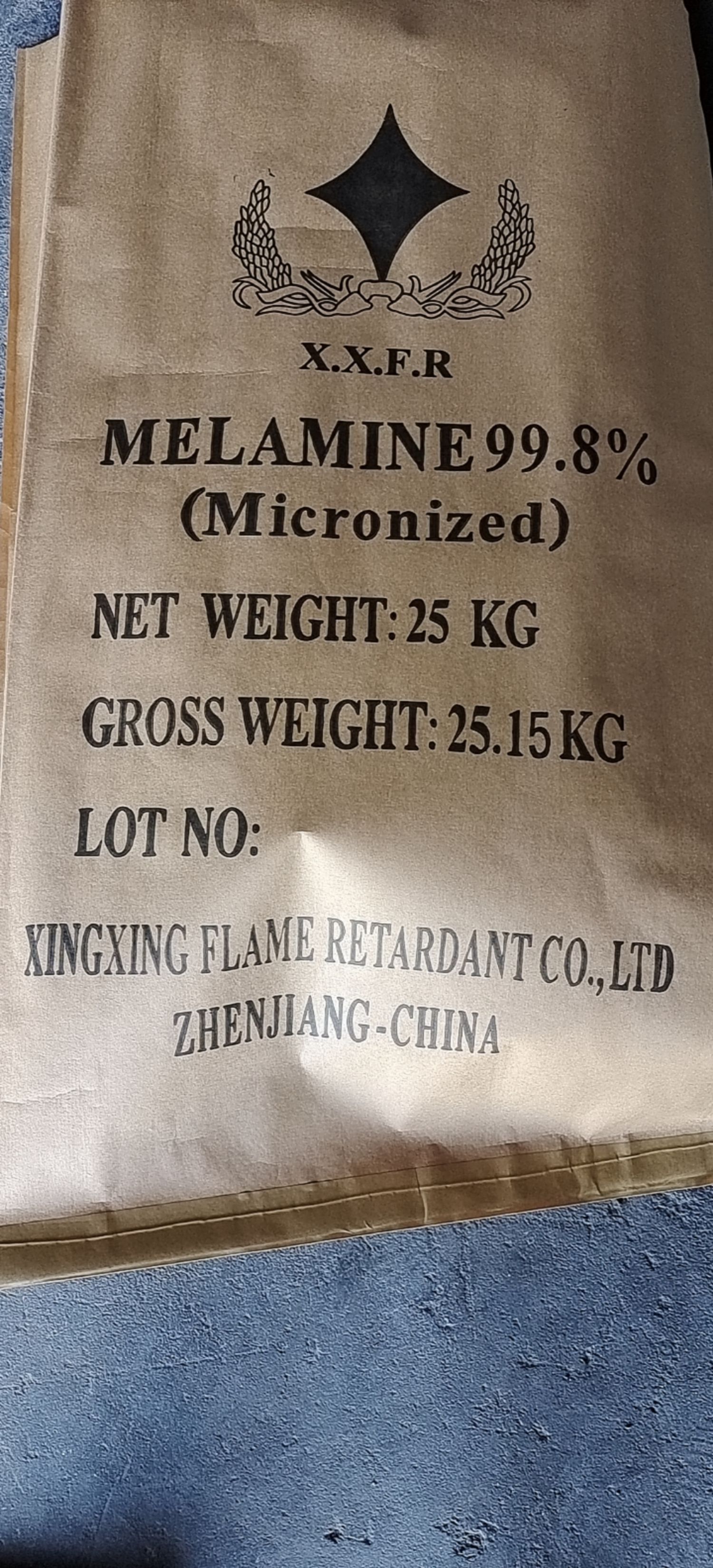
In many industries, the size of a particle can make or break a product. Micronization takes coarse materials down to the micron scale, but its real value goes beyond just making things smaller. It unlocks properties that are often completely missed when ingredients are left in their raw, granular state. From faster dissolution to smoother textures, the shift at this tiny scale has practical impacts that are easy to underestimate.
One of the quietest benefits of micronization is how it transforms material behavior without adding anything new. A micronized powder can disperse more uniformly, absorb more readily, and even change the way a formula feels or functions. This isn’t about chemical alteration—it’s about giving existing materials a physical advantage that allows them to perform closer to their full potential. When particles become small enough, they stop behaving like tiny stones and start flowing like a fluid, which opens doors to new applications that coarse powders simply can’t address.
Still, micronization is often treated as an afterthought because its influence isn’t always visible in the final product. That’s exactly where its power lies. It works behind the scenes: improving stability, reducing grittiness, and enabling lower doses to achieve the same effect. For instance, a poorly soluble compound suddenly becomes viable, or a spice delivers its flavor more intensely with less material. These overlooked advantages don’t just improve performance—they can reshape cost structures and environmental footprints in ways that are rarely given the credit they deserve.
How MP-Based Alkyds Overthrow Traditional Resin Performance
MP-based alkyds have quietly shifted the performance baseline for industrial coatings. Unlike conventional alkyds that rely on drying agents to cure, these resins build crosslink density through moisture-activated silane chemistry. The result is a coating that develops hardness faster and holds up better under mechanical stress. Early adopters noticed that racks coated with MP alkyds come out of the oven with a remarkably uniform surface—no tacky spots, no soft edges. It’s a departure from the slow, oxygen-dependent cure that often leaves traditional alkyds vulnerable in the first hours after application.
The real overthrow happens in durability. Traditional alkyds, for all their gloss and flow, are notorious for embrittlement and yellowing over time. MP-based systems sidestep this by avoiding the ester linkages that hydrolyze and break down under UV and moisture. Instead, the silane crosslinks form a network that’s inherently more resistant to chemical attack and weathering. Testing shows improved gloss retention after 2,000 hours of QUV exposure—something a standard long-oil alkyd simply cannot match. It’s not just incremental; it’s a fundamental upgrade in how the film ages.
What makes this shift even more striking is the application simplicity. Traditional high-performance resins often demand complex two-component mixing or special primers. MP alkyds, by contrast, behave like a single-package system that can be sprayed, dipped, or brushed without extraordinary measures. The moisture-cure mechanism works predictably across a range of humidity levels, removing the guesswork that plagues conventional oxidative cures. For production managers, that means faster turnaround and fewer rejected parts—a practical win that traditional alkyds struggle to deliver.
Lube Up: The Critical Role of MP in High-Performance Lubricants
Getting the most out of high-performance engines starts with the right additives, and MP is one that doesn’t get nearly enough attention. It’s not just another anti-wear compound—its molecular structure lets it fill the microscopic valleys on metal surfaces, turning rough contact points into something closer to a polished glide. The result is less friction from the very first turn of the key, even when oil pressure hasn’t fully built up.
Under heavy loads and extreme heat, ordinary lubricants can break down quickly. MP steps in precisely at those moments by forming a tenacious boundary layer—almost a sacrificial shield—that absorbs the stress before the base metal ever feels it. Unlike some additives that activate only after reaching a set temperature, MP begins working at ambient conditions and then shifts its protection strategy as things heat up, keeping gears and bearings safe across a wide operating range.
Endurance machines, whether they’re race engines, industrial compressors, or turbocharged street motors, rely on this kind of dynamic cushioning. By dramatically lowering the coefficient of friction, MP not only extends component life but also frees up horsepower that would otherwise be lost to drag. It’s one of those behind-the-scenes players that lets engineers push performance envelopes without sacrificing reliability.
From Explosives to Eco-Plastics: MP’s Lesser-Known Applications
Few substances boast a resume as paradoxical as MP. Originally harnessed for its high-energy decomposition in military-grade explosives, this compound was once defined solely by its destructive potential. Its molecular structure, prized for rapid gas release under pressure, made it a staple in controlled demolitions and propellant formulations for decades.
Yet the same reactivity that made MP a powerful explosive also hinted at other possibilities. Researchers experimenting with alternative synthesis pathways accidentally uncovered its ability to polymerize into a robust, biodegradable material when exposed to specific catalysts. The resulting polymer not only rivals conventional plastics in strength but degrades harmlessly in marine environments, addressing the global microplastics crisis without sacrificing performance.
Today, MP-based eco-plastics are finding their way into packaging, agricultural films, and even medical implants. The shift from munitions to sustainability might seem unlikely, but it underscores how reevaluating established chemistries can unlock surprises. As industries push for greener solutions, MP’s dual legacy serves as a reminder that innovation often hides in plain sight—within molecules we thought we already knew.
Getting It Right: Storage and Handling for Industrial-Scale MP
Managing massive quantities of MP on an industrial scale demands more than just ample floor space. The real challenge lies in balancing accessibility with preservation—especially when temperature swings, humidity, and vibration can degrade material integrity faster than you'd expect. A lot of facilities default to stacking pallets in the nearest available corner, but that approach quickly backfires when inventory gets misplaced or damaged. Instead, smart layout design paired with real-time environmental monitoring makes the difference. We've learned that even minor adjustments, like positioning high-turnover items closer to dispatch zones while isolating sensitive batches in climate-controlled sections, can slash retrieval times and cut write-offs by double-digit percentages.
Handling is where the hidden costs pile up if you're not careful. Forklift operators on tight deadlines often sacrifice precision for speed, leading to nicked packaging, compression damage, or worse—costly spills that halt production. Investing in specialized attachments and automated guided vehicles isn't just a flashy upgrade; it fundamentally changes how your crew interacts with the stockpile. Combine that with a clear zone-based workflow and everyone on the floor knows exactly where they need to be without scrambling. And don't overlook the human factor: consistent, refresher-style training keeps those habits sharp, because even a well-designed system fails if people drift back into old, careless routines.
FAQ
Micronized monopentaerythritol is a finely ground form of monopentaerythritol, a tetrahydric alcohol with a symmetrical neopentyl structure. By reducing its particle size to the micron range, the surface area increases dramatically, which enhances solubility, dispersion, and reaction rates when blended with resins, solvents, or other reactive components.
Bulk purchasing slashes per-unit costs and ensures a steady supply for high-volume production lines. It also cuts down on shipping frequency and packaging waste, making it a more sustainable and logistically efficient choice for industries that consume large amounts of the material regularly.
The fine particle size leads to faster and more uniform incorporation during esterification, resulting in resins with higher gloss, better hardness, and improved weathering resistance. It can also shorten reaction times and reduce the need for excessive catalysts, which ultimately refines the final film properties of paints and coatings.
Monopentaerythritol is a key building block for premium esters used in high-temperature lubricants and eco-friendly plasticizers. The micronized form dissolves more readily in reaction mixtures, promoting more complete conversion and yielding esters with superior thermal stability, low volatility, and excellent lubricity under extreme conditions.
Yes, it serves as a char-forming agent in intumescent coatings and flame-retardant formulations. Its fine particle size allows for better distribution within the polymer matrix, leading to more efficient char expansion and insulation during a fire. This often results in lower additive loadings compared to coarse grades while still meeting stringent fire safety standards.
In UV- and EB-curable systems, micronized monopentaerythritol acts as a multifunctional acrylate diluent after derivation. Its high surface area and uniform particle distribution accelerate crosslinking density, which gives cured films exceptional scratch resistance, clarity, and adhesion on fast-paced printing and coating lines.
Conclusion
Micronized monopentaerythritol has emerged as a versatile building block that goes far beyond its textbook role as a simple polyol. By reducing the particle size to a fine, uniform powder, manufacturers unlock faster dissolution and more homogeneous mixing in reactive systems, which directly translates into higher productivity and consistent end-product quality. In alkyd resin formulations, this enhanced integration means coatings can achieve superior hardness, gloss retention, and resistance to weathering—pushing traditional resin performance beyond conventional limits. The lubricant industry benefits similarly: MP-derived esters deliver exceptional thermal stability and low volatility, making them indispensable for high-temperature greases and synthetic engine oils. Even outside these established markets, the compound finds its way into plasticizers for eco-friendly polymers and acts as a key intermediate in the production of high-energy explosives, underscoring its remarkable chemical adaptability.
On an industrial scale, however, realizing these advantages hinges on proper handling. The micronized form, while beneficial for processing, is hygroscopic and prone to dust cloud formation, demanding sealed storage under low-humidity conditions and the use of explosion-proof conveying equipment. Operators must also mind temperature control during bulk transfer to prevent caking and protect the powder’s free-flowing character. When these practical measures are in place, bulk micronized monopentaerythritol becomes a cost-effective and highly functional raw material that bridges traditional chemistry with advanced industrial needs. Its double-edged nature—offering both performance enhancements and handling challenges—keeps engineers and formulators attentive, but the payoff is clear across coatings, lubricants, and the growing field of sustainable materials.
Contact Us
Contact Person: Guohua Wang
Email: [email protected]
Tel/WhatsApp: 8613003442895
Website: https://www.xxflameretard.com