

Bulk Expanded Graphite: Versatile Solutions for Modern Industries
2026-07-15
In a world where industrial demands constantly evolve, finding materials that adapt without compromise is rare. Bulk expanded graphite stands out as that exception—lightweight, resilient, and remarkably versatile. From high-temperature seals to flame-retardant systems, it quietly powers some of the most critical operations across sectors. Yet, without the right processing and purity, its potential remains locked. That’s where X.X.F.R steps in, offering precisely engineered expanded graphite solutions that turn raw reliability into real-world performance. This blog explores how this material reshapes modern industry—and why your next innovation might depend on it.
Beyond the Seal: Unpacking Expanded Graphite’s Extreme Temperature Tolerance
Most materials bow out long before the heat gets serious, but expanded graphite doesn’t flinch. Its carbon‑based structure thrives in environments where metals soften and polymers vanish. The secret lies in its layered, worm‑like particles that lock together under compression, creating a near‑impenetrable seal without degrading. Even when flames lick at its edges, the material holds its form—oxidising slowly, rather than burning away. That’s why you’ll find it deep inside furnaces, around exhaust headers, and in flanges that never get a chance to cool down.
What sets it apart isn’t just a high number on a spec sheet. In oxidative atmospheres, expanded graphite can shrug off continuous temperatures well past 450°C—and in inert or vacuum conditions, it plays comfortably above 2,500°C. The magic is in the thermodynamics of its oxidation. The carbon rings rearrange into a protective char layer that insulates the core, buying time and maintaining integrity. It’s not invincible, but it fails gracefully: a slow, predictable erosion instead of a catastrophic collapse. For engineers, that predictability is worth its weight in downtime avoided.
Handling it, you soon realise there’s no resin binder to melt or outgas. That means no creeping chemical contamination when the seal meets reactive fluids or molten salts. Combined with its natural lubricity, you get a gasket that doesn’t cold‑flow under bolt load and still springs back after a thermal cycle. From cryogenic pipes to glass‑lined reactors, it bridges extremes that would tear ordinary composites apart. That sort of flexibility—across temperature, chemistry, and mechanical abuse—transforms expanded graphite from a niche curiosity into a quiet workhorse of modern sealing technology.
How Expanded Graphite Is Quietly Reinventing Thermal Management in EVs
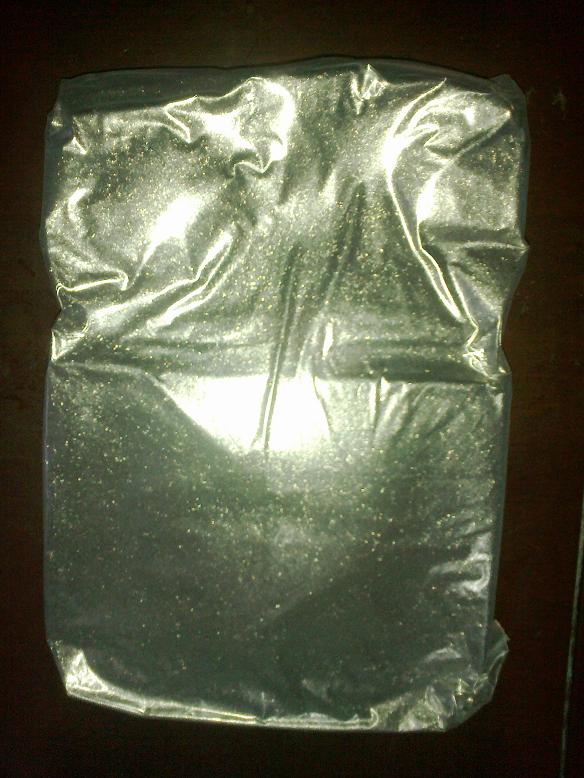
Inside the battery packs of modern electric vehicles, a subtle material shift is addressing one of the industry's most persistent headaches: uneven heat distribution. Expanded graphite, with its worm-like, highly porous structure, acts as a flexible thermal highway. Unlike rigid metal plates or liquid cooling loops that often leave hotspots near cell junctions, expanded graphite sheets conform to irregular cell surfaces and wick heat away in all directions simultaneously. This passive, omnidirectional conduction means designers can reduce the complexity of cooling systems without sacrificing safety, enabling more compact battery layouts that were previously impossible.
The real magic lies in expanded graphite’s ability to handle thermal runaway scenarios without heavy, bulky firewalls. When a cell fails and temperatures spike, the material’s layered carbon structure absorbs and spreads the intense heat load while its natural fire-retardant properties slow the propagation of flames. It essentially buys precious time for vehicle occupants and first responders. Engineers are embedding these graphite layers directly into cell-to-pack architectures, eliminating the module-level housings that once dominated designs. The result is thinner packs with higher energy density, all while maintaining the passive safety nets that regulatory bodies increasingly demand.
What surprises many is how quietly this transition is happening. You won’t find flashy announcements, but material suppliers say demand has tripled in under two years. Expanded graphite starts as natural graphite flakes treated with acid and intense heat, causing them to expand up to 300 times their original volume. The resulting lightweight, compressible mats are easily die-cut into custom shapes for any cell format—cylindrical, prismatic, or pouch. As automakers race toward solid-state and high-nickel chemistries that push thermal limits, this humble carbon derivative is becoming the unsung hero that makes next-gen batteries viable for everyday cars.
The Overlooked Role of Particle Size in Custom Gasket Performance
When engineers design custom gaskets, they often focus on material selection and overall geometry, but particle size within the filler or base material can dramatically alter sealing behavior. Finer particles tend to pack more densely, reducing porosity and enhancing resistance to fluid permeation. However, this same density can limit the material's ability to conform to surface irregularities, potentially leading to leak paths under low compression. Coarser particles, on the other hand, create a more open internal structure that compresses more readily, allowing the gasket to adapt to flange imperfections but at the cost of higher permeability. The balance between these extremes is not simply a matter of choosing a median size; it requires understanding how particle distribution interacts with the specific pressure, temperature, and media of the application.
The influence of particle size extends beyond just leakage prevention. In dynamic environments where vibration or thermal cycling occurs, the particle architecture affects the gasket's resilience and long-term stability. A gasket made with a narrow range of similarly sized particles may settle into a stable state quickly, but it could also be more susceptible to erosion or extrusion under fluctuating loads. Broad particle size distributions can create a interlocking matrix that resists flow and maintains torque retention over time, yet if not carefully controlled, they may introduce unpredictable compression set. Manufacturers often overlook the fact that even minor adjustments in particle sizing can shift the gasket's recovery characteristics, making the difference between a seal that lasts years and one that fails prematurely.
Real-world performance is also governed by how particle size influences the manufacturing process itself. The flowability of raw materials during molding or extrusion is heavily dependent on particle characteristics, affecting the uniformity and defect rate of the final product. Inconsistencies in particle size can lead to localized areas of weakness, where the material does not fuse properly or where filler agglomerates create hard spots. These hard spots may become initiation points for cracking under stress. Recognizing particle size as a critical variable—not just a basic property—enables gasket producers to fine-tune both production efficiency and on-the-job reliability, ultimately delivering a custom solution that truly matches the demands of the application.
Why Nuclear and Aerospace Engineers Bet on Graphite for Radiation Resilience
Graphite’s atomic structure is what gives it an edge in extreme environments. Its carbon atoms are arranged in layered sheets that glide over one another, allowing the material to absorb displacement damage from neutrons and gamma rays without losing its overall shape. Unlike metals, which can become brittle and swell under radiation, graphite maintains nearly the same dimensions and thermal conductivity even after years of exposure. This dimensional stability is critical in reactor cores, where slight warping could compromise safety margins.
Nuclear and aerospace engineers also value graphite for its ability to handle intense heat without melting—it sublimates directly from solid to gas at temperatures above 3,600°C. In a reactor, it serves as both a moderator and a structural component, slowing down neutrons while channeling them toward fuel. The same qualities translate to space propulsion: graphite components in ion thrusters and nuclear thermal rockets resist erosion from high-energy particles, making them last far longer than alternatives. Over decades of in-service data, graphite’s irradiation behavior remains predictable, something few other materials can claim.
The trust engineers place in graphite is rooted in a long track record. From the early Chicago Pile experiments to modern molten salt reactor designs, graphite has proven its reliability under neutron bombardment. In aerospace, it shields sensitive electronics on satellites and enables robust heat exchangers for advanced power systems. Rather than searching for exotic new candidates, many teams continue to bet on nuclear-grade graphite precisely because its limits are so well understood—a rare certainty in fields where unexpected material failures are not an option.
From Fire Stops to Flexible Heaters: Unexpected End-Use Cases
Most people think of intumescent materials and just picture fire safety products—strips that expand to seal gaps in walls during a blaze. While that remains their most critical role, their unique swelling behavior when exposed to heat has quietly enabled a surprising range of everyday technologies. When you dig deeper, you find these same polymers being used to create self-regulating heating cables that keep pipes from freezing in harsh winters. The material’s ability to expand and contract in response to temperature isn’t just about stopping flames; it’s also about finely controlling thermal output without complex electronics.
Beyond construction and heating, intumescent coatings have found a niche in consumer electronics. Ever wonder how some smartphone components survive a short circuit without erupting into flames? Engineers embed thin layers of these substances near battery packs, where a sudden temperature spike triggers instantaneous expansion, physically disrupting a fault before it cascades. It’s a passive safety net that works silently, requiring no sensors or software. In a completely different field, ceramics laboratories leverage the same principle to design kiln linings that self-seal microscopic cracks during firing cycles, improving energy efficiency in art and industrial studios alike.
Perhaps the most unexpected twist comes from the world of adaptive textiles. Researchers are now spinning intumescent additives into fibers that stiffen on demand when exposed to body heat or environmental changes. The result isn’t stiff, bulky protection—it’s lightweight fabric that remains flexible under normal conditions but instantaneously firms up for impact absorption during a fall. From construction joints to cozy heated floors to next-gen wearable safety gear, the line between passive protection and active performance keeps blurring in ways even their original inventors didn’t foresee.
Sourcing Bulk Graphite Without Sacrificing Consistency or Purity
Securing large volumes of graphite often triggers a silent trade-off: the more you buy, the harder it becomes to maintain uniformity across batches. Suppliers may blend sources, adjust processing parameters, or substitute grades without notice, and these shifts directly undermine product performance in critical applications like battery anodes, refractories, or lubricants. Consistency isn’t just a technical preference—it’s the backbone of reliable manufacturing, where even minor deviations in particle size, morphology, or carbon content can cascade into costly production failures.
Purity adds another layer of complexity. Bulk graphite commonly contains impurities like silicon, iron, or sulfur, which can originate from the mine, processing equipment, or handling. Sourcing teams that focus solely on price per ton frequently overlook how contaminant levels fluctuate between shipments, leading to performance drift. Robust procurement strategies flip the narrative: they start with rigid specification sheets, demand third-party certs for every lot, and build direct relationships with producers who operate dedicated processing lines. This approach doesn’t eliminate variation, but it shrinks it to a controlled, measurable band.
The real differentiator is auditing beyond the certificate. On-site inspections of milling and purification facilities, combined with retained sample archives, cement trust that a supplier’s claims hold up under real-world conditions. It’s also worth investing in long-term contracts that lock in raw material origins and processing methods, insulating your supply from the spot-market volatility that often forces compromises. When consistency and purity are treated as non-negotiable design parameters—rather than aspirational goals—bulk sourcing transforms from a risk into a competitive advantage.
FAQ
Expanded graphite starts as natural flake graphite but undergoes a treatment that makes it puff up into a lightweight, worm-like form. Unlike the dense, layered graphite used in pencils, this material has a vastly increased surface area and becomes highly compressible, flame resistant, and thermally conductive—properties you won't find in standard writing graphite.
Manufacturers begin with purified flake graphite and intercalate it with acids, then rapidly heat it to over 1000°C. The intercalated compounds vaporize instantly, forcing the layers apart and expanding the material up to 300 times its original volume. The result is a low-density, highly porous material that can be compressed into sheets, foils, or powders for various uses.
It's a staple in sealing and gasketing for chemical plants and automotive engines because it handles extreme temperatures and pressures without degrading. Less obvious uses include flame retardants in construction materials, conductive fillers in batteries, and even as a component in heat dissipation pads for electronics. Some niche applications involve fireproof coatings for aerospace interiors.
It doesn't creep, age, or harden under heat cycling. Expanded graphite conforms perfectly to flange surfaces even at low bolt loads, maintains a seal across temperatures from -200°C to over 3000°C in inert atmospheres, and resists nearly all organic and inorganic media except strong oxidizers. Unlike PTFE, it won't cold flow, and unlike rubber, it doesn't embrittle over time.
It's actually fairly benign. The production process uses natural graphite and the expansion step doesn't involve hazardous emissions if properly controlled. The material itself is chemically stable, non-toxic, and can be recycled in many cases. Some manufacturers are even exploring using renewable energy for the expansion furnaces to lower the carbon footprint further.
Look at the carbon content and purity first—99% or higher is typical for critical seals. Pay attention to density after compression and the presence of any binders or reinforcements. For pure thermal endurance, unbonded foil might be best, but for mechanical strength, reinforced sheets with an interlayer of stainless steel mesh are common. Always check compatibility with the media; oxidizers above certain concentrations will attack graphite.
Absolutely. Manufacturers routinely laminate it with metal foils, sinter it with ceramic powders, or blend it with elastomers to tailor properties. For example, a graphite-PTFE composite offers low friction and wide chemical resistance, while a corrugated metal core with graphite cover layers handles high-pressure steam joints. These hybrids solve problems that pure expanded graphite can't handle alone.
It's brittle in thin sections, so handling requires care. In strongly oxidizing environments above 500°C, it begins to lose mass. It can also suffer from galvanic corrosion if directly coupled with certain metals in the presence of an electrolyte. And while it's electrically conductive, its thermal conductivity drops off at very low densities, so design trade-offs are sometimes needed.
Conclusion
Bulk expanded graphite has quietly evolved into a material of remarkable versatility, solving challenges that conventional solutions often fail to address. Its extreme temperature tolerance makes it indispensable far beyond conventional sealing; it withstands thermal cycling that would degrade lesser materials, maintaining integrity from cryogenic conditions to well over 3000°C in inert atmospheres. This thermal resilience has made it a cornerstone in electric vehicle battery packs, where it not only dissipates heat efficiently but also prevents propagation of thermal runaway, all while adding minimal weight. In aerospace and nuclear contexts, its innate resistance to neutron and gamma radiation ensures long-term reliability in gaskets and reflectors, where failure is simply not an option.
The overlooked parameter of particle size critically influences custom gasket performance, allowing engineers to fine-tune compressibility, recovery, and leak tightness for specific flange conditions. Beyond traditional gaskets, expanded graphite appears in unexpected places: intumescent fire stops that expand under heat to seal penetrations, flexible heating elements for wearable technology, and even as a conductive additive in coatings. For procurement teams, sourcing bulk graphite demands a sharp focus on consistency and purity, as variations in ash content or flake morphology can sabotage downstream processing. When these elements come together, expanded graphite emerges not as a niche material but as a platform of modern industrial ingenuity, quietly enabling advances across sectors.
Contact Us
Contact Person: Guohua Wang
Email: [email protected]
Tel/WhatsApp: 8613003442895
Website: https://www.xxflameretard.com