

Bike Carbon Timing Belt Manufacturer Explains What Makes a Drive System Truly Durable
2026-11-23
Most cyclists assume a drive belt either lasts or it doesn’t. But according to Sanxing, a bike carbon timing belt manufacturer with decades of material engineering behind its name, true durability is rarely an accident. It comes down to how the belt handles tension, heat, contamination, and the subtle ways a drivetrain pushes back against every pedal stroke. Before you trust your next ride to a carbon belt, here is what actually separates a system that survives from one that quietly wears itself out.
What Actually Changes Inside a Carbon Belt After Thousands of Hard Miles
The first thing that gives way isn't the carbon itself. It's the rubber compound tucked into the teeth and valleys. After thousands of miles of heat cycles, grit, and repeated flexing, that rubber loses its memory. It hardens slightly, develops micro-cracks along the edges, and stops conforming to the pulley grooves as tightly as it did when new. You can feel it at cold start — a faint chirp or a slight roughness at idle that disappears once everything warms up. People blame the belt, but usually it's the compound giving up its grip before the fibers even notice.
Deeper inside, the load-carrying carbon cords start to shift in subtle ways. They don't stretch like steel or snap like glass, but the resin matrix holding them in place breaks down under constant bending. Tiny voids open between the carbon bundles and the surrounding polymer. Over time, individual filaments can separate from the bundle — a process called fretting fatigue. This doesn't cause immediate failure. Instead, the belt gradually loses torsional stiffness, which means it can twist more under load. On a long drive, you might notice slightly more vibration through the accessory drive or a faint harmonic at certain RPMs that wasn't there before.
What stays intact is often the carbon fiber itself. It's the interfaces that fail — between cord and matrix, between matrix and backing, between backing and rubber. These boundary layers are where heat and shear stress concentrate. Once a few interfaces degrade, the load distribution changes. Some cords start carrying more tension than others, accelerating local damage. The belt may still look fine from the outside, with no cracks or missing teeth, but inside it's no longer a uniform structure. It's a collection of slightly independent elements that happen to be moving together — until one day a cold morning, a quick throttle blip, and the whole thing lets go without much warning.
Why the Tensile Cord Is the Last Place You Want Hidden Stretch
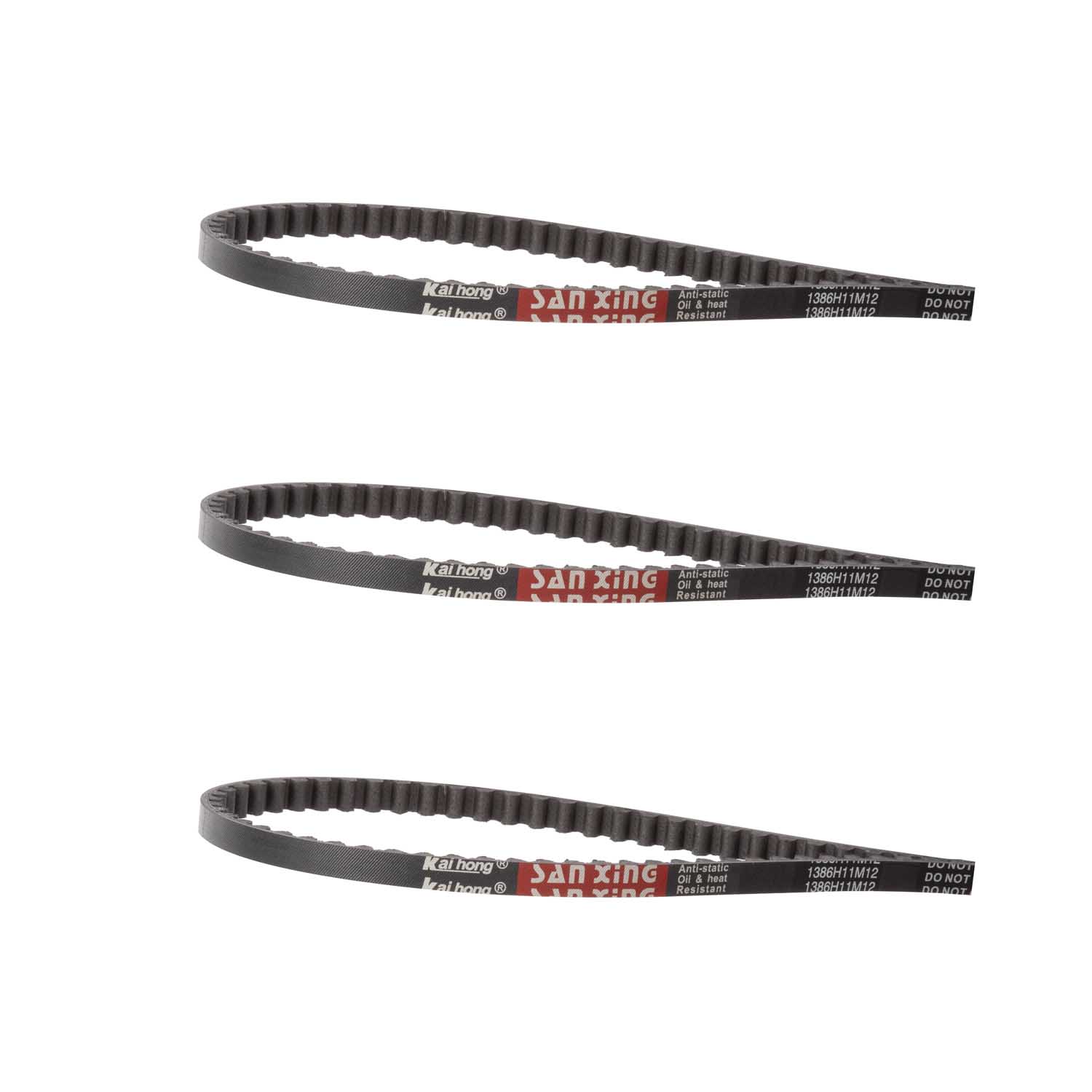
Most people assume a cord is already taut. In practice, the stretch you can't see is the one that shows up after the load has been applied. A tensile cord with hidden elongation does not announce itself during a casual inspection—it waits until tension is high, then quietly gives a few extra millimetres. That small movement can be enough to throw off alignment, delay response, or leave a safety margin thinner than expected.
The problem with hidden stretch is not just the distance; it is the timing. When a cord stretches under load, every component downstream has to absorb the change. Fasteners take extra shear, terminations creep, and the whole assembly starts working outside the geometry it was designed for. By the time you measure the cord at rest, it looks fine because the stretch has already returned. That recovery is what makes hidden stretch so easy to miss and so expensive to chase later.
If you are specifying a tensile cord for a critical run, treat stretch as a load condition rather than a specification footnote. Ask how much the cord moves under the actual working tension, not just at break. Test it seated, cycled, and wet if the environment demands it. The last place you want to discover a few millimetres of give is in the middle of a loaded rig where that give turns into misalignment or a dropped load.
The Tooth Profile Difference Between a Harsh Engage and a Quiet One
A gearset that bangs into engagement usually carries a nearly full-radius tip edge and a shallow relief ramp. The leading corner of the driving tooth contacts the mating flank before the line of action is ready, so the load jumps across the face instead of rolling through the mesh. That impact happens a few thousand times per minute and turns into a whine or rattle that rises with torque. It is not always a manufacturing error; many stock profiles are simply cut with enough material at the tip to be strong, but too blunt to enter quietly.
Quiet-running teeth are shaped to hand over load more gradually. The tip is shaved back a few microns with a longer tip relief that starts earlier and blends into the involute rather than ending in a visible step. Crowning across the face width spreads the contact patch away from the edges, and a slight lead correction keeps the mesh from scalloping under misalignment. These changes do not eliminate sliding or deflection; they just stop the tooth from arriving late or edge-first.
The real difference is in the first ten percent of roll angle. A harsh profile uses that portion for clearance only, then forces the pair to pick up the whole load almost at once. A refined profile uses the same roll angle as a loading ramp, so the contact line builds pressure over a longer arc and the mesh sounds more like a low hiss than a knock. In practice, the target is not a perfect mathematical involute but a deliberately imperfect one that is friendlier to housing flex, bearing clearances, and speed changes.
How Grit and Road Debris Eat Away at a Drive System Over Time
Grit and road debris rarely hit a drive system all at once. They work their way past boots, chain guards, and lip seals as fine dust first. Once inside, the particles embed in grease and cling to sprocket teeth, rollers, and sliding surfaces. Every rotation drags them across metal, and what begins as a dull polish slowly turns into measurable material loss.
The damage accelerates when those particles mix with whatever lubricant remains. The result is an abrasive slurry that grinds down pins, bushings, and bearing races. Hard silica from sand or crushed stone acts like a lap compound, opening tiny clearances that let more debris in. A chain that once held tension starts to show tight spots, while seals lose their grip and allow moisture to join the wear process.
Left alone, the system loosens in ways that are easy to feel before they are easy to see: more driveline lash, a harsher vibration under load, and a chain that needs adjustment far too often. By the time the wear is visible, the components have usually lost their hardened surface and the only real fix is replacement. Keeping guards intact and cleaning packed debris out of sprocket areas usually buys far more life than any lubricant upgrade.
When Tiny Pulley Misalignment Becomes a Belt’s Biggest Enemy
Most belt failures don’t start with an obvious defect. They begin with a pulley sitting just slightly out of line, a fraction of a degree that is easy to dismiss during installation. At first the belt compensates without complaint, but each revolution forces it to enter the groove at a shallow angle. That repeated side loading scrapes against the ribs and concentrates wear where it shouldn’t be.
The damage tends to show up well before the belt snaps. One edge glazes and hardens while the rest of the surface keeps working, cords lose tension unevenly, and small heat cracks appear near the sidewall. A replacement belt may quiet things for a while, but if the pulley remains misaligned the new one inherits the same problem. The pulley becomes the real enemy because it turns every fresh belt into a countdown.
A quick alignment check with a straightedge or laser often reveals how much the shafts have drifted. Watching how the belt tracks at idle and under load gives another clue, especially if it wanders slightly toward one flange. Small corrections at the motor mount can add hundreds of hours to belt life, and they cost far less than swapping belts on a schedule.
The Real-World Durability Testing That Happens Before a Belt Gets Boxed
A belt that scores well on a tensile machine hasn't earned its place in a box yet. Samples get strapped around articulated dummy hips, dragged through belt loops made of stiff denim, and flexed past the point where a normal person would call it a day. Buckles are yanked, twisted, and dropped onto concrete, because the first week of real wear is usually rougher than any chart suggests.
Heat, cold, salt spray, and UV lamps take turns on the same batch. Leather is soaked, dried, and bent to see if the finish cracks or the edge paint flakes. Stitching gets checked after thousands of abrasion cycles, not just a quick visual pass. Some belts run through a dust-and-sweat slurry that would wreck a lesser finish in a weekend, just to make sure the hardware doesn't corrode and the lining doesn't peel.
If a belt still holds its shape, keeps its color, and doesn't loosen at the buckle after all of that, it gets cleaned, inspected, and clipped into retail packaging. The point isn't to make every belt indestructible. It's to catch the weak ones before they reach someone's closet.
FAQ
It isn't just the material. A carbon belt doesn't stretch the way a chain wears at the pins, so tension stays consistent. There's also no metal-on-metal contact, which removes the main source of progressive slop and grit-related wear. When the tooth profile is designed correctly, the load spreads across a larger contact area instead of concentrating on a few rollers. That reduces point loading and keeps the system quiet and stable much longer.
Most failures we see come from misalignment or wrong tension, not from the belt itself. A belt that runs even slightly crooked will scrub the pulley flanges and load one edge, which eventually tears the cord. Too much tension kills bearings and causes premature tooth wear; too little lets the belt climb under load. Durable systems are about the frame interface and adjustment range as much as the belt.
Look beyond the carbon name. The real strength comes from the cord package inside the polyurethane body, usually aramid, glass, or carbon cord. Carbon cord offers high tensile strength with very low elongation, but the tooth geometry and jacket material matter just as much. We test for peak load, cyclic fatigue, and tooth shear, because a belt can be strong in a straight pull and still fail at the tooth root after repeated torque spikes.
Yes, if the belt is designed for debris evacuation. Unlike a chain, there are no pins or bushings to trap grit. The teeth should push foreign material out of the engagement area rather than grinding it into the pulley. A wear-resistant polyurethane compound and a low-friction tooth jacket help. But sealed bearings and a properly aligned drivetrain remain part of the durability story; the belt cannot compensate for a frame that flexes too much.
Very little, but not zero. You do not lubricate it, and you rarely adjust tension after the initial settle-in. The main job is visual inspection: check for embedded stones, edge fraying, or cracks at the tooth root. Clean it with water and a soft brush if it gets packed with clay. If you hear a ticking or whirring under load, stop and check alignment before it damages the belt edge.
Because a belt has a small amount of damping and a different engagement feel than a metal chain. It does not have the same initial clunk when you stomp on the pedals. Some riders mistake that for stretch or lag, but a high-quality carbon belt has almost no elongation. The feel is more about the pulley teeth taking up load progressively. Once you adapt, the power delivery feels smoother and more direct over rough surfaces.
It is often the deciding factor. A frame that twists under load alters the effective chainline, so the belt enters the rear pulley at a slight angle. That leads to edge wear, noise, and eventually cord failure. Even the best belt cannot survive a poorly aligned or overly flexible rear triangle. We work with frame builders on dropout alignment, bottom bracket stiffness, and belt line tolerances before recommending a belt system.
First rule out the cause, otherwise the new belt will wear the same way. Check pulley tooth wear, because a hooked or shiny pulley will chew up a fresh belt quickly. Verify alignment with a laser or straightedge under load, not just on a stand. Confirm the tension window matches the frame's recommended range. Only after those are corrected does it make sense to install a new belt.
Conclusion
Durability in a carbon belt drive is not a single feature but the result of several quiet decisions made before a belt ever reaches a bike. After thousands of hard miles, a well-made belt should show almost no meaningful change in tooth spacing or surface hardness; if it does, that usually points to the tensile cord stretching in ways riders never notice until shifting becomes vague or noise creeps in. The cord is the last place hidden stretch should appear, because once it gives, the belt loses its timing accuracy and puts extra load into every engagement. The tooth profile also matters more than it seems: a slightly altered flank angle can turn an otherwise smooth roll into a harsh, chattery engagement, especially under load or on rough ground.
What really shortens service life, however, is not always the belt itself. Grit and road debris work like a slow abrasive, getting pressed into the rubber and gradually wearing the loaded side of each tooth, which changes clearance and invites more debris. Even a tiny pulley misalignment creates uneven side wear, heat, and a distinctive edge polish that signals trouble long before failure. That is why manufacturers run hundreds of hours of dusty, wet, misaligned, and overloaded tests on fixtures that simulate years of abuse before boxing a belt. The goal is not just surviving a clean test rig but holding tension, tooth form, and quiet running in conditions closer to a neglected commuter bike than a showroom build.
Contact Us
Contact Person: Becky
Email: [email protected]
Tel/WhatsApp: 0086-15168665227
Website: https://www.sxbelts.com